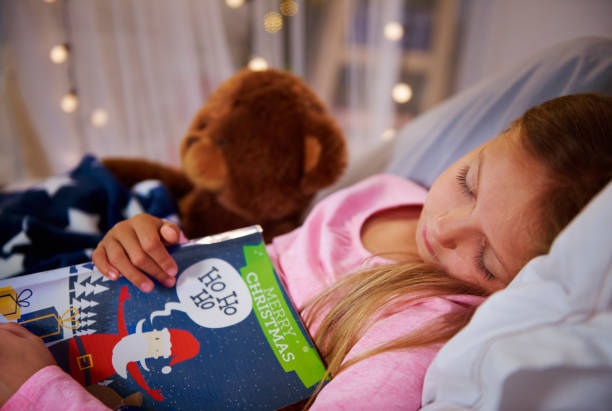
There’s something about winter that changes the rhythm of nights. The hush outside, the soft hush of snow (or frost, or mist) coating the world, invites a slower pace, more cosy closings to the day.
For parents, especially new ones, those long nights can feel endless, but also rich with possibility: the chance to press pause, share warmth, and weave small stories that linger.
You know what? Those bedtime moments are tiny time machines. A whisper here, a breath there, and suddenly you’re not just soothing your baby, you’re creating memory. Even if they don’t remember the story itself, they’ll feel the love. That matters.
So, here are four winter bedtime stories, gentle and soft, for you to tell (or adapt). Between them, you’ll find quiet reflections, talking points, and a few practical notes.
Think of this as your winter nights companion, not a rigid script, but a warm guide. (Yes, there will be typos, little side roads, and the occasional parent-to-parent confession. That’s part of the charm.)
Story 1: The Little Snowflake’s Journey
Once upon a time, in a sky rimed with twilight, there was a single snowflake named Lira. Lira was not like the others; she twirled slowly, hesitated at the cloud’s edge, watching the world below. “Am I too small?” she wondered. “Will I ever belong?”
One evening, when the stars peeked early, Lira drifted free, leaving the cloud behind. She floated past a pine tree, whose needles whispered, “Welcome.” She passed over rooftops, where windows glowed in yellow rectangles. She caught sight of a little house where someone sat reading by lamplight. In that warm light, she felt hopeful.
Down she fell, slower and slower, until she came to rest on a soft, fur-lined mitten, perched there before the wearer slipped it on. The mitten’s warmth held her, and for one blissful moment, she felt essential: part of someone’s journey. Then, gently, she melted. Not lost, but changed.
And though she disappeared as snow, she joined many others in streams, in waters, in life anew. Lira’s journey was quiet, small, but true, a reminder that even the tiniest part of winter has purpose.
(Pause here. Breathe. Let the child’s eyes flutter if they will.)
A Quiet Reflection (from one parent to another)
Do you ever worry whether your voice sounds “good enough” at night? I did. I worried I would stumble, lose my place, or make it boring. But here’s the thing, babies don’t need perfection. They need you. The shake in your voice, the tiny whisper, even the pauses, they all become part of a lullaby only you can sing.
I was once shaky telling stories at 2 a.m., exhaustion tugging at my eyelids. But those gentle stumbles became part of our rhythm, our trust. You’ll find your pace. You’ll find your voice.
Story 2: A Firefly in the Frost
In a meadow edged by birch and fir stood an old lantern, unlit now, frosted over. Nearby, hidden in the tall grass, was a little firefly named Vern. Vern’s light was mild, just a soft glow, but he hoped to shine brighter.
Night came early that evening. Vern fluttered out, wings trembling in the cold air. He passed snowflakes on the wind, and he felt smaller still. He thought: Maybe I can’t be bright enough.
Then he saw movement, a child (perhaps your child listening) tiptoeing at the window, finger tracing the frost pattern. Vern mustered courage: he hovered close to the glass. The child’s breath fogged the patch, creating a tiny heart shape. Vern’s faint glow flickered against the frost. The child paused, then smiled, pressing the palm gently to the plank.
That was enough. In that small connection, Vern realised: brightness isn’t absolute. It’s relational. A soft glow against darkness, a greeting, is meaningful. So he danced along the frost pattern, whispering light, and the child watched till eyes drooped heavy.
When Vern flew away, his light dimmed. But he had shone when it mattered.
Transition: the art of reading the moment
Stories aren’t performances. They’re conversations, even when one listener is tiny. Watch for yawns, for eyes closing, for fingers curling. Sometimes you’ll stop mid-sentence because the moment calls for silence. That’s okay. The story has done its work.
Use soft lighting. Maybe a warm night light or a Himalayan salt lamp (if that’s your thing). You might try lullaby apps. I used Calm sometimes (just music, no stories), but always turned the screen away from the baby. The glow from a phone or tablet can stimulate, so I preferred gentle instrumental ambient tracks.
Don’t worry about length. Some nights you’ll tell all four stories; other nights just one, just a few sentences. The ritual, the closeness, the breath-to-breath, is what stays.
Story 3: The Arctic Hare’s Quiet Night
High in the Arctic, where snow stretched like endless white silence, lived a hare named Silka. Silka had fur as pale as moonlight and ears that caught whispers of the wind. She hopped softly, pausing at each breath of frost, listening.
One night, under a sky frosted with stars, Silka walked to the crest of a hill. The northern lights danced, greens, purples, soft rivers of colour. Silka sat, heart quiet, letting the light wash around her. She watched the stars blink (or so she believed) and the sky shift ever so slowly.
Her paws sank into the snow. She closed her eyes and thought of all the life—tiny lichens beneath the snow, the hush of a distant seal’s breath, the flicker of starlight on ice. She felt small, yes — but part of something grand.
She stayed there until the night’s deep heart. Then she curled into her burrow, breathing slowly. Outside, the snow whispered its lullaby, and Silka dreamt of sky and stillness.
Mid-point practical tips (in narrative voice)
As you tell these stories, don’t rush. A parent recently told me, “I nearly ran myself through all three because I was anxious.” But pacing is magic. You can pause for a long moment. Let the silence speak. Even a single breath shared, you and baby, is powerful.
If your baby’s restless, you might hum softly for a minute. Try a “soundscape”, gentle wind effects, soft chimes, not noise, but ambience. A small white noise machine can help (I used the Hatch Rest+), but keep volume low.
Variation helps. Some nights, tell a story from memory; other nights, improvise: “Once there was a fox who had never known snow…” Let that unexpected phrase arise; your mind’s half-asleep, and some of the most magical lines show up there.
And be gentle with yourself. If you drop a line, repeat, stumble, or abandon a story: it’s fine. Often, the imperfect moment becomes the memory your child will feel (not remember) when older.
Story 4: The Star That Couldn’t Blink
In a sky draped with midnight blue, there was a single star named Corin. Corin had a little quirk: he couldn’t blink. All around him, stars winked softly, sometimes flashing eyes open-close in the cosmic dance. But Corin remained steadily bright, steady and constant.
He worried: “Do I look odd? Do I seem dull because I never blink?” He watched as comets zipped past, meteors flashed, and other stars flickered. He felt left out.
One evening, a child on Earth (maybe your little one) gazed upward and whispered, “Star, I like you. You’re different.” That tiny voice reached Corin across light-years. He felt warmth, not in heat, but in connection.
Meanwhile, a gentle wind planet-side carried the whisper among trees, across rooftops, into open windows. The child’s parent paused their own breath to listen. Somewhere, the challenge of the day eased.
Corin realised: steadiness is also beauty. In a sky of blinkers, not blinking means you hold space. You become the lighthouse, the dependable. So Corin kept shining, steady, unblinking, and in that consistency, he became beloved.
The child drifted to sleep, comforted. Outside, a soft breeze mingled with the hush of winter.
Final Reflections & Encouragement
You may finish one of these, or one “half story,” or sometimes just a whispered line, and that’s perfectly fine. What matters is the closeness, the ritual, the shared quiet. In those moments, you’re not just putting your child to sleep; you’re saying: “You matter. You are loved.”
You won’t remember all the stories. In years to come, you might forget their exact words. But the tone, the way your voice trembled in the dark, the way you paused to breathe, those will echo in memory. And more than stories, you’re creating safety, trust, warmth.
When nights stretch long, when exhaustion gnaws, remember: this is an invitation, not a performance. The goal is connection, not perfection.
And sometimes? The night’s silence is the best story. Sit in that silence for a while. Let your breathing sync. Let your child know, even in silence, you are here.
Resources & Gentle Reminders for Parents
- Books/collections: Goodnight Moon, Owl Moon, The Snowy Day. I also like On the Night You Were Born — short, lyrical, heart-rich.
- Apps / sound tools:
- Hatch Rest+ (for gentle ambient and white noise)
- Calm or Pzizz (just the ambient / music sections, no screen)
- Soft Bluetooth speakers with low volume
- Lights: A dim night light (warm tone), salt lamps, or a very low-wattage bulb in a shaded lamp. Keep screens away.
- Routine over perfection: Try to keep bedtime around the same window, and your child’s internal clock will gradually align.
- Your mental health: If telling stories feels like another “task,” pause. Some nights read straight from a short book. Some nights just hum. Some nights rest together in darkness. You don’t need to deliver 4 perfect tales.
I hope these stories and reflections become small tools in your parent toolkit. Winter nights can feel long and heavy, but they also offer this: time to slow, to whisper, to love in low light.