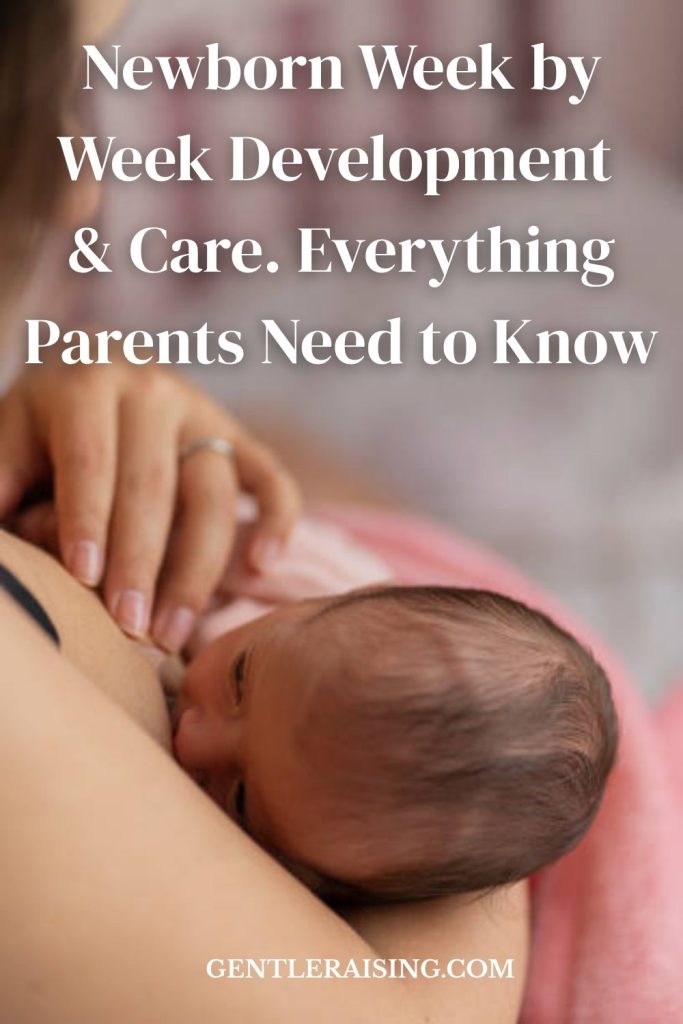
Bringing your baby home is magical, but let’s be honest, it can be overwhelming, too. From sleep cycles to growth spurts and diaper changes that feel endless, every week with your newborn brings new surprises. That’s why we created this week-by-week newborn guide.
Whether you’re a first-time mom or adding another little one to the mix, this blog will help you know exactly what to expect and how to handle it, all while embracing the journey gently and confidently.
Week 1: The Adjustment Phase
- Feeding: Newborns feed every 2-3 hours. Whether breastfeeding or formula-feeding, expect frequent cluster feeding.
- Sleep: They sleep 16–18 hours a day, but in 2–3 hour stretches.
- What’s Normal: Jittery movements, crossed eyes, peeling skin, and irregular breathing can all be normal.
- Your Focus: Bonding, skin-to-skin contact, and learning the baby’s cues.
GentleRaising Tip: Keep lights dim and use soft voices; your baby is adjusting to the world.
Week 2: Settling In
- Feeding: Baby may seem hungrier, growth spurt alert!
- Sleep: Still scattered, but you’re learning their rhythms.
- Development: They start recognising your scent and voice.
- Health Check: Time for their first paediatrician follow-up.
GentleRaising Tip: Don’t stress over routines yet, just respond to baby’s needs.
Week 3: Getting Stronger
- Feeding: Baby may start nursing more efficiently or taking longer bottle feeds.
- Sleep: Still short naps, but nighttime stretches might lengthen a bit.
- Development: Watch for more focused gazes and intentional movements.
- You Might Notice: Baby acne, fussiness in the evening (hello, witching hour).
GentleRaising Tip: Hold your baby upright for 10–15 minutes after feeding to ease digestion.
Week 4: One Month Milestone!
- Feeding: Still every 2–3 hours, but more coordinated.
- Sleep: May start to sleep longer at night (4–5 hours!).
- Development: Lifts head briefly during tummy time, responds to familiar voices.
- Doctor Visit: First-month check-up includes weight and milestone review.
GentleRaising Tip: Try gentle white noise for better sleep.
Week 5: Expressions Begin
- Feeding: Hunger cues become more obvious, rooting, sucking on hands.
- Sleep: May begin to fall asleep faster with routines.
- Development: First social smile! Head control is improving.
- Emotions: You might start to feel more connected, less unsure.
GentleRaising Tip: Begin simple play like singing and mirror gazing.
Week 6: Growth Spurt & Fussiness
- Feeding: Baby may feed constantly; this is temporary.
- Sleep: May regress a bit due to the growth spurt.
- Development: Tracking objects, turning head toward sound.
- What’s Hard: Colic may peak now.
GentleRaising Tip: Practice baby massage to calm fussy evenings.
Week 7: Alert and Aware
- Feeding: More alert during feeds. Distractions can occur.
- Sleep: Longer stretches at night may return.
- Development: Follows moving objects, enjoys eye contact.
- Playtime: Tummy time becomes more engaging.
GentleRaising Tip: Use high-contrast toys to keep the baby’s attention.
Week 8: Personality Peeks Through
- Feeding: They might get playful, cooing or smiling while feeding.
- Sleep: Naps may settle into patterns.
- Development: Baby can push up on arms during tummy time, and responds to your voice more clearly.
- Milestone: Beginning to “talk” in coos and gurgles.
GentleRaising Tip: Narrate your day; the baby learns language through listening.
Week 9: Mini Routines
- Feeding: More predictable feeding patterns begin.
- Sleep: May show signs of preferring night sleep (with early wakings).
- Development: Improved head control and began to grab at toys.
- Emotions: You may feel more confident, but exhaustion may linger.
GentleRaising Tip: Begin simple bedtime cues like a lullaby or story.
Week 10: Discovery and Grabs
- Feeding: Bigger appetite = longer feeds.
- Sleep: Shorter daytime naps, longer nights.
- Development: Reaches for toys, brings hands to mouth, and increases cooing.
- What’s Fun: Baby may enjoy play mats, gentle tickles, and peekaboo.
GentleRaising Tip: Let baby explore different textures safely.
Week 11: Movement Magic
- Feeding: Baby might get distracted, so try feeding in a quiet space.
- Sleep: Begins consolidating sleep; some babies sleep 6–8 hours.
- Development: Rolls from tummy to side, kicks with intention.
- Playtime: Start basic songs with gestures.
GentleRaising Tip: Add music to your daily rhythm; it’s soothing and stimulating.
Week 12: 3-Month Milestone
- Feeding: Feeds are quicker and more efficient.
- Sleep: Clear sleep patterns form; morning nap might emerge.
- Development: Baby smiles often, holds head steadily, and recognises familiar faces.
- You Might Feel: More balanced, though still learning each day.
GentleRaising Tip: Try short, gentle outings with baby to build routine.
Final Thoughts
Every week with your newborn brings new learning curves, little wins, and magical moments. There’s no perfect way to raise a baby, but there are plenty of gentle, loving ways that help you thrive together. Let this guide be your gentle roadmap, not a rigid rulebook. You’re doing beautifully, one week at a time.
FAQs
Q: What if my baby isn’t meeting a milestone on time?
A: Every baby develops at their own pace. If you’re concerned, talk to your paediatrician.
Q: When should I start tummy time?
A: From day one! Just a few minutes at a time, increasing as the baby gets stronger.
Q: How much should a newborn sleep?
A: 14–17 hours a day in total for the first three months, though usually in short bursts.