Parenting a toddler feels like living inside a whirlwind. One moment you’re tripping over blocks, the next you’re wiping peanut butter off the wall. And in between, there are giggles, tiny victories, and those hilarious one-liners that you swear you’ll remember forever… but somehow forget by next week.
That’s where toddler journals come in. They’re not just notebooks, they’re treasure chests. A place to collect scribbles, stories, milestones, and memories before they slip away. For toddlers, journaling sparks creativity, builds language, and gives them a sense of accomplishment. For parents? It’s a grounding ritual, a little slice of calm in the chaos.
So, let’s talk about toddler journal activities. Not the kind that feel like extra homework, but real, doable ideas that fit into family life, even on the days when bedtime feels like a marathon.
Why Journaling With Toddlers Actually Matters
Here’s the thing: toddlers may not be “writers” in the traditional sense, but their brains are bursting with new connections. Journaling taps into that.
- Language development: When you ask your toddler, “What should I write about your drawing?” you’re modelling words, sentences, and storytelling.
- Memory-building: Recording little details, what they saw, who they played with, helps them begin piecing together time and events.
- Emotional expression: A page filled with red scribbles might look messy, but it can also be their way of saying, “I was mad today.”
- Connection: Journaling is as much about your bond as it is about the paper. It’s five minutes of undivided attention that says, “Your ideas matter.”
And here’s a secret, parents benefit just as much. Writing down tantrum stories (with a touch of humour) can shift your perspective. Capturing the small wins (like “he finally wore socks without drama”) can remind you of progress on the hard days. In a way, toddler journaling doubles as parent journaling.
The Many Faces of Toddler Journals
Not all journals look the same, and honestly, they shouldn’t. Every toddler has their own quirks, and every parent has their own patience level. The good news? You can shape journaling into whatever works for you.
1. Memory Journals
Think of these as toddler scrapbooks. You jot down milestones, first words, silly mispronunciations, or that time they called broccoli “green trees.” Add photos, ticket stubs, or even a napkin doodle from a café visit.
2. Art Journals
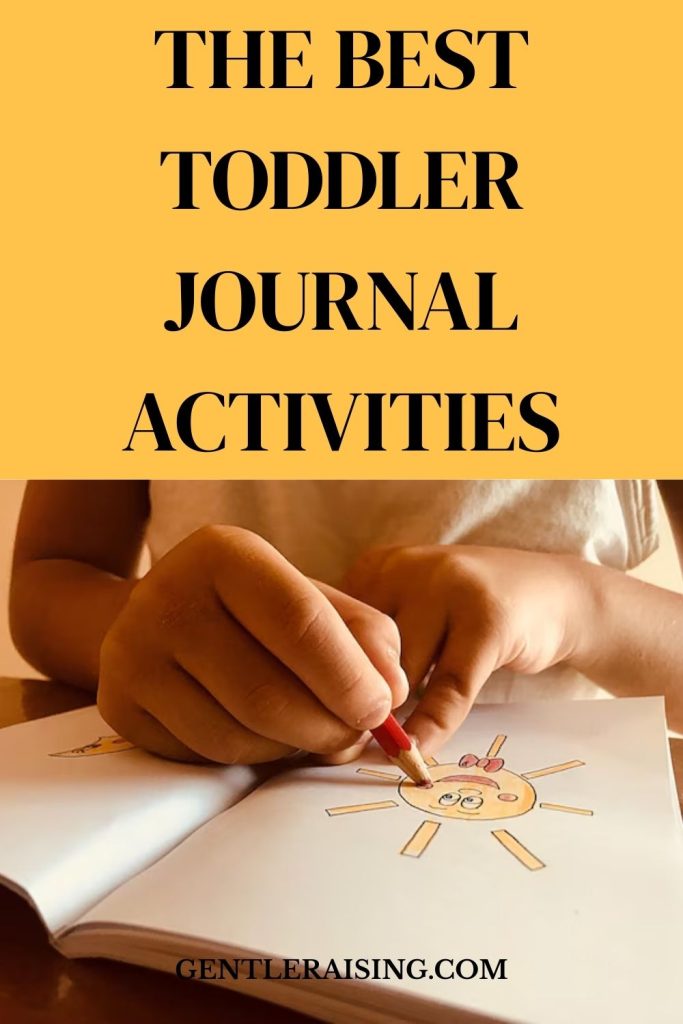
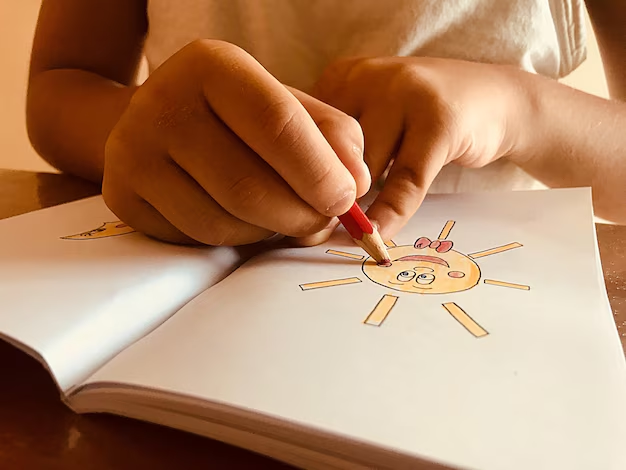
Toddlers love to draw (and sometimes chew crayons). An art journal is simply a blank sketchbook where their scribbles, stickers, and handprints live. You can add little captions under each masterpiece, like “Eli’s version of a dinosaur (we think).”
3. Shared Parent-Child Journals
This is a back-and-forth book where you and your toddler both contribute. They draw, you respond with a doodle or a note. It’s like a conversation on paper.
4. Gratitude Journals (Toddler Edition)
Of course, a toddler isn’t going to write “I’m grateful for stable housing.” But they might shout, “Cookies!” or “Grandma!” Capture that. A page with one word or one sketch a day builds a surprisingly beautiful gratitude record.
How to Start Without Making It Complicated
Parents already juggle enough, so journaling should never feel like an extra chore. Keep it light.
- Start small: Five minutes after dinner, one scribble before bed.
- Supplies matter (but don’t overthink): Crayons, washable markers, washi tape, glue sticks. A basic notebook works fine, though if you’re the type who loves pretty stationery, go for it.
- Pick a time: Morning routines, quiet afternoons, or bedtime wind-down. Linking journaling to an existing habit helps it stick.
- Let go of perfection: If the page is half covered in stickers and half covered in jelly, that’s fine. The mess is part of the story.
Digital fans, yes, you can adapt this too. Apps like Daylio or Notion can work if you prefer snapping photos and adding captions on the go. Just remember: toddlers are tactile creatures, and paper has its own magic.
Toddler Journal Activity Ideas (That Actually Work)
Alright, here’s the fun part. Think of these as springboards, not strict rules.
- “Today I Saw…” Pages: Ask your toddler what they saw that stuck out: “a red car,” “a puppy,” “a big puddle.” Write it down and let them draw alongside it.
- Sticker Stories: Give them a sheet of stickers and let them arrange them. Then you create a simple story together based on their placement.
- Handprint Art: Paint or stamp little handprints and add captions like, “Maya’s hands at age 2½.”
- Faces of Feelings: Draw circles and let your toddler fill in faces, happy, sad, and angry. Helps with emotional literacy.
- Seasonal Pages: Collect fall leaves, holiday gift wrap, or even sand from the beach. Glue them in, write a note about the day.
- Weather Tracker: Let them draw sunshine, clouds, or rain for the day. Bonus: adds a sense of time passing.
And if you want to stretch creativity, try adding sensory layers, like glueing in a piece of fabric from their favourite blanket. Toddlers love flipping through textures.
Journaling as Parenting Therapy
Here’s something parents don’t often admit: toddlerhood is exhausting. Journaling can be a lifeline.
Some parents use journals as a space to record tantrum tales, not just the screaming, but how they handled it, what worked, and what didn’t. Others use it to vent (with humour) about the fifth “No!” of the morning. Over time, these pages become reminders of growth, yours and your child’s.
There’s also joy in writing down the ridiculous. Like the day your toddler insisted on wearing winter boots in July. Or when they declared the dog was their brother. Recording these moments keeps humour alive on the harder days.
Making It a Habit (Without Pressure)
Consistency is helpful, but let’s be real, life with toddlers is unpredictable. Some days you’ll manage pages, some days you’ll barely keep your eyes open. That’s okay.
Tips to keep it flowing:
- Leave the journal where you’ll see it (coffee table, nightstand).
- Print out a few simple prompts and tape them on the fridge for quick ideas.
- Keep supplies in a basket so you’re not hunting for crayons at bedtime.
And most importantly, forgive yourself if you miss a week. Journals don’t need to be perfect records—they’re snapshots.
The Long-Term Magic of Toddler Journals
Fast forward a decade. Imagine handing your child a box filled with journals from their toddler years. Pages covered in wobbly stick figures, smudges of paint, and scribbled stories. That’s not just paper, it’s a time machine.
These journals:
- Become keepsakes for milestones you’d otherwise forget.
- Capture authentic toddler voices, their phrases, their humour.
- Support early literacy (teachers love when kids have been exposed to storytelling at home).
- Offer nostalgia, because you will miss the way they said “lellow” instead of “yellow.”
Common Roadblocks (And How to Tackle Them)
Let’s be honest: journaling with toddlers isn’t always smooth sailing.
- They refuse to participate. Solution: make it playful, stickers, stamps, even letting them “write” with your hand guiding theirs.
- You forget. Solution: pick one anchor moment (like bedtime). Even if you only jot down one funny sentence, that counts.
- The clutter takes over. Solution: Set aside a “journal basket” for supplies. Every so often, tape or glue loose papers inside.
- Paper vs. digital. No right answer here. Some parents swear by physical notebooks, others keep a private Instagram or digital scrapbook. The key is consistency, not format.
Final Thoughts: Start With One Page
Journaling with toddlers isn’t about creating Pinterest-perfect scrapbooks. It’s about pausing for a few minutes each day to capture a sliver of childhood. Some pages will be messy, others half-finished, but all of them will be real.
So grab a notebook, hand your toddler a crayon, and start today. Even one scribble is a memory saved. And years from now, you’ll be glad you did.