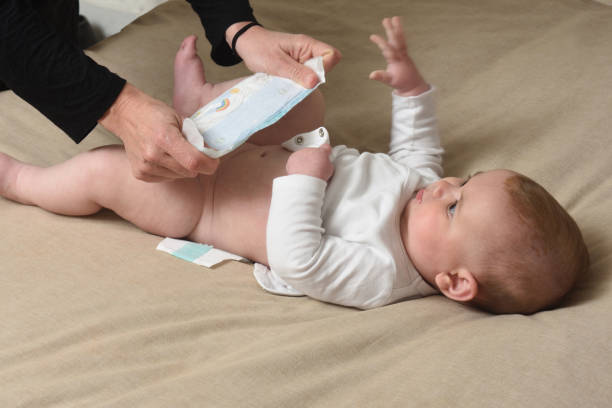
There’s a moment every new parent knows.
Your baby squirms. The diaper is clearly done for. And suddenly, somehow, you feel rushed even though no one is timing you.
Your heart rate jumps. You fumble with tabs. The wipes are just out of reach. And the baby? Oh, they sense it. They always do.
Now imagine the same diaper change, but smoother. Quieter. Almost… efficient. Not rushed. Not robotic. Just confident. Done in about a minute.
Sounds unrealistic? Honestly, it’s not. And no, this isn’t about turning parenting into a race.
It’s about reducing friction, mental, physical, and emotional, so diaper changes stop feeling like tiny emergencies and start feeling like just another thing you’ve got handled.
Let me explain.
Why “60 Seconds” Isn’t About Speed
When parents hear “quick diaper change,” they often picture frantic hands and shortcuts that feel wrong. That’s not what this is.
A fast diaper change isn’t fast because you rush.
It’s fast because nothing gets in your way.
No searching for wipes.
No rethinking your steps.
No pausing to decide what comes next.
It’s the same principle surgeons use in an operating room, or baristas use during a morning rush, everything has a place, and your body learns the order.
You’re not hurrying. You’re flowing.
And that flow matters more than you might expect, especially in those early weeks when your brain is foggy, and your patience is thin.
The Hidden Cost of Slow Diaper Changes
Here’s the thing no one says out loud: long diaper changes aren’t just inconvenient, they’re overstimulating.
For babies:
- Cold air
- Bright light
- Too much wiping
- A parent hovering and hesitating
For parents:
- Decision fatigue
- Back strain
- That creeping thought of “Why is this taking so long?”
You know what? Babies read that tension instantly. When you move with uncertainty, they wiggle more. When you hesitate, they cry sooner. It’s not manipulation, it’s biology.
Calm hands move faster. Confident hands finish sooner.
The Psychology Behind a Fast, Calm Change
There’s a reason experienced parents seem almost casual during diaper changes.
They’re not better. They’re practised.
Your brain loves patterns. Once your diaper routine becomes muscle memory, you stop spending mental energy on each step. And when your brain relaxes, your body does too.
Think of it like tying your shoes. The first few times, it’s slow. Later, it’s automatic.
The goal isn’t perfection. It’s predictability.
The Setup That Makes or Breaks the Minute
If diaper changes feel long, the problem usually starts before the diaper comes off.
Here’s what actually saves time.
Your Changing Station (Keep It Boring on Purpose)
You don’t need a Pinterest-worthy setup. You need consistency.
At arm’s reach:
- Diapers (stacked, not stuffed into a drawer)
- Wipes (opened before you start, always)
- Barrier cream (cap loosened)
- A clean onesie, just in case
That’s it. Extras slow you down.
Many parents swear by brands like Pampers Swaddlers, Huggies Little Snugglers, or Millie Moon because the tabs reseal easily when you mess up mid-change. Wipes matter too; thicker wipes like WaterWipes or Honest Company mean fewer passes.
Fewer passes = less time = less irritation.
The 60-Second Diaper Change, Step by Step
Let’s walk through it. Not rigidly, real life isn’t a stopwatch, but close enough.
Seconds 0–10: Prep Before the Diaper Comes Off
Open the clean diaper and slide it under the baby before undoing anything.
This alone saves more time than people realise.
Undo tabs. Pause. Deep breath.
Seconds 10–25: The Dirty Diaper Does the First Clean
Fold the front of the dirty diaper down and use it to wipe the bulk mess away. Yes, really.
This keeps wipes cleaner and cuts down how many you need.
Seconds 25–40: Wipes, But With Intention
One direction. Front to back. Confident strokes.
You don’t need to scrub. Over-wiping causes redness and delays you later.
If it’s a boy, a gentle hand over the area helps prevent surprise fountains. You learn this once. Then forever.
Seconds 40–50: New Diaper Up, Old One Gone
Slide the dirty diaper away. Bring the clean one up.
Tabs on, not too tight, not loose. Muscle memory does this faster than thinking.
Seconds 50–60: Cream Only If Needed
Here’s a mild contradiction: sometimes skipping cream makes changes faster overall.
If the skin looks good, move on. If not, a thin layer. Not frosting a cake.
And… done.
Where Parents Lose Time Without Realising
Small habits add minutes over a day. And hours over a week.
Common slowdowns:
- Reaching for wipes one at a time
- Cleaning “just one more time”
- Stopping to talk, scroll, or second-guess
- Re-dressing the baby before the diaper is fully secure
Honestly, the biggest one? Trying to be gentle in a hesitant way.
Gentle can be confident. Gentle can be quick.
Midnight Changes and the Case for Minimalism
Nighttime is different. The goal shifts.
You’re not aiming for sparkling clean. You’re aiming for back to sleep.
Low light. Minimal talking. Fewer wipes. No outfit changes unless necessary.
Some parents keep a separate night station with:
- Dim lamp
- Overnight diapers
- Thicker wipes
Season matters too. In colder months, fast changes keep babies warmer and calmer. In summer, airflow helps, but bugs and sweat change the game.
Adapt. That’s parenting.
Blowouts, Wiggles, and Other Reality Checks
Let’s be clear: not every diaper change fits into 60 seconds.
Blowouts laugh at timers.
Wiggly babies invent new physics.
And that’s fine.
The point is that most changes can be simple, which saves your energy for the messy ones.
When things go sideways, slow down. Reset. Talk to your baby. This isn’t a failure, it’s flexibility.
Diaper Changes as Quiet Bonding Moments
Fast doesn’t mean cold.
Eye contact. A soft sentence. A familiar rhythm. Babies love predictability, even when it’s quick.
Some parents hum the same tune every time. Others narrate in a low voice. These little rituals don’t add time; they reduce fussing.
Connection doesn’t need a long window. It needs presence.
When You’re Parenting as a Team
Here’s something worth saying: diaper changes go smoother when partners do them the same way.
Not identical. Just predictable.
When both parents:
- Use the same station
- Follow a similar flow
- Stock supplies the same way
…hand-offs are easier. No re-learning. No silent corrections.
This matters at 3 a.m. Trust me.
The Confidence Curve (It Sneaks Up on You)
At first, every diaper change feels like a task.
Then one day, you finish and realise you didn’t think about it at all.
That’s the win.
Not speed. Not perfection. Just ease.
You know what? That ease spreads. To feedings. To bedtime. To the way you carry yourself as a parent.
Final Thought: It’s Not About the Minute
The 60-second diaper change isn’t a rule. It’s a signal.
A signal that you’re finding your rhythm.
That your hands know what to do.
That you trust yourself a little more than yesterday.
Some days will be slow. Some will be messy. Some will surprise you, in good ways.
And one quiet day, you’ll change a diaper, toss it away, and realise: That felt easy.
That’s when you know you’re doing just fine.