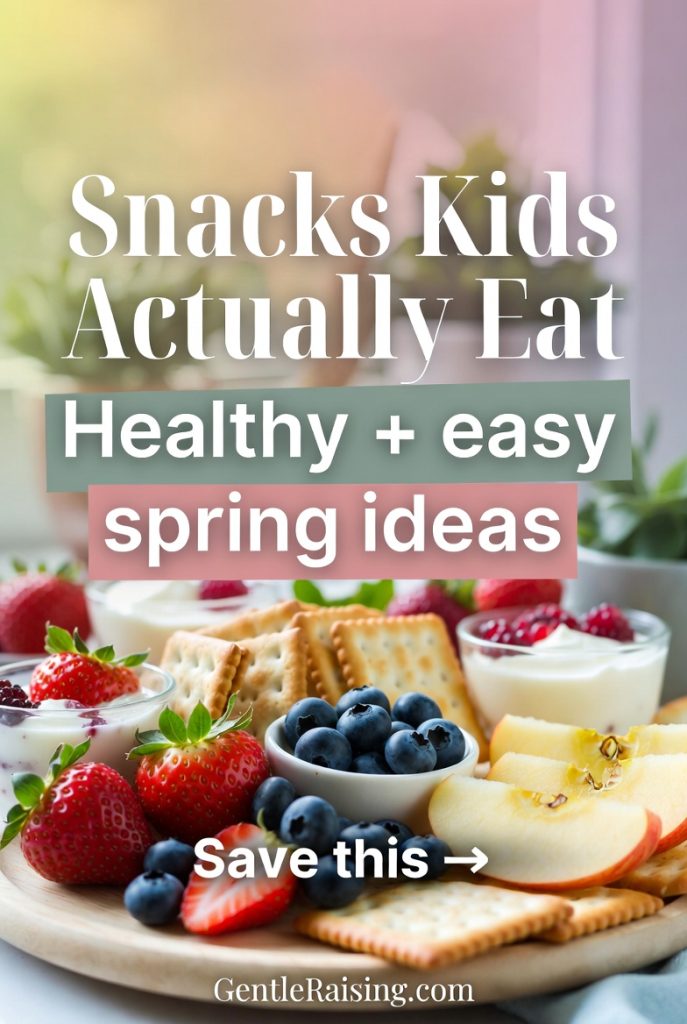
Fresh, Fun & Actually Eaten: A Parent’s Real-World Guide
There’s something about spring that makes everyone, even the world’s most committed chicken-nugget loyalist, a little more open to eating something colourful. Maybe it’s the weather. Maybe it’s the promise of eating outside on a blanket for once. Whatever the reason, spring is genuinely the best time to sneak new foods into your kid’s rotation, and if you play it right, they’ll think it was their idea.
This isn’t a list of perfectly plated Pinterest snacks that take forty-five minutes and a mandoline slicer.
These are the real stuff snacks that hold up in a lunchbox, survive a car ride to the park, and actually get eaten. By actual children. Those who have opinions.
Whether your kid is a toddler who treats every meal like a negotiation or an eight-year-old with surprisingly strong feelings about dipping sauce, there’s something here. Let’s get into it.
Why Spring Is Basically a Snack Goldmine
Here’s the thing about spring produce: it’s genuinely exciting. Strawberries that actually taste like strawberries (not those sad February ones). Sugar snap peas are so sweet you’d think someone added honey. Cucumbers with that satisfying crunch. After a winter of apples and oranges on repeat, the produce aisle suddenly feels worth lingering in.
Kids respond to novelty, which is something parents learn pretty early. The same baby carrot served for the hundredth time gets ignored. But a radish cut into a little flower shape, suddenly, everyone’s curious. Spring gives you a natural excuse to introduce textures and flavours that weren’t available a month ago, and that newness is half the battle.
There’s also the outdoor element. Snacks eaten outside, for reasons no food scientist has fully explained, taste better. A bowl of grapes on a picnic blanket with a slight breeze? Elite snacking. The same grapes at the kitchen table? Fine. Unremarkable. Use the season.
The Snacks That Actually Work (And Why)
Strawberry Yoghurt Dip with Anything Dippable
Dipping sauce is a parenting cheat code, and I’ll stand behind that fully. Kids who won’t touch a vegetable will eat it enthusiastically if there’s a reason to dip. And strawberry season is the perfect excuse to make a dip that’s actually nutritious.
Blend about half a cup of fresh strawberries with a cup of plain Greek yoghurt and a teaspoon of honey. That’s it. Serve it with apple slices, graham crackers, pretzels, banana chunks, honestly, whatever you have. The pink colour helps too. Kids are extremely susceptible to pink food.
Greek yoghurt adds protein and probiotics, which means you’re not just handing them dessert, you’re sneaking in something genuinely good for their gut. Worth noting: if your toddler is under one, skip the honey and just use ripe strawberries for natural sweetness.
Sugar Snap Peas No, Really
I know. You’ve tried peas before. Regular peas. Mushy peas. The peas that get pushed to the side of the plate every single time. Sugar snap peas are different, and once your kid tries one genuinely crunchy, genuinely sweet, eating the whole pod, the relationship changes.
Spring is peak season for them, which means they’re at their sweetest right now. Serve them cold from the fridge with a little hummus or ranch on the side. Let kids pull them apart themselves if they’re old enough. There’s something about the hands-on element that makes food more interesting. Toddlers especially seem to enjoy the snap.
They’re rich in vitamin C and fibre, which matters, but honestly, the main selling point is that most kids actually like them once they’ve had them cold and crunchy. Don’t overthink it.
Cucumber Boats with Cream Cheese and Everything Bagel Seasoning
This one sounds fancier than it is. Cut a cucumber in half lengthwise, scoop out the seeds with a spoon, spread some cream cheese inside, and sprinkle with everything bagel seasoning. Done. It takes four minutes and looks like something a food blogger made, which means kids find it impressive.
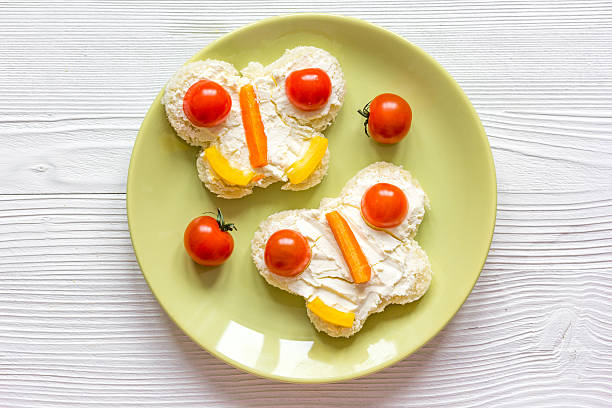
The ‘boat’ shape matters more than you’d think. Something about food that has a visual concept, a boat, a face, a little nest, gets more engagement from kids than the same ingredients in a bowl. You’re not just making a snack; you’re making a prop.
Cucumbers are mostly water, which is genuinely useful in spring when kids are running around outside, and you’re trying to keep them hydrated without fighting about it. The cream cheese adds fat and protein. And everything bagel seasoning you can find at Trader Joe’s brand everywhere now has just enough flavour to make plain cream cheese feel interesting.
The Classic Spring Fruit Skewer (With a Twist)
Fruit on a stick. It sounds too simple to mention, but there’s genuine psychology behind why kids eat more fruit when it’s on a skewer than when it’s in a bowl. Something about the format makes it feel like a treat rather than a snack they’re being asked to eat.
For spring, lean into the season: strawberries, pineapple chunks, kiwi slices, green grapes. Alternate colours if you have a moment, the visual makes kids more likely to try each piece, even the ones they’d normally skip. For younger toddlers, skip the stick entirely and just serve the same fruits mixed on a plate; the skewer is a choking hazard concern worth paying attention to.
The twist: a small cup of coconut yoghurt for dipping. Coconut yoghurt has a slightly tropical flavour that pairs remarkably well with strawberries and pineapple, and the dipping ritual, as established, is always a win.
Avocado Toast Fingers
Yes, avocado toast. For kids. I’m serious. Children who won’t touch avocado in any other context will often eat it on toast because it looks like something their parents eat, and kids are oddly interested in that.
The key is the cut. Make toast, mash avocado on top with a pinch of salt and a squeeze of lemon, then cut into finger-width strips. Long, grabbable pieces work better for toddlers and younger kids than bite-sized squares; they can hold one end and gnaw, which feels more independent and is apparently important.
Avocado has healthy fats that are genuinely important for brain development, which every paediatrician will tell you. But honestly, the more useful fact for daily life is that it’s filling. A couple of avocado toast fingers and some fruit, and you’ve bought yourself at least two hours before the next snack request.
Cheese Quesadillas with Spinach (Hidden in Plain Sight)
The hidden vegetable approach gets a complicated moral debate in parenting circles. Some people feel like it’s deceptive, others feel like it’s just practical. Here’s my honest take: if your three-year-old is getting spinach in their body, that’s a good outcome regardless of the delivery method.
A small flour tortilla, shredded mozzarella or cheddar, and a tiny handful of fresh baby spinach leaves are placed under the cheese before it melts. The cheese covers the spinach visually, and once it’s melted in, the texture becomes almost imperceptible. Cut into triangles. Done.
As kids get older, you can start making this more transparent: ” This has spinach in it, it’s what makes it so good’and gradually they start accepting it as a normal ingredient. But in the toddler years, pick your battles.
A Word About Presentation (Because It Actually Matters)
You’ve probably already discovered that the same food, arranged differently, gets completely different responses. It feels slightly ridiculous, like you’re doing visual merchandising for a toddler, but the research backs it up. Kids are significantly more likely to eat food that’s been arranged in a visually interesting way.
This doesn’t have to be elaborate. A silicone bento-style plate (OXO Tot and Munchkin both make good ones) separates foods without them touching, which matters enormously to a lot of kids. Using small cookie cutters to cut sandwiches or cheese into shapes takes thirty extra seconds and dramatically changes the reception. Serving things in a small paper cup instead of on a plate sometimes does the trick. Novelty packaging creates a novelty experience.
Spring also gives you the easiest presentation hack of all: colour. Strawberries are red. Peas are green. Carrots are orange. A plate that looks like it belongs in a Pantone spring collection gets more engagement than a beige plate. Use that to your advantage.
What to Do When They Still Say No
Here’s the part nobody puts in the cheerful snack roundups but probably should: sometimes kids just say no. To everything. In principle. And that’s developmentally normal, genuinely frustrating, and not a reflection of your cooking or your parenting.
The feeding therapist and pediatric dietitian consensus, pulled from people like Ellyn Satter, whose ‘Division of Responsibility’ framework has influenced a lot of modern thinking about kids and food, is that your job is to decide what’s offered, when, and where. Their job is to decide whether and how much. That division of labour reduces the power struggle significantly, though it takes some adjustment to trust.
What that means practically: keep offering the new snack alongside something you know they’ll eat. Don’t make a big deal of whether they try it. Studies suggest kids may need to encounter a new food ten to fifteen times before accepting it, which sounds exhausting but is also weirdly reassuring. Today’s rejected strawberry might be next month’s favourite thing.
Involve them in the prep when you can. Kids who help wash strawberries, or who peel their own snap peas, have more investment in the outcome. It doesn’t always translate to eating, but it builds familiarity with food in a low-pressure way.
Snacks That Travel Well (Because Spring Means Going Somewhere)
Spring usually means more time outside — parks, playgrounds, the school run in better weather, the occasional impromptu picnic when the weather surprises you. So it’s worth thinking about which snacks actually hold up in transit versus which ones look great on a kitchen counter and fall apart in a bag.
Things that travel well: whole fruit (oranges, apples, bananas, grapes in a sealed container), snap peas and baby carrots, crackers with individual cheese portions, squeezable yoghurt pouches, and trail mix. Things that do not travel well: anything with dipping sauce unless you have a leak-proof container, cut avocado (oxidises quickly), and anything requiring refrigeration that you don’t have a cold pack for.
A few products worth knowing about if you don’t already: Stasher bags are silicone reusable pouches that seal well and are great for fruit.
LunchBots and PlanetBox make stainless steel bento-style containers that hold compartments without leaking into each other. For squeezable yoghurt on the go, Siggi’s makes tubes that aren’t full of added sugar, which is rarer than you’d think in the kids’ yoghurt aisle.
Quick Ideas When You Have Basically No Time
Not every snack moment has a fifteen-minute prep window. Sometimes someone is hungry right now, and you have three minutes before chaos ensues. Here are things that genuinely take under five minutes and still qualify as a real snack rather than just handing someone a bag of crackers and calling it a day.
- Sliced banana with a small scoop of peanut butter or almond butter on the side
- Whole milk string cheese and a handful of grapes
- Apple slices with a small cup of sunflower butter (nut-free for school snacks)
- Frozen peas straight from the freezer, still frozen. Toddlers find this endlessly entertaining, and it doubles as teething relief.
- Whole-grain crackers with a triangle of Laughing Cow cheese spread on top
- A cup of berries with a sprinkle of granola and a small pour of milk, basically a deconstructed breakfast parfait, zero effort required
- Half a whole-grain waffle (toasted from frozen) with a thin smear of cream cheese and a few strawberry slices
The frozen pea one, specifically, is underrated. Babies and toddlers love the cold, the texture, and the size, small enough to self-feed confidently once they have the pincer grasp. It requires absolutely no preparation and produces zero mess. In the hierarchy of toddler snack wins, frozen peas are quietly elite.
The Snack That Feels Like a Party (Spring Edition)
Sometimes the occasion calls for something a little more festive, a birthday treat that doesn’t require the full sugar commitment of cake, an after-school snack for a playdate, or just a Tuesday where everyone needs a small win. This one hits that spot.
Watermelon ‘pizza.’ Cut a round slice of watermelon about an inch thick, then top it like a pizza: a thin spread of Greek yoghurt as the ‘sauce,’ sliced strawberries, blueberries, a few kiwi pieces, and a drizzle of honey. Cut into wedge slices to serve. It looks spectacular for approximately four minutes of effort, and kids treat it like an event.
The watermelon itself is at its peak in spring and summer, so it fits the season perfectly. And the ‘pizza’ framing again, the concept carries a lot of weight with kids, making it feel like a treat rather than fruit they’re being offered for the eighth time this week.
You know what’s wild? Adults love this too. It shows up at brunch tables and potlucks for good reason. It’s one of those snacks that works across ages without condescension in either direction.
A Note on Allergies, Sensitivities, and the Real World
Food allergies are more common in children than ever before. Roughly one in thirteen kids in the US has a food allergy, according to Food Allergy Research & Education (FARE). If you’re navigating a peanut allergy, a tree nut sensitivity, a dairy intolerance, or a wheat issue, some of the suggestions here need adjusting, and that’s completely straightforward to do.
Sunflower seed butter works anywhere almond or peanut butter does. Dairy-free yoghurts, oat-based or coconut-based, work well in the dip recipes. Corn tortillas instead of flour for the quesadilla. Rice cakes instead of crackers for anything requiring a crunchy base. The framework of what makes a good snack protein, something fresh, something with flavour, stays the same regardless of the substitutions.
If you’re in the early stages of introducing allergens to a baby following the LEAP study guidance (which showed that early introduction of peanuts actually reduces allergy risk in non-high-risk infants), talk to your paediatrician about timing and format. This is one area where professional guidance is genuinely worth getting rather than winging it.
Making Snack Time Actually Enjoyable Again
Somewhere in the exhaustion of daily feeding, the negotiating, the refusing, the ‘I don’t like that anymore’ about something they loved last week, it can start to feel like a chore. Which it sometimes is. That’s just honest.
But spring has this low-key way of resetting things. The produce changes. The weather shifts. There’s a reason to go outside and eat on a blanket or hand someone a strawberry straight from the farmers’ market bag while you’re still walking through the parking lot. Those moments are snack time at its best, no plates, no presentation, just something good and fresh and seasonal.
Permit yourself to keep it simple when simple is all you have. And when you have a little more energy, try the watermelon pizza or the cucumber boats and watch your kid’s face do something genuinely delighted. That’s worth something.
You’re doing fine. The fact that you’re thinking about this at all, reading an article about spring snacks for your kids, means you’re engaged and caring, which is what matters most. The perfect snack is the one they eat, and with a season this good on your side, you’ve got better odds than you think.
Seasonal Spring Snack Cheat Sheet
Quick-reference: spring produce to keep stocked
- Strawberries peak season, versatile, universally loved
- Sugar snap peas are sweet, crunchy, and kid-friendly raw
- Cucumbers are hydrating, mild, and easy to prep in any format
- Kiwi is high in vitamin C, vibrant green colour kids find interesting
- Avocado has healthy fats, is filling, and works in multiple formats
- Watermelon arrives late spring, hydrating, naturally sweet
- Asparagus roasted into fries, surprisingly snackable
- Peas, fresh or frozen, both work well and are often better received than expected
Keep your kitchen stocked with Greek yoghurt, hummus, cream cheese, and a reliable dipping vehicle (crackers, pretzels, bread), and you can build a decent spring snack from almost any combination of the above. That’s it. That’s the whole system.
Happy snacking.