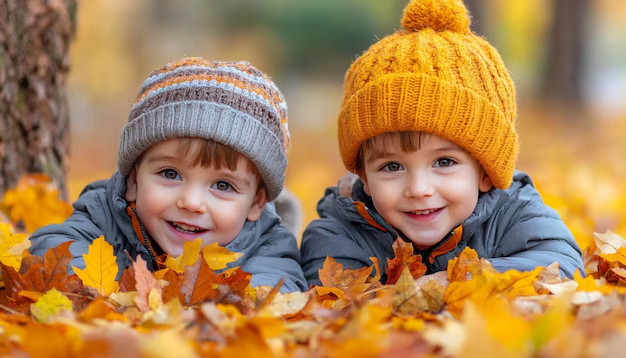
There’s something almost tender about fall, the way the air feels a touch cooler on your face, or how the trees seem to whisper when the wind brushes through them. If you’re a parent, you’ve probably watched your kids run outside, jackets half-zipped, yelling about something you can’t quite hear. And then, just like that, they’re lost in a swirl of crunchy leaves, giggles echoing across the yard.
And honestly? There’s a special kind of magic when siblings play during fall.
It’s like the season softens them a bit. Maybe it’s the novelty of colored leaves, or maybe it’s just harder to stay annoyed at your brother when you’re both knee-deep in gold and rust-colored piles.
Whatever the reason, fall has a way of nudging kids toward cooperation, even if five minutes ago they were arguing about who got the blue cup.
This article is here to help you soak all that in, intentionally. And not in the Pinterest-perfect way (though if you are someone who uses pumpkin-shaped cookie cutters before breakfast, no judgment), but in the “real-life parenting” way. You’ll find games, gentle parenting tweaks, creative projects, and a few emotional breadcrumbs worth tucking away. Because you know what? These little seasonal pockets of childhood pass quickly. And siblings, even the ones who constantly poke each other, are quietly building memories that will outlast the leaf piles themselves.
Why Fall Makes Kids Play Differently (and Why That Matters)
If you think back to your own childhood, chances are that some of your most vivid memories involve seasons, the first snow, summer evenings that stretched too long, or the week the trees changed color seemingly overnight. Fall holds an emotional blueprint for many adults, and that matters more than we realize.
Kids feel seasons with their whole bodies. They notice the cold noses, the smoky hint of distant fires, the way the wind actually sounds different. Developmentally, this matters because sensory environments shift the way children interact. When everything looks new and smells new and feels new, the brain pays attention differently. It’s a small boost to curiosity, teamwork, and the willingness to try something outside the usual routine.
And let’s be honest: siblings often need that invitation, right? A seasonal setting gives them a “third thing” to focus on. Something that isn’t the remote control or a piece of Lego someone refuses to return.
I always think of fall as a natural reset button for families. The warmth of summer fades; the holiday rush hasn’t started yet. It’s just… steady. A little quieter. That quietness opens a door for siblings to rediscover each other without the background noise of routine squabbles.
Leaf Pile Magic: The Low-Effort, High-Joy Starter Activity
Let’s start with the most obvious activity, the classic leaf pile. But stay with me here, because there’s more going on than the usual jump-and-laugh moment.
A leaf pile is one of the easiest sibling bonding setups you can create. It doesn’t require a shopping list or a carefully timed snack break. It’s basically the fall version of a sand pit. Kids see a pile and know instantly what to do.
But what most parents don’t realize is that this activity naturally encourages joint effort:
- They gather leaves together.
- Someone leads; someone follows.
- They discuss where to put the pile.
- They negotiate who jumps first.
- They experiment together, tossing leaves, burying each other’s arms, pretending the pile is a “castle” or a “nest.”
Even kids who usually compete for attention often fall into an easy rhythm here. The task is too fun, too visually rewarding, for them to cling tightly to their usual dynamics.
A few variations, because variety keeps siblings invested:
- “Leaf Volcano”
Ask them to pile leaves around a small hill or a ball, then jump to “explode” it. Works wonderfully with siblings who avoid working side by side because they suddenly share a single goal. - “Leaf Spa”
One child lies down while the others gently cover them with leaves until only their face shows (yes, it gets silly). This works remarkably well for siblings who crave closeness but don’t always know how to show it. - Toddler-Friendly Version
Skip the big jumps. Create small “baby piles” and let your toddler scatter them with hands while older siblings build bigger piles nearby.
And here’s the thing: the minute you stop caring about how neat the yard looks, kids relax. When you say yes to a mess, and fall is practically designed for this, you’re giving siblings permission to connect freely. That freedom matters.
Games That Build Sibling Warmth Without Them Realizing It
Some games feel like games. Others, especially the fall-themed ones, double as quiet bonding engines. And you don’t need a coaching handbook to make them work.
The Leaf Treasure Hunt
Scatter a handful of small “treasures” (think: smooth rocks, small wooden tokens, acorns with washable-marker stars). Hide them in the leaves or place them around the yard. Then let the kids hunt.
But, here’s the helpful twist, give joint clues.
“Your treasure is under a red leaf that’s shaped like a star.”
Or: “Look for something hiding near the fence, but you’ll only find it if you work together.”
Kids don’t even notice they’re collaborating. That’s the beauty of it.
The Leaf Olympics
Keep it light, nothing official:
- Fastest leaf scoop
- Highest leaf toss
- Most creative jump
- Team sprint carrying handfuls of leaves
The competition gives them energy; the teamwork gives them softness.
The Great Leaf Race
Create short running lanes and let them move leaves from one spot to another using spoons, buckets, old sand shovels, whatever you have. They shout, they run, they bump into each other, and eventually someone falls down laughing.
These games create tiny, shared victories. And shared victories, according to pretty much every child development specialist who’s ever studied sibling dynamics, are relationship gold.
Creative Projects for Kids Who Love Crafting (or Need a Calm Moment)
While outdoor games help release energy, creative fall projects create the opposite vibe—quiet teamwork. It’s that moment when your kids, who were just yelling across the yard fifteen minutes ago, suddenly sit side by side comparing crayons or debating which leaf looks “prettier.”
Leaf Rubbings
All you need:
- Paper (grocery bags are great)
- Crayons
- A handful of flat leaves
Kids learn something without realizing it: textures, patterns, pressure. But the real charm is when one sibling gives the other a crayon because “this color works better.” Those moments count.
Sibling-Made Leaf Crown
Have them work together on a single crown, one collects leaves, one arranges them, one tapes or glues. There’s something heart-melting about seeing siblings walk around wearing something they worked on together.
A Simple “Family Tree” Mural
Tape a big sheet of kraft paper to a wall. Draw a simple trunk. Let the kids add leaves they found outside. You can even write names on them, grandparents, cousins, pets. A subtle way for them to understand connection.
Crafting slows the whole world down for a little while. And honestly, who doesn’t need that during the parenting years?
Outdoor Adventures That Feel Bigger Than They Are
Sometimes the magic isn’t in the activity itself, it’s in the way you frame it. When you call it an “adventure,” kids believe you.
The Backyard Fall Trail
Create a simple path using stones, sticks, or leaf piles. Then give siblings roles:
- Explorer
- Map keeper
- Safety officer
- Photographer (even if it’s with an old phone set to airplane mode)
This tiny shift in structure often reduces arguments, because each child has an identity within the play.
Mini Nature Walk
Ask them to find:
- Something smooth
- Something that smells like fall
- Something shaped like a heart
- Something that reminds them of each other
That last one always surprises parents. Kids say things like, “This leaf looks like your hair when it’s messy,” or “This stick is strong like you.” Those small moments stick.
Shadow-and-Sun Games
Fall sunlight is different, angled, warm, and kind of dramatic. Use it:
- Shadow tag
- “Make your shadows kiss”
- Long shadow races
It seems silly. But those siblings? They’re building trust in tiny increments.
For Siblings Who Struggle to Get Along. Gentle Tweaks That Help
Let’s be real. Not all siblings fall into easy harmony just because the leaves look pretty. Some pairs (or trios) need a bit of structure to thrive.
Here are tweaks that don’t feel like “rules”:
1. Shared Roles Instead of Rival Tasks
Instead of “you rake, you gather,” try:
- “You’re both Official Leaf Architects today.”
- “You two are the judges of the Leaf Olympics, who wants which category?”
When siblings share a role, power struggles soften.
2. Timers Can Be Helpful
Especially when kids want the same shovel or bucket. A simple kitchen timer works wonders. And kids tend to respect the authority of a beeping object more than a parent’s repeated reminders.
3. Rotate Leadership
Tell them:
“Okay, Sam leads the treasure hunt for five minutes. Then Emma’s turn.”
You’d be surprised how many children behave more kindly when they know their turn is coming.
4. Use “Spotter Jobs”
One child is the “spotter,” the other is the “finder.” These roles swap quickly, but the structure prevents fights.
These tweaks don’t eliminate conflict, but they give kids tools to practice cooperation. And honestly, the messiness is part of the point. If siblings never argued, they’d never learn the emotional skills we hope they carry into adulthood.
Memory-Making Moments Parents Forget to Capture
Here’s something parents talk about later, years later, when their kids are too big to fit in leaf piles:
“I wish I captured more small moments.”
You don’t need a full photo shoot. Sometimes it’s:
- A picture of them walking away from you, holding hands
- The way leaves get stuck in their hair
- Their mismatched gloves
- The giant smile after someone slides down a small hill
These tiny snapshots become anchors in your memory. And in theirs.
And sometimes, this might sound silly, you should step away from photos altogether. Stand there with your coffee or your coat zipped up to your chin, watch them quietly, and let your brain remember what the moment feels like instead of freezing it on a screen. Kids notice that kind of presence.
When You Want Indoor Fall Fun Instead of Muddy Clothes
Parents everywhere know the feeling: “It looks cold. And those shoes? Still wet from yesterday.” Indoor fall activities make bonding easier without the logistical overhead.
1. Indoor Leaf Toss
Use paper leaves or felt ones. Siblings toss them into baskets from different distances. Easy, low noise, surprisingly fun.
2. Fall Pretend Play
Try:
- “Leaf Store”
- “Nature Café”
- “Forest Animal Hospital”
Siblings naturally take complementary roles, chef and customer, vet and animal, cashier and collector.
3. Cozy Movie-and-Snacks Ritual
Pick a fall movie (think: Kubo and the Two Strings, Over the Moon, Pooh’s Grand Adventure). Let siblings build a blanket nest together. This is slower bonding, but bonding nonetheless.
Closing Thoughts: The Season That Softens Everything
Fall has this quiet way of reminding parents to slow down, not dramatically, just enough to notice things again. Maybe that’s why kids seem happier playing together this time of year. Maybe they’re responding to the way we slow down and breathe more deeply.
Sibling relationships can be messy and noisy and wonderfully unpredictable. But give kids a yard full of leaves, a few simple games, a project or two, and a season painted in oranges and reds, and something shifts.
They laugh. They negotiate. They chase each other. They cooperate without realizing they’re doing something meaningful. And these tiny interactions, repeated over weeks, form the foundation of a relationship that lasts long after the leaf piles collapse.
So go ahead. Let them run outside in mismatched socks. Let them build a leaf mountain. Let them yell for you to “watch this!” even if they’ve already yelled it five times.
It’s fall. Let the season do its work.
