Let’s be honest for a moment.
Most parents hear the phrase sensory table and picture something expensive, Pinterest-perfect, and frankly… exhausting. A colour-coded setup. Wooden bins. Matching scoops. A toddler calmly pouring rice while smiling softly at the sunlight.
You know what? Real life rarely looks like that.
Real life looks more like spilt lentils, curious fingers, and a child who’s deeply focused while you’re wondering if this activity is actually doing anything useful. Spoiler: it is. More than you might think.
Sensory table activities aren’t just “busy play.” They’re foundational experiences that shape how children think, move, feel, and regulate themselves. Quietly. Gently. Almost unnoticed.
Let me explain.
So, What Is a Sensory Table, Really?
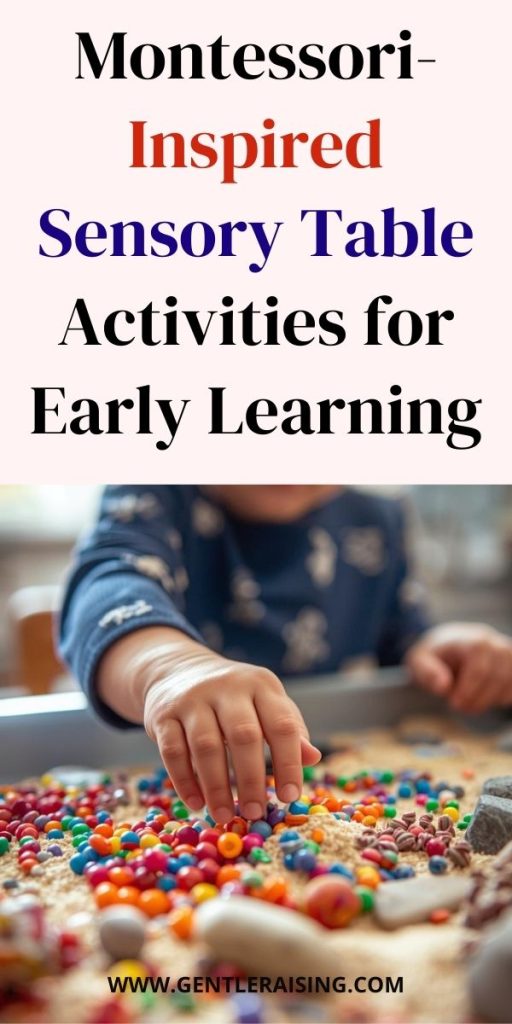
At its core, a sensory table is simply a space, any space, where children explore materials using their senses. Touch. Sight. Sound. Sometimes smell. Occasionally taste (yes, that happens).
It can be:
- A plastic storage bin on the kitchen floor
- A shallow box on a coffee table
- A water tray on the balcony
- Even a baking dish placed on a towel
No fancy labels required.
And here’s the part that often gets missed: the table itself doesn’t matter nearly as much as the experience.
Children aren’t looking for perfection. They’re looking for feedback. Texture. Resistance. Cause and effect. That tiny moment of “Ohhh, when I do this, that happens.”
That’s learning. Real learning.
Why Sensory Play Matters (More Than We Were Told)
Sensory play sounds soft and gentle, and it is, but its impact runs deep.
When children scoop, pour, squeeze, stir, or sift, they’re doing several jobs at once:
- Building neural pathways
- Strengthening fine motor skills
- Practising problem-solving
- Learning emotional regulation
And they’re doing it without worksheets, flashcards, or adult-led instruction.
Honestly, it’s one of the most efficient learning formats available to young children.
Occupational therapists use sensory play to support focus, emotional balance, and coordination. Early childhood educators rely on it for language growth and pre-writing skills. Parents? We often underestimate it because it looks too simple.
Simple doesn’t mean small.
The Brain–Body Connection (Without the Heavy Science)
Here’s the thing: young children don’t learn primarily through listening. They learn through movement and sensation.
When a toddler runs their fingers through sand or presses playdough flat, sensory receptors in the skin send messages straight to the brain. Those messages help the brain organise information, what feels safe, what feels new, and what requires caution.
Think of sensory play like traffic control for the nervous system. It helps sort signals, reduce overload, and create calm focus.
That’s why many kids seem more settled after sensory play, not more hyper.
When Can You Start Sensory Table Activities?
Short answer? Earlier than you think.
Babies (6–12 months)
At this stage, sensory play is mostly supervised exploration:
- Water splashing
- Soft fabric textures
- Large, safe objects to grasp
No table needed. A towel on the floor works just fine.
Toddlers (1–3 years)
This is prime sensory play time. Toddlers crave repetition, texture, and physical interaction.
- Pouring beans
- Scooping rice
- Squishing mud
- Floating toys in water
Expect a mess. It’s part of the deal.
Preschoolers (3–5 years)
Sensory play becomes more imaginative:
- Pretend cooking
- Sorting and categorising
- Simple science-style experiments
They’re still using their senses, but now with intention and story.
Setting Up a Sensory Table Without Losing Your Mind
Let’s keep this practical.
You do not need a dedicated sensory table. You need:
- A container
- A base material
- A few tools
That’s it.
Containers that work well:
- Under-bed storage bins
- Large baking trays
- Dish tubs
- Kiddie pools (outside)
Tools kids love:
- Measuring cups
- Spoons
- Funnels
- Old kitchen whisks
- Small bowls
You probably already own most of this.
A Quick Word on Safety (Because It Matters)
Sensory play should feel free, but not careless.
A few simple rules:
- Avoid choking hazards for children under three
- Supervise water play closely
- Watch for mouthing (especially with grains or beads)
- Stop an activity if a child seems distressed
Sensory play should invite curiosity, not anxiety.
Everyday Materials That Work Surprisingly Well
You don’t need speciality kits. Some of the best sensory materials are already in your pantry or backyard.
- Rice or lentils
- Oats
- Cornmeal
- Water
- Ice cubes
- Soil
- Leaves
- Pinecones
Honestly, children don’t care where the material came from. They care how it feels.
Dry Sensory Table Activities (Low-Mess Favourites)
Dry materials are often a good starting point, especially indoors.
Ideas to try:
- Rice with cups and scoops
- Oats with toy animals
- Dry beans with funnels
- Cornmeal for finger drawing
These activities support hand strength, focus, and coordination.
And yes, some will end up on the floor. A small mat underneath helps. A deep breath helps more.
Wet Sensory Play (Yes, It’s Worth It)
Water play can feel intimidating. But it’s incredibly regulating for kids.
Simple setups:
- Floating lids and cups
- Sponges to squeeze
- Plastic animals to “wash”
- Ice cubes melting in warm water
Water play teaches cause and effect, temperature awareness, and patience. Plus, many children find it deeply calming.
Messy Sensory Play That Builds Confidence
Mud. Paint. Shaving foam. Dough.
These materials invite bold exploration and help children get comfortable with unpredictability. That matters more than we sometimes realise.
Children who regularly engage in messy play often show:
- Better emotional flexibility
- Higher tolerance for discomfort
- Increased creativity
It looks chaotic. It’s actually constructive.
Nature-Based Sensory Tables (A Quiet Favourite)
Nature brings built-in variety.
Try:
- Leaves, sticks, and stones
- Sand mixed with shells
- Water with petals
- Soil with toy insects
Outdoor sensory play often feels grounding for kids and adults alike.
Sensory Tables and Emotional Regulation
This part deserves attention.
Many children struggle to express big feelings. Sensory play gives them a physical outlet. Stirring. Pouring. Pressing. Releasing.
It’s not therapy, but it is supportive.
If your child melts down less after sensory play, that’s not a coincidence. It’s the nervous system regulation in action.
Language Growth Happens Here Too
While hands are busy, brains are listening.
As children play, they naturally hear and practice words:
- Full
- Empty
- Heavy
- Light
- Wet
- Dry
Narrate gently. Ask open-ended questions. No quizzes needed.
When Kids Don’t Want to Play
Sometimes children walk away. That’s okay.
It might mean:
- They’re tired
- The material feels unfamiliar
- They need time
Sensory play is an invitation, not a requirement.
Common Parent Mistakes (We’ve All Been There)
- Over-directing play
- Expecting a long attention span
- Cleaning up too fast
- Comparing your setup to online images
Children don’t need perfection. They need permission.
How Often Should Sensory Play Happen?
There’s no magic number.
Some families offer sensory play daily. Others, a few times a week. What matters is consistency, not frequency.
Even 10 minutes counts.
Making Sensory Play Work for Busy Parents
Short on time? Try this:
- Prep once, reuse often
- Store materials in labelled containers
- Rotate themes weekly
- Let kids help with setup
It doesn’t have to be elaborate to be effective.
A Final Thought (Because Parents Need This Too)
Sensory table activities aren’t about raising prodigies or hitting milestones early. They’re about meeting children where they are, curious, hands-first, and deeply connected to their bodies.
If your child is calm, focused, or quietly absorbed while playing, something important is happening.
And if it feels a little messy along the way?
Honestly, that’s a good sign.