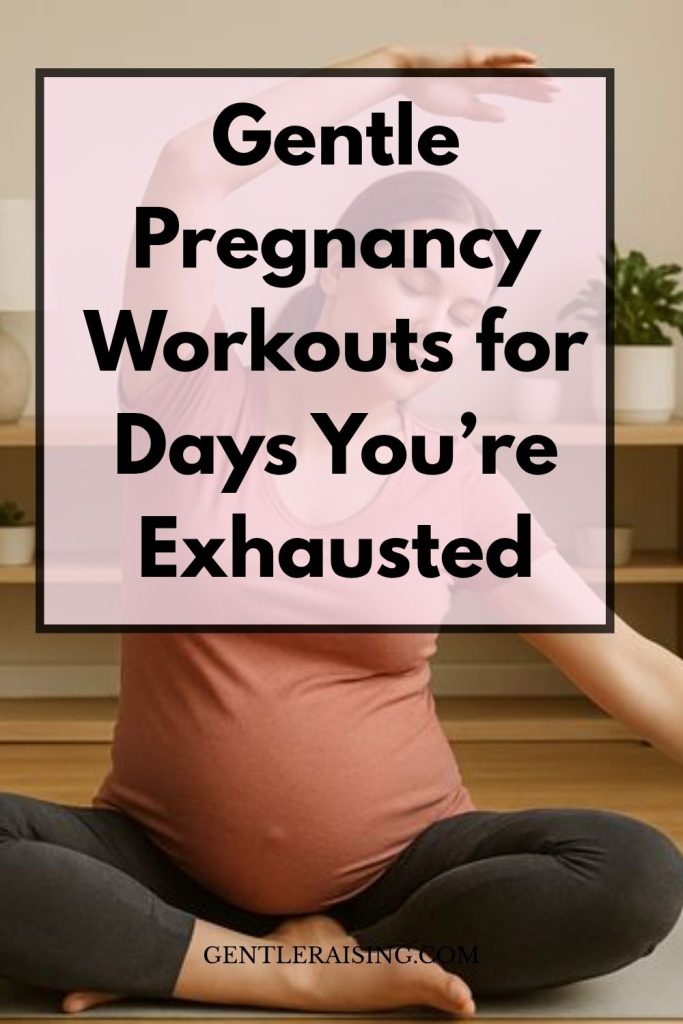
There’s something almost magical about the moment you realise you’re growing a whole human. Even if you’re still wrapping your head around it, or feeling a little queasy about the whole thing, your relationship with your body shifts instantly. Suddenly, every move feels intentional.
Every stretch, every deep breath, every slight twist makes you pause and wonder, “Is this okay?”
And honestly, that’s natural. Pregnancy blends excitement with anxiety in this very human way. You want to do what’s best for your baby, but you also want to feel like yourself. And movement, thoughtful, pregnancy-safe movement, can help with both.
Let’s talk about how to move through these months with confidence, comfort, and a little curiosity. You don’t need fancy equipment or some intimidating routine. Just a body that’s trying its best, a bit of awareness, and permission to be gentle with yourself.
So… Is Working Out During Pregnancy Actually Safe?
Here’s the thing: most modern OB-GYNs, midwives, and prenatal fitness specialists agree that staying active during pregnancy is not only safe but genuinely beneficial for most people. Decades ago, people treated pregnancy like a season of sitting still, feet propped up, barely breaking a sweat. But we now understand that movement supports circulation, mood, energy levels, and even sleep (which gets a little complicated as your belly grows).
Of course, the big caveat is this: pregnancy isn’t a “one-size” situation. Some people feel strong and energised; others are managing nausea, exhaustion, or complicated symptoms that mean they need extra caution. If your provider has cleared you for movement, and most will, with a few common-sense notes—then gentle workouts are your friend.
One of the biggest fears I hear from parents is: “What if I push too hard?” And the truth is that your body usually gives you very clear signals when something isn’t working. You don’t need to move intensely. You don’t need to “push through.” You certainly don’t need to impress anyone. The goal is comfort, strength, and keeping your body as happy as possible while it does some of the most demanding work it will ever do.
Listening to Your Body (Even When It Sends Mixed Signals)
Pregnancy symptoms are… unpredictable, to put it lightly. One morning, you might feel like an Olympic athlete; that afternoon, you’re wondering if walking to the fridge counts as cardio. It makes “listening to your body” feel vague, but it doesn’t have to be.
A few guiding principles help:
• The talk test.
If you can hold a simple conversation while moving, you’re right where you should be. Not gasping. Not pushing.
• Rated exertion.
Think of effort on a scale of 1–10. Pregnancy-friendly workouts usually sit around 4–6. Not too easy, not too intense.
• No pain, no strain (really).
If something pulls, pinches, feels unstable, or ramps up pressure in an odd way, stop. Your body isn’t being dramatic; it’s being honest.
There’s also the emotional layer. Some days you might feel guilty for not doing more; other days you feel a little proud simply for stretching your arms above your head. Give yourself some compassion. Pregnancy isn’t linear, and your energy won’t be either.
The Warm-Up That Doesn’t Make You Roll Your Eyes
Let’s be real: warm-ups can feel boring. But a pregnant body appreciates a little prep, especially as joints loosen and your centre of gravity shifts.
Keep it simple:
- Slow shoulder rolls
- Gentle hip circles
- Ankle rotations
- A few easy marches in place
- Neck mobility (soft and slow)
- Light spinal sways (cat-cow style)
You don’t need a 10-minute ritual unless you want one. Even two minutes helps circulation, warms muscles, and wakes up your core and pelvic floor. If you’re short on time or patience, do what feels reasonable. Warm-ups aren’t a rule; they’re a kindness.
Trimester-by-Trimester Breakdown (Because Everything Changes…)
Pregnancy technically lasts 40 weeks, but it feels like three very different seasons. Your energy, balance, and even breathing rhythm can shift dramatically.
Let’s walk through what movement often feels like during each trimester, and what tends to work well.
First Trimester: “What Is Happening to Me?”
Those early months are a swirl of emotions. Some people feel almost normal; others are floored by nausea and fatigue. Even seasoned athletes find themselves winded unexpectedly.
The goal here is maintaining a gentle habit, not chasing intensity.
Good options include:
• Walking
It’s underrated. It keeps circulation flowing and feels grounding.
• Light strength training
Think 2–8 lb dumbbells, resistance bands, or simple bodyweight moves.
• Yoga (prenatal-friendly or slow-flow)
Breathing + simple movement = magic some mornings.
• Swimming
It’s supportive and cool, and it helps with nausea.
What to avoid?
Overheating, sudden impact, or anything that makes your heart feel like it’s jumping out of your chest. If you feel like you’re pushing too hard, you probably are.
Second Trimester: “Hey, I Think I Can Do This!”
For many people (not all), weeks 14–27 feel a little lighter. Nausea often eases. Energy improves. Your belly starts showing, but it isn’t yet in the way.
This is a great time for:
• Stability work
Your hips, glutes, and deep core are your support system now.
• Modified planks
On a bench, wall, or knees, safe and effective.
• Light strength training
Think squats, rows, deadlifts with a light kettlebell, and calf raises.
• Swimming or aqua aerobics
Especially if the weather’s warm and swelling starts.
• Prenatal yoga
Helps with flexibility and stress.
Balance starts shifting because ligaments loosen (thanks, relaxin), so don’t push tricky single-leg moves without support.
Third Trimester: “Slow, Steady, and on Baby Time”
Around week 28, movement becomes… different. Not bad, just slower, heavier, and more thoughtful. Breathing might feel more shallow. Sleep might get interesting. And workouts need to feel supportive, not stressful.
Focus on:
• Mobility + stretching
Especially the hips, ribs, and lower back.
• Breathing routines
Diaphragmatic breathing is a lifesaver for comfort and labour preparation.
• Pelvic floor prep
Relaxation is just as important as strength now.
• Gentle circuits
Wall push-ups
Glute bridges
Side-lying leg lifts
Supported squats
• Walking—shorter but still helpful
Even 5–10 minutes counts.
Don’t feel pressure to “keep up” your second-trimester routine. Your body is busy enough growing a whole baby in your belly.
Pregnancy-Safe Workouts You Can Actually Do in Your Living Room
Most people don’t want elaborate routines during pregnancy. You want something doable that doesn’t require rearranging furniture or searching for missing equipment.
Here are practical options.
1. Low-Impact Cardio
A simple 10–20 minute session keeps your heart healthy without jarring your joints:
- Walking around your neighbourhood or on a treadmill
- Stationary bike at an easy pace
- Simple step-touch combos
- Light dance sessions
And yes, dance workouts while pregnant sometimes look a little silly, but the joy is worth it. If your toddler joins in with chaotic energy, count that as extra cardio.
2. Strength Training (Simple & Sustainable)
Strength training has huge benefits:
- Supports posture
- Reduces pregnancy aches
- Prepares you for holding a newborn
- Helps with postpartum recovery
Try:
- Resistance bands
- Dumbbells (light to moderate)
- Chair-supported movements
- Slow, controlled reps
- Core engagement with breath
A few go-to moves:
- Squats (regular or sumo)
- Rows with a band
- Wall push-ups
- Banded kickbacks
- Standing biceps curls
- Deadlifts with a light weight
Focus on form more than intensity. And if your belly feels tight or your breath gets shallow, pause.
3. Prenatal Yoga
Yoga might be the most loved pregnancy workout, and for good reason. It blends movement with breath, which helps with stress, sleep, and space-making in your torso.
Great poses:
- Cat-cow
- Supported child’s pose
- Hip circles on hands and knees
- Warrior II (gentle stance)
- Wide-knee seated forward fold
- Side stretches with a block or cushion
As your belly grows, skip deep twists and anything that compresses your abdomen. You’ll feel it instantly.
4. Pilates-Style Core Work (The Safe Kind)
Pilates gets a reputation for being tough, but prenatal modifications focus on:
- Deep core support
- Breathing
- Controlled movement
- Stability
Safe moves include:
- Bird-dog
- Side-lying leg lifts
- Quadruped core activations
- Pelvic tilts
- Seated arm work with bands
Skip crunches, V-sits, or twisting moves once your belly starts showing. They place pressure on the linea alba (the connective tissue that can separate, aka diastasis recti).
5. Water Workouts
If you have access to a pool, oh, it’s bliss. Truly.
Buoyancy reduces pressure, swelling, and joint stress. Water offers gentle resistance for:
- Walking laps
- Side steps
- Arm circles
- Light jogging in place
- Flutter kicks (on your side)
It’s especially good in late pregnancy when everything feels heavier than usual.
Exercises and Movements to Skip (Even If You Feel ‘Totally Fine’)
It’s tempting to think, “I used to do this! I can still do it!” And sometimes you can. But certain movements aren’t safe because of increased fall risk, overheating, or pressure on the abdomen.
Better to be safe, even if you feel capable.
Avoid:
- Contact sports
- Hot yoga or overheated spaces
- Heavy lifting that strains breathing
- Movements that involve jumping, jerking, or sudden impact
- Exercises on your back after the first trimester
- Skiing, horseback riding, or anything that risks falling
- Intense core exercises like full planks, leg lifts, or sit-ups
If you’re unsure about something, picture your belly like a water balloon, stable, but not designed for sudden collision or pressure.
Let’s Talk Pelvic Floor. The Unsung Hero of Pregnancy Fitness
Your pelvic floor is the hammock-like group of muscles that supports your bladder, uterus, and bowels. It carries more weight with every passing week, so giving it attention now pays off during labour and postpartum.
A strong pelvic floor helps with:
- Lower back support
- Reducing leaking (common but not mandatory!)
- Better pushing during labour
- Postpartum recovery
- Core stability
But here’s the twist, pregnancy isn’t about endlessly squeezingOver-tightness can cause as many issues as weakness.
Balanced pelvic floor work looks like:
- Gentle contract → release cycles
- Diaphragmatic breathing
- Hip mobility
- Relaxation techniques
- Supported squats
- Side-lying movements
Real tools and programs that many expecting parents love:
- Bloom Method
- Every Mother
- Pelvic floor physical therapists
- Glo prenatal yoga classes
If you ever feel vaginal heaviness, pressure, or sharp pain, it’s a sign to slow down and talk to a specialist.
How Often Should You Work Out While Pregnant?
There’s no perfect schedule. Most guidelines suggest aiming for 150 minutes of moderate movement weekly, but the real world rarely follows clean numbers.
Think of movement in flexible categories:
- Good week: 20–30 minutes a few days
- Busy or tired week: walking, stretching, slow yoga
- Hard week: breathing practices, gentle mobility, rest
Your workouts might look different each trimester, or even each day. And that’s okay.
Movement should feel like a conversation with your body, not a negotiation.
When to Pause, Modify, or Call Your Provider
Any of these signals means it’s time to stop or check in:
- Dizziness
- Vaginal bleeding
- Contractions or cramping
- Sudden swelling
- Severe shortness of breath
- Sharp pelvic or abdominal pain
- Fluid leakage
- Feeling faint
- Decreased fetal movement (later in pregnancy)
Reaching out to your provider isn’t overreacting;g, you’re gathering information. And providers expect questions. Truly.
If You Hate Working Out… Here’s a More Gentle Way to Think About It
Not everyone loves exercise. And pregnancy isn’t the time to pressure yourself into becoming a fitness enthusiast.
Instead, see movement as:
- Comfort
- Circulation
- A way to clear your mind
- Preparation for holding, feeding, and carrying a baby
- Support for your back, hips, and pelvis
You can build tiny habits:
- Stretch before bed
- Walk five minutes after meals
- Sway your hips while brushing your teeth
- Do ankle circles while watching TV
- Practice breathing while lying on your side
Pregnancy reshapes your expectations, sometimes gently, sometimes abruptly. But movement stays flexible. It meets you where you are.
A Soft, Encouraging Wrap-Up
Your pregnant body is doing something extraordinary, creating a human from scratch. Movement during pregnancy isn’t about “keeping up,” staying toned, or following a perfect plan. It’s about support. Comfort. Connection. Confidence.
You deserve to feel strong and rested. Capable and gentle with yourself. Some days you’ll move more; some days you’ll move less. Every version of you during these months is doing enough.
If pregnancy-safe workouts feel like an invitation to stay connected to your body, even in small, simple ways, that’s a beautiful thing. And if you ever need to pause, adjust, or start fresh, that’s perfectly normal too.
You’re growing a life. Everything else can soften around that truth.