You don’t really look at your house the same way once you’re expecting. Suddenly, that faint smell of bleach under the sink feels like an assault on your nose.
The dust on the bookshelf seems louder somehow, like it’s daring you to ignore it. And let’s be honest: between fatigue, cravings, and the awkward waddle that sneaks up around month seven, the idea of scrubbing floors can feel almost heroic.
But here’s the thing: wanting a clean, safe space for your baby is completely natural. It’s part nesting, part protection, part “I just want my environment to feel calm when everything else is changing.”
The catch is, not all cleaning methods are pregnancy-friendly. Some cleaners release fumes you shouldn’t be breathing. Some chores are downright risky for your body.
That doesn’t mean you need to surrender to mess or live in fear of your mop. What it does mean is shifting the way you clean. Think: safer products, gentler hacks, smarter shortcuts, and yes, sometimes just lowering the bar a little.
So, let’s talk about cleaning while pregnant. Not just the basics, but the little tricks that help you keep your home tidy without compromising your health (or your sanity).
Why Cleaning Feels Different When You’re Pregnant
Pregnancy flips your senses upside down. A whiff of bathroom cleaner that used to smell “fresh” can now send you gagging into the next room. Even laundry detergent, something you barely noticed before, might suddenly feel like it’s choking you. That’s because pregnancy hormones crank up your sense of smell and taste, sometimes to dramatic levels.
Then there’s the physical stuff. Bending over a bathtub to scrub grout? Not so fun when you’ve got a belly in the way. Lifting a heavy vacuum the stairs? Your doctor would probably prefer you didn’t.
And let’s not forget the emotional side. The “nesting instinct” is real; it’s that surge of energy (or obsession, depending on the day) that makes you want to organise baby clothes at 2 a.m. or rearrange your spice cabinet just so. It can feel deeply satisfying, but also frustrating if your body isn’t cooperating.
Bottom line: cleaning while pregnant isn’t just about products; it’s about pacing yourself, protecting your body, and adjusting expectations.
Rethinking Cleaning Products (with a few quick answers along the way)
Here’s where most parents-to-be start: staring at their shelves of sprays and scrubs and wondering, “Is this safe?” The truth? Many conventional cleaners contain chemicals that aren’t ideal during pregnancy. We’re talking about ammonia, bleach, phthalates, and synthetic fragrances, all of which can irritate lungs or, in some cases, pose potential risks if inhaled or absorbed.
But don’t panic. This doesn’t mean you need to throw out every bottle under your sink. What it does mean is making some swaps and adding protective steps.
Simple, pregnancy-safe staples that actually work:
- Baking soda – gentle scrubber, deodoriser, stain-lifter.
- Vinegar – cuts grease, kills some germs, leaves glass streak-free.
- Lemon – fresh scent, mild bleaching effect.
- Castile soap – a multipurpose cleaner that’s mild yet effective.
And since I know you’re wondering, is vinegar really safe during pregnancy? Yes, it is. The only “catch” is the smell, which can feel extra sharp when you’re queasy. Open a window or pair it with lemon to soften the scent.
What about bleach? Well, Bleach isn’t the villain some blogs make it out to be. You can use it if you wear gloves and ventilate the room. But many pregnant parents prefer to skip it unless it’s necessary (like sanitising a raw chicken spill).
And if DIY isn’t your thing? Brands like Seventh Generation, Ecover, Method, and Babyganics make cleaners designed to be gentler. Are they perfect? No cleaner is 100% chemical-free, but they’re generally safer than chlorine bleach or ammonia sprays.
Pro tip: Even with natural cleaners, ventilation is your friend. Open windows, run fans, or take breaks if smells get overwhelming. And yes, gloves are worth using; your skin can be more sensitive when pregnant, so it’s not just about avoiding chemicals, it’s about avoiding irritation.
Room-by-Room Hacks That Actually Help
Kitchen: where grease meets germs
The kitchen can feel like a battlefield. On one side, oil splatters and sticky counters. On the other hand, concerns about raw meat germs and food safety.
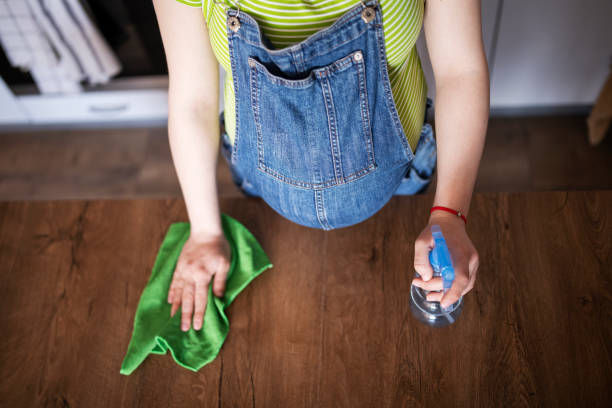
- Countertops: A spray bottle with half vinegar, half water handles daily wipe-downs. Add a drop of dish soap if it feels too “watery.”
- Cutting boards: Sprinkle with coarse salt, scrub with half a lemon, rinse. It smells good and sanitises naturally.
- Microwave: Heat a bowl of water with lemon slices for 3 minutes, steam loosens grime, and you can just wipe it away.
Oh, and since detergent comes up a lot here: do you really need “baby detergent” for all that laundry? Not really. The goal is fragrance-free and gentle. Brands like All Free Clear or Seventh Generation Free & Clear work just fine. But if the smell of Dreft makes you feel cosy? That’s perfectly okay, it’s safe, just more perfumed.
Bathroom: the mould zone
Bathrooms love to test your patience. But you don’t need to choke on bleach fumes to win.
- Tile and grout: Make a paste of baking soda and water, spread it on grout, then spray lightly with vinegar. Foam does half the scrubbing for you.
- Toilet: Pour in baking soda, let sit, then scrub with a brush. You can add a splash of vinegar for fizz.
- Mildew smell: Open windows (if you can), or run a fan for 20 minutes after showers. Natural sunlight works wonders on mildew, too.
And yes, someone will ask: what about essential oils for a fresher scent? Some are great (lavender, lemon, orange), but others, like clary sage, rosemary, or cinnamon, aren’t recommended during pregnancy. Always double-check before using them.
Living areas: dust, meet laziness
Dust isn’t glamorous, but it’s worth tackling; it can aggravate allergies and asthma, which pregnancy sometimes makes worse.
- Dusting hack: Old socks over your hand work better than most dust cloths. Just don’t put them back in the drawer afterwards!
- Vacuuming without strain: Break it into chunks, one room in the morning, another later. Or, if budget allows, consider a robot vacuum. (Yes, it feels indulgent. No, you won’t regret it when your belly makes bending tricky.)
Bedroom and nursery prep
Nothing says “baby’s coming” like folding tiny onesies. But cleaning the space itself matters, too.
- Wash baby clothes with fragrance-free detergent.
- Skip fabric softeners; they often leave residues that can irritate skin. Wool dryer balls are a safer alternative.
- Let fresh air circulate before the baby arrives. A HEPA air purifier can help if you live in a city or an allergy-prone area.
Smart Shortcuts (Because You’re Tired)
Let’s be honest: pregnancy fatigue is no joke. Some days, you’ll conquer the bathroom grout. Other days, brushing your teeth feels like an achievement. That’s okay.
- Clean-as-you-go: Wipe kitchen counters while dinner simmers. Toss laundry in when you’re already heading to the bathroom. Small wins add up.
- Batch chores: Instead of running up and down stairs all day, pile things to return upstairs and carry them in one trip.
- Get help when you need it: Hiring a cleaner once a month isn’t a failure; it’s a sanity-saver. If that’s not in the budget, enlist your partner, family, or friends. (Pro tip: grandparents-in-waiting usually love being “useful.”)
And if guilt creeps in? Remind yourself, your body is doing the heavy lifting of growing a human. That’s more than enough work for one person.
Extra Precautions You May Not Have Considered
A few cleaning-related risks fly under the radar until someone mentions them:
- Cat litter: If you have a cat, avoid cleaning the litter box. Toxoplasmosis risk is small, but real. Ask someone else to handle it, or use gloves + mask if you must.
- Mould: Chronic damp areas can harbour mould, which isn’t great for anyone, especially not while pregnant. Address leaks promptly, and use vinegar for mild spots. For serious mould? Call professionals.
- Essential oils: Already touched on this, but it’s worth repeating, “natural” doesn’t always mean safe.
- Ventilation: It’s underrated, but even mild cleaners can feel overwhelming without fresh air. Open windows, run fans, or use an air purifier.
By the way, a lot of parents-to-be wonder: how much cleaning is “enough” before the baby comes? Truthfully? Enough is whatever feels manageable without draining you. Focus on high-touch areas (counters, doorknobs, the bathroom) and the nursery. Dusty baseboards? They can wait.
Cleaning as Self-Care (Yes, Really)
Here’s the emotional twist: cleaning isn’t only about germs and dust. For many parents-to-be, it’s about control, comfort, and mental clarity.
Think about it: you can’t predict when labour will start, what your birth will be like, or how those first weeks will unfold. But you can fold those baby blankets, clear the counters, and line up diapers in neat rows. That sense of order can be grounding.
And if you’re thinking, “So, do I really have to keep up with all this cleaning?” The answer: nope. Your baby won’t care if your floors sparkle. They’ll care that you’re rested and healthy enough to love them.
Sometimes, the cleanest choice you can make is to rest.
Wrapping It All Up
Pregnancy-safe cleaning isn’t about having a magazine-ready home. It’s about creating a space that feels safe, comfortable, and manageable. Swap harsh products for gentler ones. Break chores into smaller bites. Lean on help when you can. And most importantly, be kind to yourself.
Your baby won’t remember whether you vacuumed twice a week or twice a month. But they’ll benefit from having a parent who feels healthy and rested enough to welcome them into the world.
So breathe, wipe a counter if it makes you feel good, and then put your feet up. Because honestly? You’ve already done the hardest job there is, growing a human.