A soft food with a surprisingly big role in early feeding
Oatmeal has a funny way of sneaking into parenthood. One minute you’re pacing the living room with a newborn at 2 a.m., wondering how someone so tiny can cry so loudly. Next, you’re standing in a grocery aisle reading ingredient labels like it’s your job, holding a box of baby oatmeal and thinking, Is this really happening already?
Yes. It is.
For many families, oatmeal becomes one of the very first solid foods a baby ever tastes. It’s gentle. It’s familiar. It feels… safe. And honestly, in those early months of feeding uncertainty, safe is comforting.
But oatmeal for babies isn’t just about tradition or convenience. There’s real nutrition here, real developmental reasons, and let’s be honest, real confusion too. Which oats are okay? When do you start? Why does one baby love it while another acts personally offended?
Let me explain. Slowly. Without pressure.
So… what exactly is oatmeal for babies?
At its core, oatmeal is made from oats, whole grains that have been harvested, processed, and cooked into a soft, spoonable form. For adults, oatmeal can be chewy, textured, and even crunchy at times. For babies, though, it’s a different story.
Baby oatmeal is usually:
- Finely ground
- Smooth when prepared
- Easy to thin with breast milk, formula, or water
The goal isn’t to flavour fireworks. Its texture and tolerance.
Babies are learning how to move food from the front of their mouth to the back. They’re figuring out swallowing. Their digestive systems are still, well, under construction. Oatmeal meets them where they are, soft, forgiving, and adaptable.
And yes, it looks boring. That’s kind of the point.
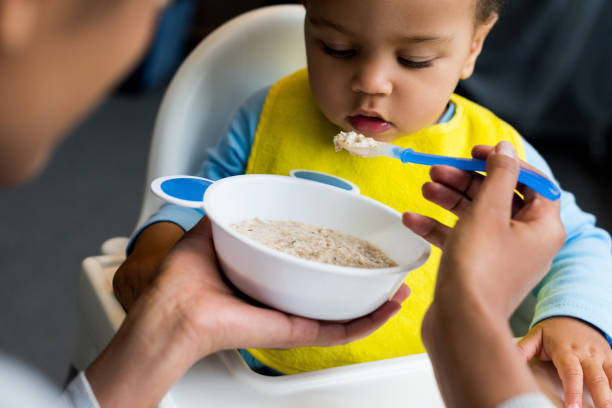
When can babies eat oatmeal?
Here’s the part where advice starts to sound contradictory. And honestly? That’s because feeding babies isn’t a neat checklist.
Most pediatric guidelines suggest introducing solids around 6 months, though some babies show readiness closer to 4–5 months. Age matters, but readiness matters more.
Signs your baby might be ready:
- They can sit with support and have decent head control
- They’ve lost the tongue-thrust reflex (pushing food out automatically)
- They show interest in food (watching you eat, reaching, opening their mouth)
Here’s the mild contradiction: a baby can be six months old and not ready. Another might be five months, and clearly prepared. Trust observation over the calendar.
And if oatmeal feels like the first step? You’re in good company.
Why oatmeal gets so much love (from parents and paediatricians)
Oatmeal isn’t trendy. It’s not flashy. But it works.
Nutritional reasons parents lean in
Oatmeal naturally contains:
- Iron is especially important after 6 months, when the baby’s iron stores start dipping
- Fibre, which supports digestion (with a caveat we’ll get to)
- Complex carbohydrates, offering steady energy
Unlike rice cereal, which used to dominate the baby food scene, oatmeal tends to be gentler on digestion and raises fewer eyebrows around heavy metal exposure. That shift alone explains why oatmeal has quietly taken centre stage.
You know what? Sometimes boring foods are the most reliable ones.
Types of oatmeal for babies, because not all oats behave the same
Walk into any store, and you’ll see oats everywhere. Big tubs. Tiny boxes. Instant packets screaming about flavour. Let’s break it down simply.
Baby oatmeal (infant oatmeal cereal)
This is usually the starting point.
- Finely milled
- Fortified with iron
- Cooks fast and smoothly
Brands parents often recognise include Gerber, Earth’s Best, and Happy Baby. Not because they’re magical, but because they’re consistent.
Rolled oats (old-fashioned oats)
These are whole oats that have been steamed and flattened.
- Nutritious
- Affordable
- Need blending or extra cooking for babies
Many parents use rolled oats once the baby is a bit older, especially if they already eat oats at home.
Steel-cut oats
Dense. Chewy. Slow-cooking.
- Excellent nutrition
- Usually better for older babies (8–9 months+) after heavy cooking and blending
Not ideal for first bites unless you enjoy extra prep.
Instant oats
Here’s where people hesitate.
- Highly processed
- Often pre-cooked
Plain instant oats (no flavours, no sugar) can work in a pinch, but they’re not the top pick. Convenience has its place, though, especially on rough mornings.
Gluten-free oats
Oats themselves don’t contain gluten, but cross-contamination happens. If celiac disease runs in your family, gluten-free certified oats can offer peace of mind.
Choosing oatmeal at the store without overthinking it
Reading labels while holding a baby carrier should count as cardio.
Here’s what actually matters:
- No added sugar
- No artificial flavors
- Short ingredient list
Organic? Nice, but not mandatory. Fortified with iron? Helpful, especially early on.
Honestly, the “best” oatmeal is the one you’ll actually prepare calmly, without stress.
Texture is everything (and it changes fast)
Early oatmeal should be thin. Thinner than you think.
Think:
- Pourable
- Smooth
- Almost soupy
As babies grow, the texture thickens gradually. Around 7–8 months, oatmeal can resemble soft mashed potatoes. By 9–12 months, thicker oatmeal with small lumps is often welcomed.
Common mistake? Rushing thickness. Babies need time to learn texture safely.
Oatmeal and allergies let’s clear the fog
Oats are not a top allergen. Still, reactions happen.
Watch for:
- Rash around the mouth
- Vomiting
- Hives
Introduce oatmeal on a calm day, earlier in the day, and avoid mixing multiple new foods at once. Not because oatmeal is risky, but because clarity matters if something feels off.
Oatmeal and constipation (a gentle warning)
Fibre can be a friend… or a frenemy.
Oatmeal can help soften stools when paired with enough liquid. But too thick, too fast, or too often? It can slow things down.
If constipation shows up:
- Thin the oatmeal
- Add pear, prune, or apple purée
- Offer water (for babies over 6 months)
Balance beats elimination.
First oatmeal recipes that babies actually tolerate
1. Starter oatmeal (the classic)
- 1 tbsp baby oatmeal
- 3–4 tbsp breast milk, formula, or water
Smooth. Neutral. Perfectly fine.
2. Banana oatmeal (6 months+)
- Mashed ripe banana
- Prepared oatmeal
Naturally sweet without sugar.
3. Apple oatmeal (7 months+)
- Steamed apple, blended
- Oatmeal
Warm, comforting, and familiar.
Cinnamon can wait. Flavour comes later.
6–8 months: oatmeal grows up a little
This is when oatmeal becomes a base, not just a food.
Add:
- Greek yogurt
- Nut butter (thin and smooth)
- Mashed lentils
Protein and fats enter the picture, slowly and safely.
9–12 months: oatmeal joins the family table
At this stage:
- Thicker texture
- Less blending
- More variety
Some parents even shape leftover oatmeal into soft oat fingers. Messy? Yes. Developmentally gold? Also yes.
Make-ahead oatmeal for exhausted parents
Batch cooking oatmeal can save sanity.
Store:
- Refrigerator: up to 48 hours
- Freezer: up to 1 month
Reheat gently. Stir well. Add liquid.
No hero points for cooking fresh every time.
Common worries (that deserve reassurance)
“My baby gags.”
Gagging is learning. Choking is silent. Know the difference.
“My baby hates oatmeal.”
Or… they weren’t ready. Or it was too thick. Or they just didn’t feel like it that day.
Feeding isn’t linear.
A gentle ending, because feeding is emotional
Oatmeal might seem small. A bowl. A spoon. A mess on the floor.
But it’s also trust. Rhythm. Connection.
You’re not raising a perfect eater. You’re raising a human.
And sometimes, that starts with oatmeal.