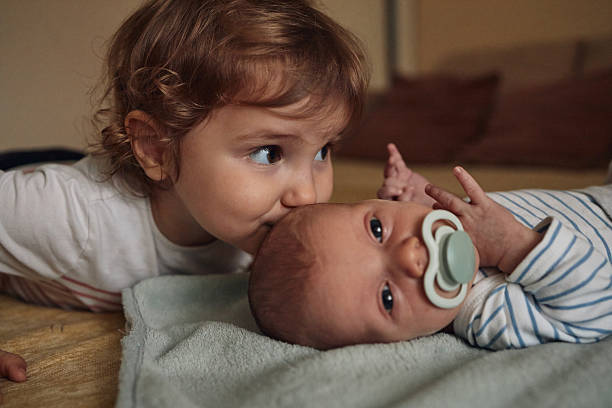
A real-life guide for parents who want closeness without pressure
The Moment Nobody Warns You About
Bringing a newborn home is strange enough. Bringing a newborn home to another child? That’s a whole different emotional weather system.
You’re juggling feeds, sleep deprivation, that soft newborn smell and then you catch your older child watching from the doorway. Quiet. Curious. Maybe excited. Maybe unsure. Maybe already doing emotional math, you didn’t even realise it was happening.
Do I still matter?
Is this baby staying forever?
Why does everyone keep whispering?
No one really prepares parents for that moment. And yet, it’s where sibling bonding begins, not with matching outfits or staged photos, but with awareness.
Here’s the thing: sibling bonds don’t arrive fully formed. They’re built in fragments. In shared glances. In accidental touches. In tiny moments that don’t look like much while you’re living them.
And honestly? That’s a relief.
Why Sibling Bonding Is a Bigger Deal Than We Admit
We talk a lot about attachment between parent and baby, and rightly so. But sibling relationships quietly shape childhood in powerful ways.
Siblings are often a child’s first lesson in:
- sharing attention
- managing frustration
- reading emotions that aren’t centred on them
- learning empathy without adult rules attached
It’s not always pretty. But it’s real.
Studies in developmental psychology keep circling back to the same idea: children who experience secure, supported sibling relationships tend to show better emotional regulation later in life. Not because siblings are always kind, they’re not, but because the relationship offers practice. Daily practice.
And practice, as any tired parent knows, is messy.
The Emotional Math Older Siblings Are Doing (Even If They Can’t Say It)
Older siblings, especially toddlers and preschoolers,s don’t think in words. They think in feelings and patterns.
Suddenly:
- The baby cries, and someone comes running
- feeding takes longer
- parents sit down more, move more slowly, and hold someone else
Your older child may not articulate jealousy, but they’ll feel displacement. That’s normal. That’s human.
What helps isn’t pretending everything is the same. Kids aren’t fooled by that. What helps is naming the change gently, without drama.
“This is new.”
“This feels different.”
“And you’re still important.”
Reassurance doesn’t come from speeches. It comes from repetition. Calm repetition.
Let’s Clear This Up: Bonding Isn’t Instant
Social media loves the story where siblings fall in love at first sight.
Reality? It’s more like:
- curiosity
- indifference
- mild annoyance
- sudden affection
- back to annoyance
And that’s okay.
Bonding isn’t a single event. It’s a slow accumulation. Expecting instant love sets everyone up to feel like something’s wrong when nothing is.
If your older child ignores the baby for weeks, normal.
If they swing between affection and frustration, also normal.
If they regress a bit, yep, that too.
Connection grows on its own timeline.
Preparing Siblings Before the Baby Arrives (What Actually Helps)
You don’t need elaborate plans. You need predictability.
Simple things work best:
- Talk about what babies actually do (cry, sleep, need help)
- Use real photos instead of cartoons
- Read books that show mixed emotions, not just joy
If you can, involve siblings in small decisions:
- choosing a blanket
- picking a stuffed animal
- helping set up a corner of the room
Not because it makes them responsible, but because it makes the baby familiar.
Familiar things feel less threatening.
The First Introduction: Keep It Low-Key
The first meeting doesn’t need to be magical. It needs to be calm.
A few practical notes parents often appreciate later:
- Try to greet the older child before the baby, if possible
- Keep the baby in a bassinet or carrier initially
- Let the older sibling approach at their own pace
Forced affection backfires. Always.
A simple “This is your baby brother” works better than “Isn’t she adorable?!”
Let curiosity lead.
Bonding Rituals That Don’t Feel Forced
You don’t need structured activities. You need shared presence.
Some easy rituals:
- reading a short book together during feeding time
- letting the older child “talk” to the baby in the morning
- a shared song during diaper changes
These moments don’t need commentary. They just need consistency.
Over time, they become familiar. And familiarity builds connection.
When Jealousy Shows Up (Because It Will)
Jealousy isn’t a parenting failure. It’s a sign of attachment.
When it surfaces:
- acknowledge it without shaming
- avoid comparisons
- don’t rush to fix the feeling
Saying “You’re upset because the baby needs me right now” can be surprisingly soothing.
You don’t need to make jealousy disappear. You need to make it safe to feel.
Language That Builds Connection (Without Competition)
Words shape relationships more than we realise.
Small shifts matter:
- “Our baby” instead of “my baby”
- “You’re both learning” instead of “You’re older”
- “She needs help” instead of “She’s getting more”
Avoid turning siblings into opposites. Children hear patterns fast.
Connection grows when no one feels replaced.
Involving Siblings Without Making Them Mini-Parents
There’s a fine line here.
Involvement is good. Responsibility? Not so much.
Helpful involvement:
- handing you a diaper
- choosing pajamas
- singing to the baby
What to avoid:
- pressure to soothe
- guilt-based praise (“You’re such a big helper”)
- expecting emotional maturity beyond their age
They’re siblings. Not caregivers.
Safety Boundaries Can Still Feel Warm
Yes, you need rules:
- gentle hands
- no lifting
- adult supervision
But rules don’t have to feel cold.
Try pairing boundaries with connection:
“Let’s touch together.”
“Let me help you hold her.”
“Watch how she looks at you.”
Safety and closeness can coexist.
Age-by-Age Bonding Ideas (Realistic Ones)
Toddlers
- parallel play near the baby
- copying baby sounds
- simple naming games
Preschoolers
- storytelling about the baby
- drawing pictures “for” the baby
- helping with routines
School-age kids
- teaching the baby songs
- reading aloud
- explaining family traditions
Different ages connect differently. That’s not a problem it’s a feature.
When Things Go Wrong (And They Will)
There will be:
- hitting
- shouting
- slammed doors
- tears (everyone’s)
Pause before reacting.
Behaviour often masks uncertainty. Responding with curiosity rather than punishment keeps the door open.
Repair matters more than perfection.
The Role of Fathers and Non-Birthing Parents
This part gets overlooked.
Non-birthing parents often become the emotional anchor for older siblings during newborn weeks. That role matters.
One-on-one time, even a brief reassures children that their world hasn’t collapsed.
Bonding isn’t only about siblings. It’s about the whole family adjusting together.
Blended Families Add Extra Layers
Step-siblings, half-siblings, and age gaps all change the dynamic.
Go slower. Name relationships honestly. Avoid forcing labels.
Connection grows from shared experiences, not titles.
Cultural Expectations (And When to Ignore Them)
Some cultures expect instant sibling devotion. Others expect rivalry.
Neither extreme helps.
Children don’t owe anyone a performance. They owe themselves honesty.
Let bonding grow at its own pace.
A Few Myths Worth Letting Go Of
- “Siblings should be best friends”
- “Jealousy means something’s wrong”
- “Older kids should know better”
Letting go of these expectations creates space for real connection.
The Small Moments That Matter Most
Not the photos.
Not the announcements.
Not the milestones.
It’s the everyday stuff:
- shared silence
- quick smiles
- accidental laughter
That’s where bonds form.
Quietly. Slowly.
For the Tired Parent Reading This
If you’re worried, that already says a lot.
Sibling bonding doesn’t require perfection. It requires presence. Again and again.
You’re not behind. You’re right where this story starts.
One Last Thought
Sibling relationships aren’t built in grand gestures. They’re shaped in ordinary days.
Days when everyone’s tired.
Days when someone cries.
Days where nothing seems to happen until years later, when you realise everything did.
And that’s enough.