The worry nobody really talks about
You bring your baby home. The car seat clicks into place. The door opens. And there it is, your dog’s tail thumping against the wall, your cat frozen on the stairs, your bird squawking like it always does.
And suddenly, a thought creeps in.
Is this safe?
Most parents don’t say it out loud because it feels… disloyal. You loved this pet before your baby existed. You still love them. But now there’s something fragile in your arms, something tiny that doesn’t blink or flinch or defend itself.
Honestly, that tension is normal. Very normal.
Living with pets and a newborn isn’t about perfection or constant fear. It’s about awareness, boundaries, and a few steady habits that protect everyone, including the animal that’s already part of your family.
Let me explain.
Why pets still matter after the baby arrives
There’s a narrative floating around that once a baby shows up, pets slide down the priority list. Food, sleep, safety, all baby.
But here’s the thing: pets don’t understand life transitions. They understand routines, smells, energy shifts, and attention. When those change abruptly, confusion follows. Sometimes anxiety. Sometimes acting out.
And yet, pets also bring something powerful into a home with a newborn. Calm. Familiarity. Rhythm.
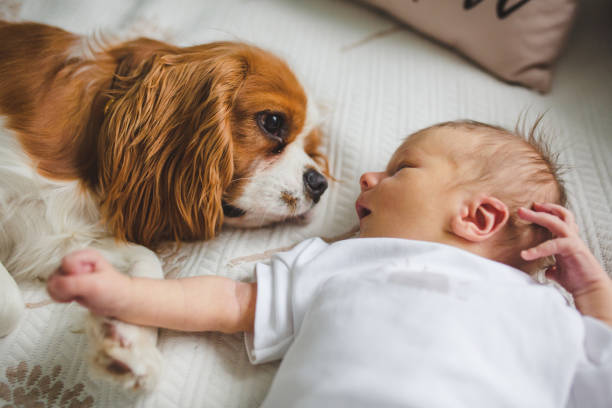
Studies have shown that children raised with pets often develop stronger immune systems and social awareness. But even without studies, parents notice it. The way a dog lies quietly near the crib. The way a cat watches from a distance is like a sentry.
Safety isn’t about removing pets from the picture. It’s about reshaping the picture so everyone fits.
Animal behaviour 101 (without the lecture)
You don’t need a degree in animal psychology, but it helps to understand one basic truth: pets react to stress differently than humans do.
A dog might pace. A cat might hide. A bird might scream more than usual. These aren’t signs of aggression; they’re signs of uncertainty.
Newborns bring:
- unfamiliar smells (amniotic fluid, milk, diapers)
- unpredictable sounds (crying, grunting, white noise)
- new objects (swings, bassinets, carriers)
- distracted humans
That’s a lot.
You know what? Even the gentlest pet can behave unpredictably when their environment shifts fast. That doesn’t mean danger is inevitable. It means supervision matters.
Dogs, cats, and the “everyone else” category
Not all pets respond the same way to babies.
Dogs
Dogs are social animals. Many become curious, protective, or clingy. Others get overstimulated.
Watch for:
- stiff body posture
- whale eye (white of the eyes showing)
- excessive licking or yawning
- avoidance or sudden guarding behaviour
These are stress signals, not warnings of attack.
Cats
Cats are more territorial. They don’t rush toward babies; they observe.
Concerns usually centre around:
- sleeping in cribs
- rubbing against the baby’s face
- litter box hygiene
Most cats simply want warmth and quiet.
Other pets (birds, rabbits, reptiles)
These animals are usually caged or contained, which reduces direct risk. The bigger concern is hygiene and supervision during handling.
Bottom line? Each species and each animal needs slightly different boundaries.
Before baby comes home: the prep that actually helps
Forget dramatic training montages. Simple steps go a long way.
- Play recordings of baby cries weeks before delivery
- Set up baby gear early so pets can sniff it without pressure
- Shift feeding or walking routines gradually
- Practice boundaries around rooms that will be baby-only
And here’s a small but powerful move: bring home a blanket with the baby’s scent before the baby arrives. Let pets investigate on their terms.
It sounds old-school, but it works.
The first introduction (less ceremony, more calm)
This moment gets overhyped.
You don’t need a formal introduction like a royal meeting. You need calm adults, leashed dogs if necessary, and zero rushing.
Hold the baby securely. Let pets approach if they choose. No forced sniffing. No excitement cues.
And if your pet ignores the baby entirely? That’s fine. Honestly, that’s ideal.
Safety isn’t about instant bonding. It’s about neutral coexistence at first.
Supervision: what it really means
People say “never leave your baby alone with a pet,” and parents imagine hovering 24/7.
That’s not realistic.
Supervision means:
- Pets are not in the room during unsupervised sleep
- You’re aware of proximity, not panicked about it
- You intervene early, not after tension builds
If you need to pee, shower, or breathe? Close a door. Use a gate. Management is not a failure. It’s parenting.
Sleep safety, where most mistakes happen
This deserves its own pause.
Pets should not sleep in:
- cribs
- bassinets
- baby loungers
Even gentle animals can block airways accidentally. This isn’t about aggression. It’s about physics.
Use:
- closed doors
- crib nets designed specifically for pets (not DIY)
- firm routines around bedtime
Nighttime exhaustion makes judgment fuzzy. Systems protect you when you’re tired.
Germs, fur, and allergy fears (let’s be realistic)
You’ll hear it all:
“Pets make babies sick.”
“Fur causes asthma.”
“Animals are dirty.”
Here’s the calmer truth.
Normal household exposure to pets does not automatically increase illness risk. In fact, moderate exposure can support immune development.
That said:
- Wash your hands after handling pets
- Keep litter boxes away from baby areas
- Vacuum regularly (a HEPA filter helps)
- Keep pets up to date on vet care
Clean enough, not obsessively. Babies don’t need sterile lives.
Feeding time, crying time, chaos time
Crying can stress pets out. Some dogs whine back. Some cats disappear. Some birds escalate their noise.
This is where routine saves you.
Feed pets before predictable crying windows if possible. Give them a quiet retreat space. Use background sound to soften sharp noises.
And remember, pets feed off your energy. If you tense up every time the baby cries, they feel it too.
Teaching boundaries without guilt
You’re not replacing your pet. You’re redefining roles.
That means:
- No licking the baby’s face
- No jumping near feeding areas
- No guarding baby items
Use calm redirection, not punishment. Praise neutral behaviour. Reinforce distance.
Boundaries aren’t rejection. They’re clarity.
When pets act out (and yes, it happens)
Regression is common. Accidents. Scratching. Barking. Clinginess.
Before labelling behaviour as “bad,” ask:
- Has routine changed?
- Is attention inconsistent?
- Is the pet overstimulated?
Sometimes adding one daily walk or one quiet cuddle resets everything.
If behaviour escalates, consult:
- a veterinarian (to rule out pain)
- a certified trainer
- a behaviorist
Early help prevents long-term issues.
Older pets with set habits
Senior pets may struggle more with noise and disruption. Arthritis, hearing loss, and cognitive changes affect tolerance.
Offer:
- soft, baby-free zones
- predictable schedules
- patience
They’re not being difficult. They’re adapting slowly.
The rehoming conversation (spoken softly)
Most families never need to rehome a pet. But when safety is compromised despite effort, it becomes a painful consideration.
This isn’t failure. It’s grief mixed with responsibility.
If you reach this point, involve professionals. Avoid rushed decisions. And be gentle with yourself.
The long view: why this effort matters
Babies who grow up with pets often learn:
- empathy
- gentle touch
- nonverbal communication
- emotional regulation
They learn that living beings have needs, moods, and boundaries.
That’s no small gift.
Seasonal and situational concerns
- Shedding seasons: increase cleaning temporarily
- Fleas/ticks: maintain prevention year-round
- Holidays: watch for overstimulation with visitors
- Open windows and doors: double-check barriers
Life changes in waves. Adjust as needed.
Trust yourself more than panic headlines
Search engines thrive on fear. Real life thrives on balance.
You don’t need to eliminate pets. You need to stay aware, flexible, and honest about what’s happening in your home.
You know your baby.
You know your pet.
And over time, you’ll know the rhythm that keeps everyone safe.
A quiet ending, on purpose
One day, you’ll catch it, your baby sleeping on your chest, your dog at your feet, your cat stretched in a sunbeam. Nothing dramatic. Nothing scary.
Just life, layered.
And you’ll realise safety was never about control. It was about care, consistency, and paying attention when it mattered most.
