You know what? There’s nothing quite like the first few weeks of life with a newborn. It’s magical, chaotic, and, honestly, a little sleep-deprived. One minute you’re marvelling at those tiny fingers, the next you’re fumbling through a half-lit nursery, desperately searching for a burp cloth while your baby wails like a tiny opera singer.
This, my friend, is exactly why a well-thought-out feeding station isn’t just a “nice-to-have.” It’s your lifeline, your sanity saver, your late-night secret weapon.
Think of it this way: a feeding station isn’t just a chair and a basket of bottles. It’s a carefully curated space designed to make every feeding smoother, faster, and, dare we say, enjoyable. Let’s walk through how to create a newborn feeding station that actually works, keeps you sane, and makes your baby’s first meals as cosy as possible.
1. Picking the Perfect Spot
Alright, before we start piling up blankets and bottles, location is key. The “perfect spot” doesn’t mean some Pinterest-perfect corner, it means somewhere practical, accessible, and comfortable.
Here’s what to consider:
- Quiet corner vs. central family area: Night feedings are quieter if your station isn’t smack in the middle of high-traffic zones. But sometimes, being near the action during the day helps you feel connected. Some parents even rotate their station depending on the hour.
- Lighting: Look for soft, warm lighting, adjustable lamps, night-lights, or even a gentle string of LED lights that work wonders. Avoid bright overhead lights, unless you’re ready to see your baby’s pupils dilate like little saucers at 2 a.m.
- Proximity: You don’t want to trek across the house every time your baby needs a bottle. Keep your station near water, diapers, wipes, and maybe a cosy chair that won’t have your back screaming at you by week two.
And honestly, sometimes your “perfect spot” ends up being the living room floor. You’ll find yourself improvising, and that’s completely normal.
2. The Feeding Chair: Comfort Is Everything
If you ask any seasoned parent, they’ll tell you: your chair is your throne. You’ll be spending countless hours here, so it has to feel like it was made for royalty, or at least a slightly sleep-deprived version.
What to look for:
- Types: Rockers, recliners, gliders, or a trusty armchair with good support. Each has its charm; gliders are great for soothing fussy babies, while recliners let you nap mid-feed (don’t judge, it happens).
- Features: Lumbar support is non-negotiable. Armrest height matters, especially if you’re breastfeeding. Removable, washable covers are a sanity-saver for inevitable spit-ups.
- Extras: A small footstool can be a game-changer. Seriously, your legs will thank you after marathon sessions.
And here’s the emotional kicker: a comfy chair doesn’t just help your back. It sets the tone for a calm feeding session. A stressed mom or dad equals a fussy baby. Coincidence? Probably not.
3. Lighting That Won’t Wake the Whole House
You might think, “It’s just a bottle. How hard can it be?” But anyone who’s fed a newborn at 3:17 a.m. knows lighting can make or break the experience.
- Soft night lights or dimmable lamps are ideal. They keep things visible without jolting the baby awake.
- Warm tones are your friend; blues and whites can be stimulating, which is the opposite of what you want during nighttime feeds.
- Optional tech: Some parents swear by colour-adjustable LED lights. A gentle amber glow can almost hypnotise a baby into staying sleepy while feeding.
Here’s a tip: keep a small flashlight nearby for emergencies. Not all babies are impressed by the latest gadgets.
4. Storage Essentials: Everything Within Arm’s Reach
Imagine this: you’re mid-feed, baby starts hiccuping, and your burp cloth is three feet away… on the other side of the room. Nightmare. Storage is all about keeping essentials at arm’s length.
Must-haves:
- Burp cloths, bibs, wipes
- Pacifiers and small toys for distraction
- Bottles and formula or breast milk storage
Organisation tricks:
- Small baskets or drawer dividers keep items visible and accessible.
- Rolling carts are surprisingly handy if you have multiple feeding spots.
- Consider a “mini cockpit” approach, like pilots, everything should be in reach.
Tech twist: Some parents use bottle warmers with timers or app-controlled sterilisers. Fancy? Yes. Necessary? Depends on your patience at 2 a.m.
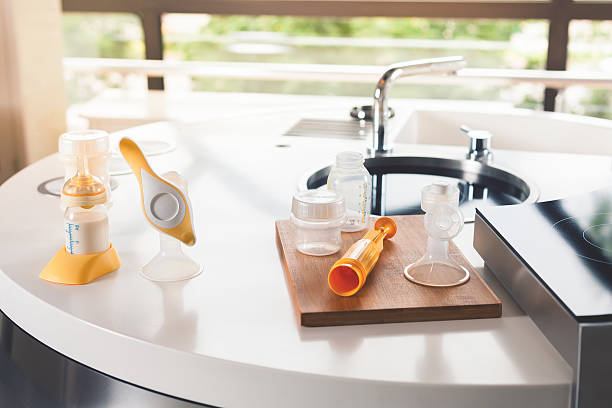
5. Feeding Tools & Equipment
Here’s the thing: whether you’re breastfeeding or bottle-feeding, having the right tools can save hours of frustration.
For breastfeeding:
- Nursing pillows for support
- Nipple cream
- Comfortable nursing bras
For bottle-feeding:
- Bottles (extra in case of leaks)
- Bottle warmer
- Steriliser (or at least a dedicated small sink caddy)
Cleaning gear:
- Drying racks
- Dish brushes dedicated to bottles
- Baby-safe cleaning sprays
Pro tip: colour-coded bottles or caps can save your sanity, especially if you have twins or multiples.
6. Comfort & Atmosphere for Baby
Feeding is more than nutrition; it’s bonding. A calm environment can make a huge difference.
- Soft blankets: Swaddle for newborns, cosy throws for older babies.
- Gentle sounds: White noise machines or soft music can help.
- Seasonal touches: Light muslin wraps in summer, thicker swaddles in winter.
- Minimal sensory stimulation: Nighttime feedings aren’t the time for bells and whistles. A calm, low-stim environment helps everyone sleep afterwards.
Here’s a little secret: when a baby feels safe and cosy, the whole session feels shorter. And your stress level drops dramatically.
7. Feeding Station Hygiene
Let’s be real: babies are messy. But keeping your feeding station hygienic is easier than it sounds.
- Quick wipes for surfaces
- Antibacterial sprays are safe for babies
- Rotate clothes and bibs frequently
- Launder regularly, but don’t stress if you fall behind. Everyone does at some point.
Remember: a clean space isn’t just about germs. It’s about mental clarity. Feeding is already high-stakes; clutter and mess make it feel ten times worse.
8. Nighttime vs. Daytime Setup
Your station will evolve depending on the hour.
- Night: Keep it minimal. Essentials only. Low lighting. Soft surroundings.
- Day: Add extra storage, maybe a small play area, decorative touches. Some parents even maintain dual stations, nursery + living room, for convenience.
Fun fact: you might be shocked at how different your needs feel depending on the time of day. Night setups are about survival; daytime setups are about comfort and bonding.
9. Organising for Flexibility
Babies grow fast. Their needs change faster. Your feeding station should evolve with them.
- Portable caddies or mini diaper bags for travel or room-hopping
- Adjust shelves and baskets as bottles get larger or solids enter the mix
- Keep a “grab-and-go” corner for quick trips
A little anecdote: many parents start with a single small cart and, three months later, find themselves with a full-blown mini nursery setup. Adaptability is key.
10. Practical Hacks & Little Luxuries
Sometimes it’s the small details that make a huge difference.
- Warm water is ready for bottle prep
- Timers or trackers to keep feeding schedules in check
- Calming scents or soft sounds for you and baby
- Mom’s chocolate stash: truly essential for late-night survival
Other hacks: keep an extra chair nearby for partner participation, or use a hammock-style nursing pillow for extra comfort. Trust me, little luxuries go a long way.
11. Safety Considerations
No guide is complete without safety. You’re feeding a tiny human, so some precautions are non-negotiable:
- Ensure furniture is stable; nothing should wobble or tip.
- Keep cords, wires, or dangling items out of reach.
- Soft floor mats near your chair in case of mid-feed drops.
- Baby monitors and night lights can be lifesavers during solo nighttime sessions.
Even small safety tweaks can prevent big headaches later.
Conclusion: Your Feeding Station as a Sanctuary
Here’s the takeaway: your newborn feeding station is more than just convenience; it’s a sanctuary. It’s where your baby eats, sleeps, bonds, and grows. And it’s where you reclaim some sanity in the middle of what can feel like chaos.
Personalise it. Adjust it. Tweak it. Some days you’ll love it, other days it’ll feel like a mess, but over time, you’ll find a rhythm that works for your family. And honestly? That rhythm, that sense of calm, is worth every burp cloth, bottle, and late-night feed.
Remember: a feeding station isn’t just about organisation. It’s about care, care for your baby, care for yourself, and care for the quiet moments in between.
Quick Checklist for a Fully Stocked Feeding Station
- Comfy chair (glider, rocker, or recliner)
- Nursing pillow & blankets
- Burp cloths, bibs, wipes
- Bottles, formula, or breast milk storage
- Bottle warmer & steriliser
- Soft lighting & night lamp
- Small toys or sensory items (minimal)
- Cleaning supplies (baby-safe)
- Footstool & small table
- Portable caddy for flexibility