The School Paper Avalanche. And Why It Feels Weirdly Emotional
Let’s be honest: kids bring home a ridiculous amount of paper.
Permission slips, math worksheets, spelling tests, drawings of cats that look suspiciously like potatoes — all of it handed to you at the exact moment you’re juggling grocery bags, a toddler who suddenly hates pants, and a phone that won’t stop buzzing.
And you know what?
Some of those papers feel like tiny pieces of their childhood, the kind you can’t bear to toss even though they smell faintly of glue sticks.
Parents don’t talk about it enough, but these piles can create a quiet kind of pressure.
A nagging feeling that if you don’t keep everything, you’re somehow missing parts of your child’s life.
But there’s good news: you can create a system that feels natural, sustainable, and, most importantly, doable on real-life, messy, exhausting school days.
This isn’t about creating a museum.
It’s about keeping the season you’re in from swallowing the kitchen counter alive.
So let’s make a system that actually fits your family, your energy levels, and your already-full brain.
Why School Papers Pile Up So Fast (You’re Definitely Not Imagining It)
Kids don’t hand you papers like normal humans.
They slip them into your bag.
They fold them into tiny squares.
They crumple them inside lunch boxes next to a lonely grape.
They shove them into your hand at pickup right when you’re trying to buckle a seatbelt.
So, of course, the pile grows.
Plus, school papers aren’t just “papers”, they’re mixed categories living together in what can only be described as chaos:
- Important papers that need signatures
- Daily worksheets
- Random artwork
- Tests you feel guilty throwing away
- Invitations
- Projects that shed glitter for three months
- “Mom, don’t lose this!” papers that always get lost
And honestly, who can keep up with all that?
Then there’s the emotional side, the part we pretend doesn’t matter but absolutely does:
The fridge door syndrome.
It starts with one sweet drawing.
Then two.
Then suddenly, the entire fridge looks like a preschool scrapbook.
And removing anything feels like betrayal.
You’re not disorganised, you’re human.
And your child creates more paper in a week than a small office does.
But once you know why it piles up, it’s easier to fix.
A Mindset Shift That Makes Everything Easier
Before we get practical, we need one grounding truth:
You are not archiving a historical record. You’re managing a moment in your child’s life.
You’re allowed to let most things go.
Seriously, you can toss the math worksheet with 17 smiley stickers on it.
You can recycle the spelling test where they spelt “pumpkin” as “pupkin.”
It’s okay.
The goal isn’t to keep everything.
The goal is to keep the right things.
If something doesn’t spark emotion, showcase growth, or tell a story, it probably doesn’t belong in the long-term pile.
You’re the curator, not the storage unit.
Step 1: Create a “Drop Zone” That Works Even on Exhausting Days
If you only set up one thing, let it be this.
A drop zone is a simple place where all papers go when they enter your home.
Not sorted.
Not reviewed.
Not colour-coded.
Just dropped.
The trick?
It must work on days when everyone is tired, hungry, sweaty, and mildly over life.
Some parents use:
- A basket in the kitchen
- A wall file near the entry
- An IKEA magazine holder
- A Target Brightroom bin
- A wide envelope labelled“School Papers Temporary Home”
- A drawer in the coffee table
Pick something you can reach even while carrying backpacks, snacks, and a child who’s narrating their whole day in one breath.
This drop zone becomes your “I’ll look at it later, but not right now” space, and that tiny adjustment alone creates mental breathing room.
Step 2: Sort Papers Into 4 Simple Categories
When you’re ready (not when the papers demand it), sort everything into four categories.
It’s surprising how these four cover 99% of what comes home.
1. Everyday Papers
Worksheets, doodles, classwork.
Most of this will eventually be recycled, but it deserves a short stay so you can peek at what they’re learning.
2. Action Papers
Anything that needs your attention:
- Forms
- Permission slips
- Homework instructions
- Flyers
- Notices aboupyjamama day you always forget
These go into a visible spot, a clipboard, a mini basket, a magnet clip, whatever grabs your attention before the deadline disappears forever.
3. Artwork + Sentimental Papers
Not everything your child creates belongs here, but the special ones do:
- First writing samples
- Creative drawings
- Award certificates
- Projects that show growth or personality
Don’t overthink it.
If it makes you smile, keep it.
If it makes you sigh in confusion, recycle.
4. Long-Term Records
Report cards, evaluations, and important documents.
This is the “adult” section.
Keep these in a labelled folder for each child.
Here’s the mild contradiction: separating everything into categories can feel like extra work, until you realise how much calmer your brain feels when each type has its own home.
You’ll see the difference almost immediately.
Step 3: The 10-Minute Weekly Sort (Your Secret Weapon)
You don’t need a fancy planner.
Just set aside ten minutes a week, usually Sunday evenings work well, and look through the drop zone.
Ask yourself:
- What needs action now?
- What can be tossed?
- What deserves the memory folder?
And yes, you’ll feel a pinch of guilt throwing out some of the artwork.
You might even sneak things into the trash under other items so your child won’t notice.
Every parent does this. It’s practically a universal ritual.
Seasonal energy matters too.
In September, you’re excited and overly ambitious.
By April, everything feels heavier, and you’re “done done.”
That’s why the simple weekly sort matters more than a once-a-year purge.
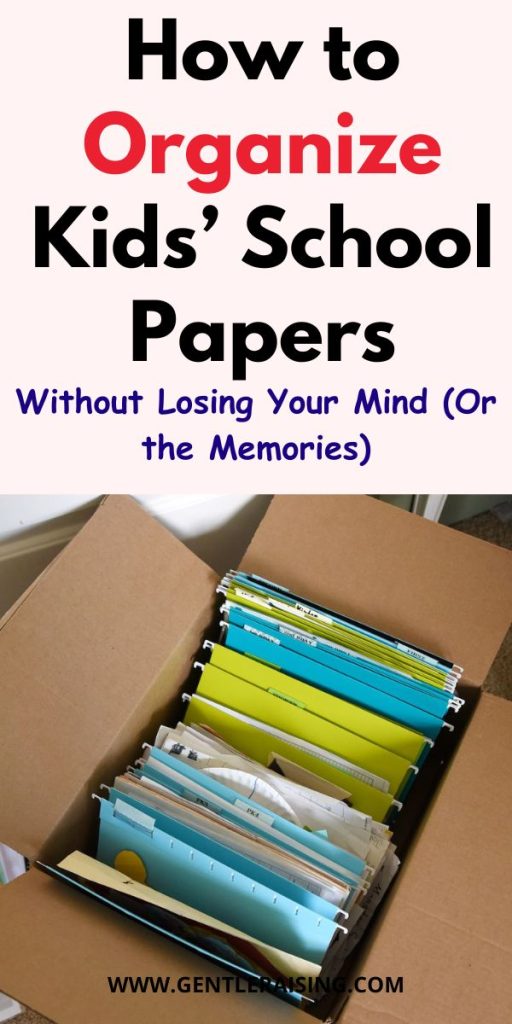
Step 4: Create a “Memory Folder” for Each Child
This is the heart of the system.
Every child gets:
- A binder
- Or an expandable file
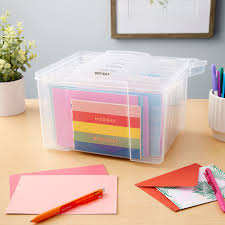
- Or a memory box
- Or a wide accordion organiser
There’s no perfect container, just the one that feels natural for your home.
Aim for 10–20 meaningful pieces per school year.
That’s enough to tell the story without overwhelming future-you, who will eventually look through all this.
Include:
- Special drawings
- Handwriting samples
- Creative projects
- Notable schoolwork
- Sweet notes teachers send home
- Anything that would make them smile when they’re older
Here’s the thing: kids love digging through these folders.
During summer break, they’ll flip through their old work with glowing pride.
And you’ll feel extra grateful you didn’t let the entire pile take over your house.
Step 5: Display the Good Stuff Without Losing Your Walls
Kids’ artwork should be seen, but not everywhere.
Some realistic display ideas:
- A set of clipboards on the wall
- Magnetic frames (the kind you open like a book)
- A cork strip in the hallway
- A hanging wire with clips (IKEA has a great one)
- A rotating frame that holds multiple pages inside
- A fridge section with a limit: “3 pieces at a time”
Display what they’re proud of.
Rotate every few weeks.
Make it casual, not a museum exhibit.
This keeps their confidence strong without letting paper creep into all corners of the house.
Step 6: Digital Archiving. For the Parent Who Loves Photos
If physical storage stresses you out, digital archiving is your new best friend.
Take photos of artwork and upload them too:
- Artkive
- Keepy
- Google Photos (simple and free)
- Canva folders
- A shared family album
You can create end-of-year photo books, which feel meaningful without boxes of paper stacked in closets.
A hybrid system works well for most families. Keep a few originals, digitise the rest.
Step 7: The End-of-Year Cleanout (Surprisingly Satisfying)
Set aside one afternoon at the end of the school year.
Bring snacks.
Play music.
Let your child help choose their favourites.
Go through:
- The memory folder
- The artwork displays
- The long-term records
- The leftover pile
Keep the best.
Recycle the rest.
Kids enjoy seeing how much they have grown, and you’ll appreciate the closure before the next school year starts.
Extra Tips for Staying Sane
A few small things help more than you’d expect:
- Keep a recycling bag near the drop zone.
- Set boundaries: “We keep the best, not everything.”
- Let your child choose one favourite each week.
- Take photos of bulky projects before letting them go.
- Don’t start a new system if you’re already overwhelmedAdddd one small habit at a time.
And let me repeat this gently:
You’re not failing if papers pile up.
Life is full. Parenting is full.
This is just one of those things that need a little structure and a lot of grace.
What NOT to Do (It’s Surprisingly Easy to Make These Mistakes)
- Don’t keep everything. It becomes cluttered and loses meaning.
- Don’t create a system that requires daily maintenance. Real life doesn’t allow it.
- Don’t over-organise. Too many bins = burnout.
- Don’t leave kids out. They’re more invested in systems they help create.
- Don’t wait for a “perfect time” to start. Perfection slows progress.
Simple Systems for Different Household Styles
The Busy Parent “Bare Minimum” System
- One drop basket
- One weekly review
- One memory folder per child
- Toss the rest
Perfect for seasons when you’re running on fumes.
The Aesthetic-Lover Minimalist System
- Wall file with clean labels
- Slim portfolio folders
- Rotating frames
- A curated digital library
Small-Space System
- Accordion folders
- Magnet strips
- Photo scanning
Apartment parents swear by this.
ADHD-Friendly System
- Open containers, no lids
- Visible storage
- Color-coded zones
- A weekly habit paired with another routine (like after Sunday breakfast)
Each family will tweak these differently; that’s the beauty of a flexible system.
Final Thoughts: It’s Not About Papers. It’s About PeaceOrganisingOrganising
Organising school papers isn’t really about the papers.
It’s about building a home that feels manageable and warm, not cluttered and overwhelming.
It’s about protecting your mental space while honouring their childhood.
You don’t need perfection.
You just need a simple rhythm.
One drop zone.
One weekly review.
One memory folder.
And a whole lot of grace.
You’re doing better than you think.