Why Holiday Cleaning With Kids Even Matters
You know what? When the holiday season rolls around, it can feel like every surface accumulates something: stray socks, gift wrap scraps, cereal dust, maybe a rogue crayon or two. You’re already juggling meals, guests, cooking, and emotional check-ins (“Are we good for dinner? Did you remember grandma’s gift?”). The idea of cleaning (with or without kids) can feel exhausting, frankly.
But involving your children in the holiday cleaning doesn’t just lighten your load; it builds something: connection, responsibility, a sense of shared purpose. Your kids learn that caring for the home is part of how we show love. Truthfully, it’s not just chores; it’s life skills. And yes, having helpers means there’s more happening in parallel (even if slower), but it also spreads the emotional weight. You’re not stuck doing it all alone.
Plus, a side benefit, when your home looks tidier, your holiday mood tends to lift. That calm, breathing-room feeling? It matters.
Setting the Stage: Mindset, Preparation & Tools
Before you hand your toddler a cloth, pause. Let me explain.
Mindset shift: cleaning as play
If you treat it like a lecture or punishment, kids will respond like you might in a meeting that drags on: disengaged, cranky, maybe even sullen. Instead, frame it as a joint mission. “Team Clean,” “Operation Tidy Tree,” “Make This Room Shine”, these aren’t just cute names. They set the tone. You’re the captain, and they’re your crew. You lead by example.
When I was a new mom, I’d sometimes put on a superhero cape (just a scarf over my shoulder) and exclaim, “We have to rescue the living room from the glitter monsters!” The kids giggled, grabbed dusters, and we got stuff done, sometimes.
Sort first, then clean
One trap many parents fall into: start scrubbing before removing clutter. If a room is full of distractions, toys, clothes, wrappers, your cleaning tools can’t reach the surfaces. So, do a quick “clear stage” first: one basket or bin per kid, for stray items. Let them sort as “keep/donate/put away.” Even toddlers can toss things into bins.
You’ll thank yourself. It’s easier to wipe surfaces when they’re unobstructed. And kids see visible progress faster, which fuels their enthusiasm.
Kid-friendly tools & safety
- Microfiber cloths in fun colours
- Small dusters, mini brooms, handheld vacuums (toy-sized but real)
- Spray bottles with diluted, safe cleaners (vinegar & water mix, gentle formulas)
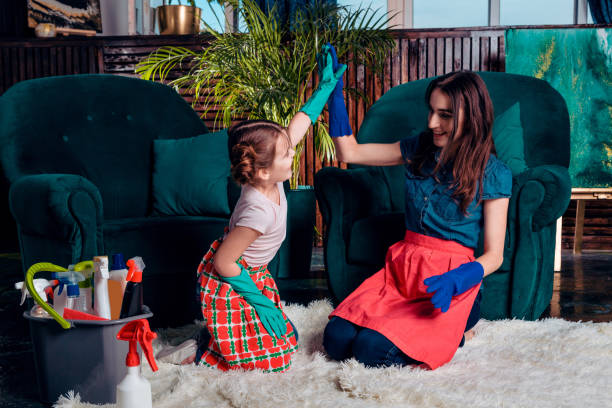
- Protective gloves or apron
- Step stools (stable, wide base)
- Clear labelling (stickers, colours) so kids know which clothes are for which area
- Safety first: avoid bleach where kids are; store chemicals out of reach
Also: talk through rules with them. “Hands off the plug,” “Don’t spray near the face,” “Use gentle pressure”, explain why. It helps them feel trusted, not bossed.
Easy Cleaning Hacks (Kid-Friendly), Room by Room
Here’s where theory meets action. These are hacks you cause and adapt with kids around.
Living Room / Family Room
- Use a basket pass: Each child carries a ‘basket of stray items’ and walks around the room for 2 minutes tossing things inside.
- “Fluff and straighten”: pillows, throws, cushions, all lifted, shaken, aligned. This low-stress task builds s a physical sense of order.
- Use a handheld vacuum (kid size) for crumbs and dust on rugs or floors; you supervise the electric cord.
- Feather dusters work great on shelves; challenge kids to find three dusty spots per pass.
Kitchen
This is delicate; kitchens have unpredictables. But kids can help:
- Let them help empty the dishwasher (non-sharp utensils, cups, plates) into the lower drawers.
- Use a spray mixture (vinegar + water) to wipe down cabinet fronts or backsplash, hand them a cloth and supervise the spray.
- For the countertop: mix a few drops of dish soap into warm water; kids can wipe surfaces under supervision (steering clear of hot pans).
- Sweep crumbs with a small broom. Make a “crumb race”, who can sweep into the dustpan fastest.
Bedrooms
- Bed-making is easier than it looks: put sheets and pillows in place together. You do the heavy lifting; they tuck the corners.
- Toy organisation: use labelled bins (animals, blocks, dolls), and have a 3-minute “race to sort” before wrapping up.
- Closet check: invite them to pick 2 items they’ve outgrown to donate. That teaches minimal clutter.
- Wipe down surfaces with a cloth, desks, dressers, letting them choose which piece to wipe each time.
Bathrooms & Shared Spaces
- Kid size isn’t small: give them spray bottles of safe cleaner and cloths; ask them to wipe down the mirror edges (avoid the central zone near faces) or baseboards.
- Soft scrub on plastic surfaces (tubs, sinks) using safe cleaning paste or baking soda mix, which can be applied with a sponge.
- Bath toys: toss into a bin and rinse all together — clean while they play.
- Toilet brush work is for you — but kids can hold the cleaner bottle or place towels.
Entry / Hallways / Mudroom
- Quicker to vet shoes: designate a “shoe station” where kids pair and align their shoes (left with left, right with right).
- Use a small broom or mop to dust/mud off shoes and floors.
- Wipe handrail or doorknobs with wipe cloths (string these tasks together).
- Top-level clutter (bags, hats, umbrellas), everyone picks one item to hang or store.
Games, Timers, Incentives. Making It Fun
Here’s the secret sauce: if it’s dull, kids lose interest fast. So gamify it.
Timer wars
Set a 5- or 10-minute timer. “Can we get the living room tidy before the timer goes off?” Turn it into a friendly competition (you vs. them, or team vs. team). When the buzzer rings, celebrate what you achieved — not what’s incomplete.
Cleaning bingo
Make a bingo card listing tasks: wipe coffee table, sort toys, sweep floor, fluff pillows, etc. First to bingo (row or column) earns a small reward, extra story time, pick the movie, and choose a snack.
Music & dance breaks
Play upbeat songs as “cleaning anthems.” Every two songs, pause and do a quick dance/stretch break. Keeps energy up, prevents burnout, brings joy. (“Shake off the dust!” music break.)
Sticker charts / small tokens
Each task done = sticker or token. Collect 5 and pick a small privilege (choose dessert, pick a family game, or extra reading time). But, and this is crucial, don’t overdo external rewards: aim for a shift toward pride and ownership, not dependence on treats.
When to step in & when to hold back
Sometimes a child will try a task but not do it exactly. That’s okay. Resist the urge to hijack. Instead, offer gentle guidance (“That corner needs a little more swipe”) and praise effort. Gradually, they learn precision. Too much micromanaging kills confidence.
Dealing with Setbacks, Perfectionism & Fatigue
Real talk: you will hit obstacles. Maybe one kid loses interest mid-cleaning. Maybe someone spills something. Maybe your own energy crashes. You’re human — and the holidays amplify that.
It’s okay when things aren’t perfect..
If there’s an unwiped shelf or a corner that still looks messy, fine. The holiday vibe matters more than absolute perfection. You’re not filming a home tour (unless you are, kudos). So choose your battles. Focus on visible, high-use spaces; the rest can wait.
Adjust expectations & pick your battles.
If you attempt full house cleaning in one go, you’ll burn yourself and the kids out. Instead, pick one area per session — living room now, bathroom later. If you only accomplish 50%, it’s still progress. Repeat that thought: progress matters.
When fatigue hits: pause & reset
If everyone’s tired or cranky, stop. Take a short break. Hydrate, snack, maybe sing a silly song. Sometimes, a 5-minute rest revitalises the energy enough to finish a bit more. If not, accept that the rest can wait.
Self-compassion
You are doing more than “just cleaning.” You’re caring for family, lodging emotion, and hosting memories. Don’t beat yourself up if the mantel still has glitter. Tomorrow you’ll pick up more. You aren’t less of a parent because one corner looks messy.
Sustaining Momentum After the Holidays
Once the holidays pass, many of us drop the routines. But what if you keep just a few of the habits? Then your home stays manageable (and less daunting next season).
Quick daily or weekly routines
- Ten-minute tidy: a timer, quick pass through high-traffic rooms
- Nightly reset: everyone picks up their stuff before bed
- Weekly “mini deep clean”: pick one area (bathroom, fridge, drawers) every week
- Alternating responsibilities: rotate kid tasks so no one feels stuck in repetitive chores
Involving kids regularly (not just during big cleanups)
Make cleaning a regular family ritual, not an emergency event. E.g., Sunday afternoon “reset hour” — 15 minutes cleaning together before screen time. Or create a shared task board so each child knows their task for the week.
Celebrate small wins
Don’t wait for the house to be spotless. When the floor is swept or toys are sorted, cheer it. Say, “Look how nice this feels!” Let them hear you describe the calm, the ease, the breathing space that emerges. That feedback is powerful.
Wrap-Up & Encouragement
So, what have we got? A strategy, some playful hacks, realistic expectations, and (most importantly) a mindset shift. Cleaning with kids over the holidays isn’t about getting it allperfect’ss about creating rhythm, teamwork, and a home that feels cared for together.
Yes, at times it will feel messy, chaotic, and slow. Yes, there will be mistakes and spills. But these are the moments that teach resilience, patience, and generosity of spirit, especially in motherhood or fatherhood.
You’ve got this. Pick a corner today, call in your crew, grab a song, and set a timer. Celebrate what you do. And if tomorrow you need to pause, you pause. The love in your home is what lasts, not the dust on the shelf.