The Tug-of-War Between Holiday Magic and Bedtime Chaos
If you’re a parent, you already know the holidays can feel like a beautiful, chaotic tug-of-war. On one hand, there’s the sparkle: twinkling lights, fresh cookies, that wide-eyed excitement kids carry in their little bodies like electricity. On the other hand, there’s reality: overstimulation, sticky fingers from candy canes, and bedtime meltdowns that hit harder than a dropped ornament on tile.
You want the magic. You also want your kid to sleep. And let’s be honest, sometimes those two things feel like they’re in direct conflict.
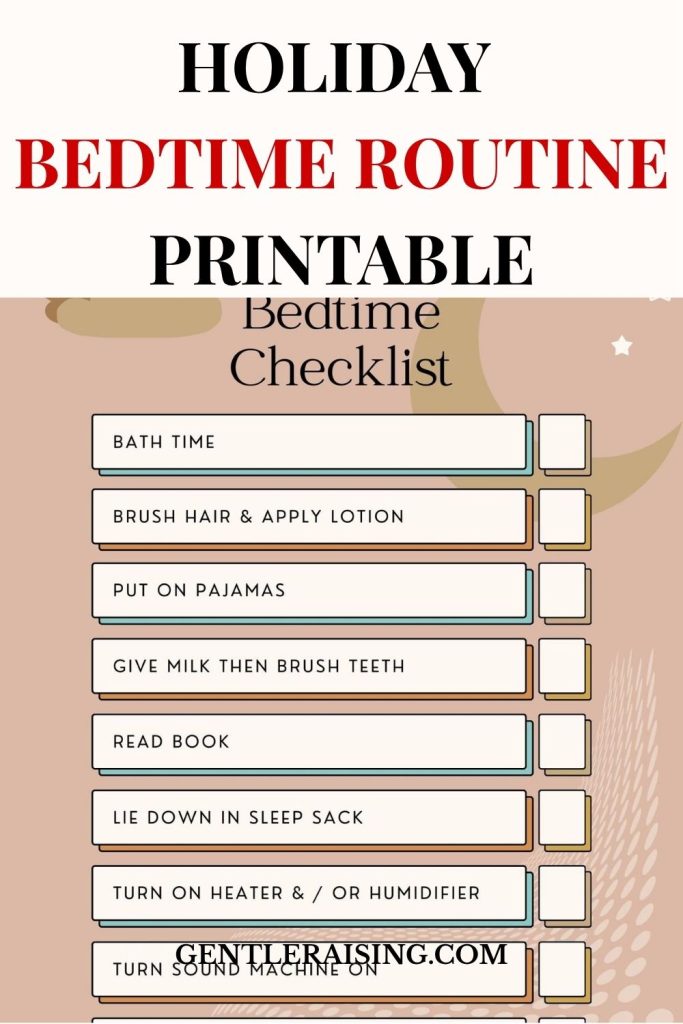
That’s where a holiday bedtime routine (and yes, a printable you can stick on the wall) comes in. Think of it as your parenting safety net. It’s not about rigid rules or crushing spontaneity; it’s about creating just enough predictability so kids can wind down—even when the house smells like gingerbread and Grandma insists on another round of cocoa.
Why Holidays Disrupt Sleep (and Why It Matters)
Holidays bring joy, sure, but they also scramble the rhythms kids rely on. Their sleep cues (what doctors call circadian rhythms) can get thrown off by:
- Late-night gatherings where bedtime slides later than usual.
- Extra sugar—those cookies taste magical at 6 pm, but often fuel a 9 pm second wind.
- Travel—a 5 pm car seat nap can sabotage bedtime faster than you can say, “Just close your eyes.”
- Overstimulation—the noise, decorations, relatives… even happiness can be exhausting.
And the kicker? Sleep-deprived kids aren’t just “a little cranky.” They’re prone to meltdowns, harder mornings, and even weaker immune systems, which nobody wants during cold and flu season.
Parents feel it, too. When kids stay up late, adults often lose the only quiet window they have to wrap gifts, sip tea, or just breathe. So really, routines aren’t only for kids, they’re for everyone’s sanity.
The Case for Bedtime Routines (Even When Everything Feels Upside Down)
Bedtime routines are like guardrails. They don’t lock you into one rigid schedule, but they keep you from swerving too far into chaos. Even research shows that kids who follow consistent bedtime rituals fall asleep faster and wake less often at night.
It doesn’t have to be complicated. Think: bath, story, cuddle, sleep. The key is predictability. When kids know what’s coming next, their nervous systems relax. It’s like turning down the volume on their inner excitement so sleep can sneak in.
Here’s the thing: routines aren’t just practical, they’re emotional anchors. A child who knows they’ll always get “two pages and a kiss” feels secure, even if the house is full of relatives. That’s powerful.
Holiday-Specific Challenges
Let’s get real for a minute. The holidays bring specific curveballs. You probably recognise at least one of these:
- Visiting relatives with different schedules. Grandma might insist, “Just let them stay up, it’s the holidays!” Sweet, but not so sweet when you’re dealing with a 3-year-old tantrum at midnight.
- Sleeping in new places. Hotel rooms, cousins’ houses, or even a sleeping bag in the living room can unsettle kids. Unfamiliar smells, sounds, and even the lighting can throw them off.
- Screen time creep. “We’ll just watch one holiday movie.” Cut to three Hallmark specials later, and everyone’s wired.
- Parent fatigue. Let’s not pretend we’re immune. Parents often stay up later, eat more sugar, and keep odd schedules, too. It’s hard to enforce calm when you’re running on cocoa fumes yourself.
This is why a printable bedtime chart works: it’s external. Instead of you being the bedtime police, the chart becomes the “boss.” Kids get to check things off, which shifts the energy from nagging to play.
Building the Holiday Bedtime Routine
So what actually goes on in the routine? The core isn’t different from any other time of year: consistency, cues, and connection.
Consistency: Same steps, same order, every night (with wiggle room for travel).
Cues: Signals that help the brain wind down, dim lights, brushing teeth, and reading.
Connection: A ritual that makes kids feel loved and safe, hugs, gratitude, soft words.
Now, here’s where the holiday twist comes in: you weave the season into the routine.
- Christmas: Write a note for Santa, hang a special ornament, or read a Christmas story.
- Hanukkah: End the evening with a quiet reflection or retelling of family history.
- Kwanzaa: Share a single word connected to the principle of the day.
- Winter Solstice: Step outside for one minute of stargazing before bed.
These touches keep the holidays alive without letting them spiral out of control.
The Printable: Visual, Fun, Kid-Friendly
Now let’s talk about the star of the show, the printable bedtime chart.
What it looks like:
- Bright but not overwhelming colours (soft blues, gentle reds, festive accents).
- Icons or small pictures (toothbrush, pyjamas, book, bed) so even toddlers can follow along.
- Simple layout with steps kids can check off with a marker or sticker.
Why it works:
Kids feel empowered when they’re in charge of checking the boxes. Suddenly, bedtime isn’t something happening to them, it’s something they’re steering. And when they take ownership, resistance usually melts.
How to use it:
- Print it, laminate if possible, and use dry-erase markers.
- Post it on the fridge or bedroom wall at child-eye level.
- Let your child decorate it with stickers or drawings to “make it theirs.”
Sample Routines by Age
Because let’s face it, bedtime with a toddler is a different beast than bedtime with an 8-year-old.
Ages 2–4:
- Put on pyjamas
- Brush teeth
- Read one short story
- Sing a lullaby
- Lights out
Ages 5–7:
- Brush teeth
- Choose one stuffed animal for bed
- Write one thing about a holiday “gratitude jar”
- Read one chapter/story
- Lights out
Ages 8+:
- Screen-free time 30 minutes before bed
- Journal (favourite memory from the day, or tomorrow’s wish)
- Quiet reading or meditation app for kids
- Lights out
Pro tip: If you’ve got siblings, let them each pick one routine card (like “story” or “song”) so they feel invested.
Parent Survival Tips
Here’s where I’ll say something you might need to hear: you don’t have to get it perfect. Holidays are messy. If you keep 70% of your routine intact, you’re winning.
A few survival hacks:
- Travel bag of routine cues. Pack their favourite book, a night-light, and their pillowcase. Familiar smells and textures help kids relax.
- Balance the sugar. Offer a protein snack before bed (cheese stick, banana with peanut butter) to soften the sugar crash.
- Use sound. A white-noise app can drown out noisy relatives in the next room.
- Model calm. Kids notice when you’re frazzled. If you can, give yourself a mini-routine: t: :o: , wash your face, light a candle, take two deep breaths.
Making It Magical Without Overcomplicating
It’s easy to overdo it, Pinterest-worthy rituals, 12-step routines, elaborate crafts. But honestly? Small touches mean the most to kids.
- A string of fairy lights by the bed.
- A lavender-scented lotion rub before pyjamas.
- Whispering one “secret” (something you love about them) every night.
That’s it. That’s the magic.
The Free Printable
So, about that printable. Here’s what’s inside:
- Three templates: one blank (for customisation), one toddler-friendly with pictures, and one for older kids with checkboxes.
- Holiday icons: little snowflakes, stars, menorahs, candles, festive but not overwhelming.
- Editable space: You can write in your own traditions (like “light a candle” or “gratitude jar”).
You can print it, laminate it, or even tape it to the fridge and let kids add stickers each night.
Closing: The Gift of Rest
At the end of the day (pun intended), holiday bedtime routines aren’t about being rigid; they’re about giving your child an anchor in the middle of all the excitement. Think of it less as a checklist and more as a gift.
Because here’s the truth: kids don’t remember the perfectly decorated cookies or the exact number of gifts. They remember how they felt. And if bedtime can be a pocket of calm, warmth, and connection? That feeling will outlast the season.
So this year, while the lights twinkle and the cocoa simmers, permit yourself to slow the night down. Use the chart. Keep it simple. And remember: peaceful nights make for brighter mornings.