Light, Nourishing Ideas That Actually Make It Past the ‘I Don’t Like It’ Stage
There’s something quietly magical about spring. The air shifts, the markets fill up with colour again, and suddenly you’re standing in front of a pile of snap peas and strawberries thinking, yes, okay, maybe this season can work for us. If you’re feeding a toddler, you know that ‘this season can work for us’ is doing a lot of heavy lifting in that sentence.
Toddlers are, let’s be honest, unpredictable eaters. One Tuesday, your child will demolish an entire bowl of peas. The very next day, peas are apparently the enemy. It’s exhausting and occasionally hilarious, and you are not alone in this.
What spring does quietly, helpfully, is offer a whole new rotation of colours, textures, and flavours to cycle through. And more options means more chances to land on something they’ll actually eat.
This guide isn’t here to lecture you on nutritional percentages or hand you a rigid meal plan. Instead, think of it as a friend, one who’s been in the kitchen, has flour on their shirt, and genuinely wants to help you navigate the beautiful chaos of feeding small humans in spring. We’ll cover breakfast, lunch, dinner, and a few snacks in between, with real ideas that work in real kitchens.
Why Spring Is Actually a Game-Changer for Toddler Meals
Before the recipes, a quick thought on why this season matters. Toddlers are hardwired to respond to novelty; it’s part of how they learn. Bright colours on a plate catch their attention. New textures give their developing senses something to work with. And spring, perhaps more than any other season, delivers both.
Asparagus, peas, radishes, strawberries, spinach, artichokes, and spring onions aren’t just fresh ingredients. They’re conversation starters. ‘What colour is this?’ ‘Does it snap or squish?’ ‘Does it smell like anything?’ Food becomes play, and play at the table reduces the standoff energy that turns mealtimes into negotiations.
There’s also a practical angle. After months of root vegetables and citrus, which are fine, spring produce tends to be sweeter and milder. Peas are naturally sweet. Strawberries need no convincing. Even asparagus, when roasted, develops a slightly nutty edge that many toddlers find surprisingly acceptable. The season essentially gives you softer entry points.
And one more thing, spring produce cooks fast. You’re not waiting an hour for a butternut squash to soften. Most of what’s in season right now is ready in ten to fifteen minutes, which, when you’re feeding a hangry toddler at 5:30 PM, feels like an actual gift.
Mornings Without the Meltdown: Spring Breakfasts Worth Waking Up For
Breakfast for toddlers is its own category of challenge. They’re often still half-asleep, their appetite hasn’t fully switched on, and you’ve got approximately twelve minutes before the morning turns sideways. So the goal here is simple, quick, and colourful enough to pique some curiosity.
Strawberry Banana Oat Pancakes
These have become a weekend staple in households across the board for good reason. Mash one ripe banana into a bowl, mix in an egg and about a third of a cup of rolled oats (blended fine works better for younger toddlers), and cook in small circles in a lightly oiled pan. Top with sliced strawberries. That’s it.
The sweetness comes from the banana and the berries, no added sugar needed. The oats give it staying power, which matters because toddlers who are still full at 10 AM are markedly easier to be around than the alternative. You can batch these on a Sunday and reheat them throughout the week.
Green Eggs (Without the Ham, if You Prefer)
Blend a handful of fresh spinach with two eggs before scrambling them. The result is a pale green, slightly flecked scramble that looks dramatically different from regular eggs, and toddlers, for reasons that defy adult logic, often find that delightful. Serve alongside toast soldiers, and you’ve got protein, iron, and a visual that makes breakfast feel like an event.
The spinach barely registers taste-wise, eggs are quite assertive in their flavour, but you’re getting the nutritional benefit in. It’s one of those gentle back-door moves that parents learn to appreciate.
Spring Fruit Yoghurt Bowls
Full-fat plain yoghurt, not the sweetened stuff, topped with strawberries, a few blueberries if you have them, and perhaps a small drizzle of honey for children over twelve months. Add a sprinkle of granola if your toddler handles texture well. The contrast of creamy, tart, and sweet in one bowl tends to land well, and the whole thing takes about ninety seconds to put together.
A small note on yoghurt: brands like Chobani, Fage, and Stonyfield make full-fat options that are widely available and work really well here. If you’re in a region where Greek yoghurt is harder to find, any full-fat plain yoghurt does the job.
The Midday Meal: Where Vegetables Go to Become Actually Acceptable
Lunch is where you have a little more time to be creative or at least, more time than the dinner crunch allows. And spring gives you so much to work with.
Pea and Mint Pasta
This one sounds more sophisticated than it is. Cook a small pasta shape, such as fusilli or orzo work especially well, and blend about half a cup of frozen or fresh peas with a small splash of pasta water, a teaspoon of olive oil, a pinch of salt, and two or three fresh mint leaves. Toss through the pasta.
The colour is a gorgeous pale green, the flavour is sweet and fresh, and the whole thing comes together in about fifteen minutes. Grated parmesan on top adds a salty depth that many toddlers find irresistible, and honestly, it’s not bad for the adults eating the leftovers either. There’s always someone eating the leftovers.
Spring Vegetable Fritters
Fritters are a parent’s secret weapon. Grate or finely chop whatever spring vegetables you have: courgette, peas, corn, spinach, spring onion. Mix with an egg, a few tablespoons of flour, and a pinch of salt. Fry in small rounds until golden. They’re portable, they reheat well, and because they’re golden and slightly crispy, toddlers who refuse vegetables in other forms often eat these without complaint.
The texture thing is real, by the way. Occupational therapists who work with children on food aversions often talk about how the same ingredient can land completely differently depending on how it’s prepared. A boiled pea and a pea inside a crispy fritter are, to a toddler’s sensory system, genuinely different foods. Which is useful to know.
Soft Flatbreads with Hummus and Spring Toppings
A small warm flatbread, spread thickly with hummus, topped with whatever the fridge offers: sliced cherry tomatoes, cucumber rounds, a few pea shoots, and a strip of roasted red pepper. It’s not complicated. But the act of building it, of arranging things on the bread, is something toddlers can participate in. Children who help make their food are, research consistently shows, more likely to eat it.
There’s no fancy technique here. Just a plate, a willing toddler, and the patience to let them place things slightly chaotically. It’s worth it.
Snack O’Clock: The Quiet Hero of Toddler Nutrition
Toddlers have small stomachs and high energy needs, which means snacks aren’t optional; they’re structural. Spring makes snack time easier because so much of what’s in season is naturally snack-shaped. Strawberries. Sugar snap peas. Radishes. Thin asparagus spears. These things don’t require much preparation beyond washing.
The Snack Plate (or ‘Bento Box’ if You’re Feeling Ambitious)
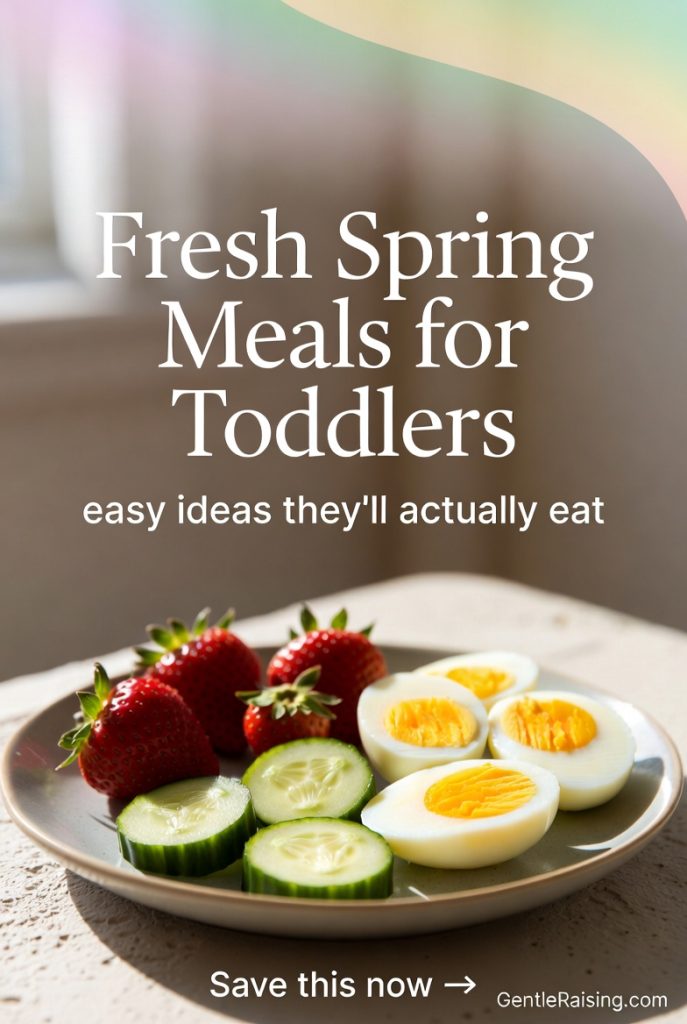
This doesn’t need to be a work of art. A small plate with four or five different things, a few strawberry halves, some cheese cubes, crackers, snap peas, and a couple of grapes halved lengthwise hits multiple food groups and gives toddlers the autonomy of choosing what to eat first. That sense of control matters more than most parents realise.
Ellyn Satter’s Division of Responsibility model, which is widely cited in paediatric nutrition, makes the point that parents decide what and when, and children decide whether and how much. A snack plate lets that dynamic breathe naturally. You’ve done the work of offering; the rest is theirs.
Frozen Strawberry Yoghurt Drops
Blend strawberries into full-fat yoghurt, spoon small drops onto a baking sheet lined with parchment, and freeze for two hours. These are especially brilliant on warmer spring days and can be stored in a container in the freezer for up to two weeks. They melt slowly enough that they’re safe for most toddlers, though check the size, keep drops small and flatten them slightly.
Avocado on Rice Cakes
Mashed avocado on a plain rice cake with a tiny squeeze of lemon is one of those snacks that never seems to go out of fashion in toddler circles. The fat content in avocado supports brain development, it’s one of the genuinely good fats, and rice cakes offer crunch without being a choking risk, the way some crackers can be. Simple, effective, beloved.
Dinner Without the Drama: Evening Meals That Don’t Require Negotiation Skills
Here’s the thing about toddler dinners: they need to be fast, because by 5 PM hunger has usually tipped into impatience. They need to be familiar enough not to cause panic, but interesting enough to keep things moving. And they need to survive the moment when your toddler suddenly decides that the food they’ve been eating for three weeks is now ‘yucky.’ Spring helps because you’ve got enough variety to rotate through without exhausting the rotation.
Spring Vegetable Risotto
Risotto sounds labour-intensive, and a traditional risotto certainly is. But a toddler-friendly version is much more forgiving. Use arborio rice, cook down with a mild vegetable stock, and stir in whatever you have: frozen peas (added right at the end so they stay bright), wilted spinach, diced courgette cooked soft. Finish with a good knob of butter and some grated cheese.
The soft, creamy texture of risotto is a genuine winner with toddlers who struggle with harder textures. It requires chewing, sure, but it’s forgiving in a way that chewy meat or raw carrots aren’t. And the mild, savoury, slightly buttery flavour hits a note that most toddlers respond well to.
Baked Salmon with Pea Purée and Sweet Potato Mash
Salmon baked at a low temperature around 180°C/350°F for fifteen to eighteen minutes comes out soft and flaky, easy for toddlers to pick at with fingers or a fork. Pair it with a simple pea purée (blended peas, a splash of butter, a little salt) and mashed sweet potato for a plate that’s genuinely well-rounded nutritionally.
Oily fish like salmon contain omega-3 fatty acids, specifically DHA, which play a role in brain development during early childhood. Paediatric guidance in most countries recommends including fish one to two times per week in young children’s diets. Spring is a good time to build that habit while the rest of the plate is seasonal and colourful.
Spring Chicken Tray Bake
Tray bakes are genuinely underrated in the toddler meal canon. Arrange chicken thighs (boneless, skinless) in a roasting pan alongside halved new potatoes, asparagus spears, and a handful of cherry tomatoes. Drizzle with olive oil, add a pinch of salt and dried herbs, and roast at 200°C for about thirty-five minutes. Everything cooks together, everything softens together.
What you’re left with is a full meal from a single pan, minimal washing up, which matters at the end of a long day and a plate that can be adapted for the adults eating alongside. Add some chilli flakes to the grown-up portions, a squeeze of lemon, and a glass of something cold. The toddler version stays mild; your version gets to have flavour. Everybody wins.
Lentil and Spring Vegetable Soup
Red lentils cook quickly and collapse into a naturally thick, smooth soup with very little effort. Add diced carrot, a handful of spinach, a tin of good-quality chopped tomatoes, and a mild vegetable stock. Simmer for twenty minutes. Blend partially if your toddler prefers a smoother texture, or leave it chunky if they’re up for it.
Lentils are an excellent plant-based protein and iron source important for toddlers, particularly those in households that eat less meat. Pairing iron-rich foods with something vitamin C-rich (tomatoes do this work here) helps with absorption. There’s a bit of nutrition science working quietly in the background of this soup, and nobody at the table needs to know.
Making It All Work: A Few Honest Notes on Feeding Toddlers in the Real World
You’ve probably noticed that none of the recipes above is particularly complex. That’s deliberate. When you’re parenting a toddler, elaborate cooking often doesn’t survive contact with the reality of the day. What works is simple techniques, good ingredients, and a bit of advanced thinking.
A few things worth keeping in mind as you cook through spring:
- Exposure without pressure. Paediatric feeding specialists consistently note that repeated low-pressure exposure to a food, even if it’s refused twelve times, is how acceptance eventually comes. Keep serving the asparagus. Don’t make it a battle. One day, mysteriously, it’ll disappear from the plate.
- Batch cook and freeze. Spring pea purée freezes beautifully. So do fritters, pancakes, and soup. Making a double batch on a Sunday afternoon and storing portions in the freezer means you have backup meals for the hard evenings.
- Involve them in shopping. A toddler who helped pick out the strawberries at the market is measurably more interested in eating those strawberries at home. It sounds small, but it consistently works.
- Don’t stress about perfect variety every day. Some days lunch is cheese and crackers and a handful of grapes. That’s fine. Nutrition is evaluated over days and weeks, not individual meals.
- Eat together when you can. Research on family meals, including from the Harvard T.H. Chan School of Public Health, links shared meals with better dietary habits in children. It doesn’t have to be every dinner. But as often as you can manage it, sit down together.
A Quick Word on Texture, Because It Matters More Than You Think
Texture aversions in toddlers are genuinely common, and they’re not stubbornness for its own sake; they reflect real differences in sensory processing. If your toddler rejects a food based on how it feels in their mouth, that’s information, not defiance.
Spring is actually useful here because the season gives you so many different textures to work with. The crunch of a snap pea. The soft give of a roasted asparagus tip. The creamy smoothness of an avocado. The fluffy lightness of scrambled eggs. You can observe which textures your toddler gravitates toward and build meals around those while gently introducing others on the side.
If texture aversions are significantly limiting your child’s diet, if they’ll only accept a very narrow range of foods and seem genuinely distressed around others, it’s worth a conversation with your paediatrician. Some children benefit from working with a feeding therapist, and there’s no shame in seeking that support. Most parents who go that route wish they’d done it sooner.
The Spring Farmers’ Market and Why It’s Worth Going
This might seem like an odd detour, but bear with me. Farmers’ markets in spring are a genuine resource for parents of young children, not just for the produce (though that’s excellent), but for the experience itself.
When toddlers see where food comes from, when they can watch someone hand over actual strawberries from an actual basket, talk to the person who grew them, and choose their own bunch of radishes, food becomes something with a story. It stops being a thing that appears on a plate and becomes something connected to people, places and the outdoors. That shift, even if it happens gradually, tends to make children more curious and less apprehensive about eating.
You don’t need to go every week. Once or twice a season is enough to plant that connection. Find your nearest market. Local Harvest is a useful directory if you’re in the US. Pack a small bag, bring your toddler, and let them point at things. See what happens.
Honestly, You’re Doing Better Than You Think
Feeding a toddler through any season is a combination of planning, improvisation, patience, and accepting that control is mostly an illusion. Some days, the pea-and-mint pasta is a triumph. Some days it ends up on the floor. Both of those outcomes are completely normal.
What spring offers is optimism, really. New flavours, new colours, lighter air, and the sense that everything is starting fresh. Bring that energy to the kitchen. Keep the meals simple. Make the plate colourful. Eat together when you can. Serve the asparagus even if it gets thrown across the room.
Because one of these days, maybe next week, maybe next spring, your toddler is going to pick up a snap pea from the snack plate, take a bite, and say something like ‘more please.’ And you’ll remember that you kept trying, kept offering, kept showing up at the kitchen counter. That persistence is the whole game. You’ve got this.