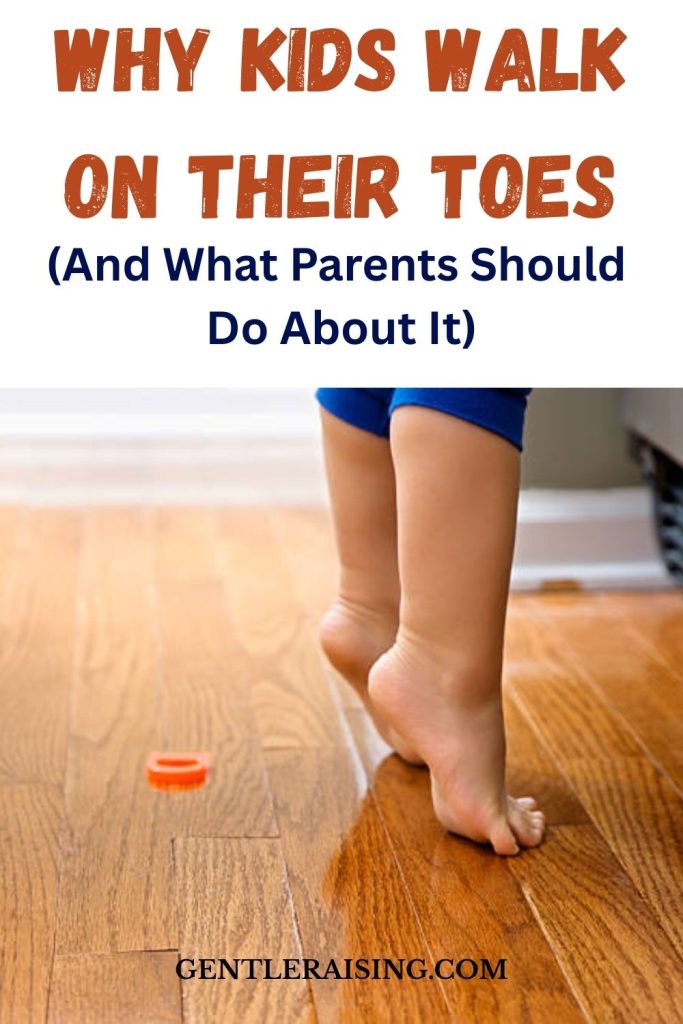
You’re watching your child walk across the living room, bare feet, pyjamas dragging just a little, and then you notice it. They’re up on their toes. Not once. Not twice. Consistently.
And suddenly your brain does that thing it does best: Is this normal? Should I be worried? Did I miss something important?
If you’re a new parent, or even a seasoned one, toe walking can feel like one of those oddly specific concerns no one warned you about. It sits in that uncomfortable space between probably nothing and what if it’s something. Let me explain, because the truth lives somewhere in the middle, and it’s far less scary than Google might suggest.
First Things First: What Is Toe Walking, Really?
Toe walking is exactly what it sounds like. A child walks on the balls of their feet without their heels making contact with the ground. Sometimes it’s constant. Sometimes it comes and goes. Sometimes it’s almost playful, like they’re pretending the floor is lava.
Here’s the thing: toe walking is common, especially in toddlers who are just figuring out how legs, balance, and gravity work together. Walking is a learned skill, not an instinct. Kids experiment. A lot.
And yes, toe walking can be part of that experimenting.
The Age Question Everyone Asks (and Rightfully So)
Most children begin walking between 9 and 18 months. In those early months, sometimes even the first year or two of walking, toe walking is often considered developmentally typical.
Many paediatricians won’t even blink unless:
- Toe walking continues past age 2–3
- It happens all the time, not just occasionally
- The child can’t walk flat-footed, even when asked
That last point matters more than parents realise.
If your child can walk heel-to-toe but prefers toes, that’s a very different story from a child who physically cannot put their heels down.
Idiopathic Toe Walking: A Fancy Term for “We Don’t Know Why”
You may hear professionals use the phrase idiopathic toe walking. It sounds heavy. It isn’t.
Idiopathic simply means there’s no identifiable medical cause. No neurological condition. No muscle disease. No injury. Just toe walking that sticks around longer than expected.
This is the most common diagnosis for persistent toe walking in otherwise healthy children.
Honestly, it’s medicine’s way of saying: We’ve checked the big things, and everything looks okay.
When Toe Walking Points to Something Else
Now, let’s be clear without being alarmist. In some cases, toe walking can be linked to underlying conditions. This is why doctors ask questions, observe movement, and sometimes refer families to specialists.
Possible associations include:
- Cerebral palsy
- Muscular dystrophy
- Autism spectrum differences
- Spinal cord conditions
- Shortened Achilles tendon
That list can feel overwhelming. Take a breath.
Most children who toe walk do not have these conditions. The presence of toe walking alone, without other signs like delayed milestones, muscle weakness, or coordination issues, rarely tells the whole story.
Context matters. Always.
The Sensory Piece Parents Often Don’t Hear About
Here’s a tangent worth taking.
Some children toe walk because of sensory processing differences. For these kids, walking on toes may feel more stable, more controlled, or simply more comfortable.
Think of it like this: some people hate socks with seams. Others can’t stand certain food textures. Sensory preferences show up in surprising ways.
Toe walking can be one of them.
Occupational therapists see this pattern often, especially in children who:
- Seek deep pressure
- Avoid certain floor textures
- Seems sensitive to noise or crowds
Again, not a problem, just information.
How Common Is Toe Walking?
Estimates vary, but studies suggest that up to 5% of children toe walk at some point. Among toddlers, that number jumps much higher.
By school age, most children naturally shift into a typical walking pattern without any intervention. Their muscles stretch. Their coordination improves. Their nervous system matures.
Bodies are smart like that.
When “Let’s Wait and See” Is Actually Good Advice
Parents often feel pressure to do something. Right now. Immediately.
But in many cases, observation is the correct call.
Toe walking may not require treatment if:
- Your child is under age 3
- They meet other developmental milestones
- They can walk flat-footed when prompted
- There’s no pain or stiffness
Monitoring doesn’t mean ignoring. It means watching with intention.
When It’s Time to Ask More Questions
A paediatrician or specialist may suggest further evaluation if:
- Toe walking persists past age 4–5
- Calf muscles appear tight or shortened
- Your child complains of leg pain or fatigue
- Shoes wear unevenly
- Balance seems off
This isn’t about labelling. It’s about clarity.
What an Evaluation Usually Looks Like (No, It’s Not Dramatic)
Most assessments are straightforward and surprisingly low-key.
They may include:
- Watching your child walk and run
- Checking ankle flexibility
- Reviewing developmental history
- Asking about family patterns (yes, toe walking can run in families)
Sometimes referrals go to:
- Physical therapy
- Occupational therapy
- Pediatric orthopedics
- Neurology (less common, but thorough)
No flashing machines. No immediate conclusions. Just careful observation.
Treatment Options: From Minimal to More Structured
Here’s where things often get misunderstood. Treatment doesn’t always mean intervention.
Options depend on severity, age, and physical findings.
Common approaches include:
- Physical therapy to stretch muscles and strengthen gait patterns
- Occupational therapy for sensory-related toe walking
- Night splints or braces to gently stretch the Achilles tendon
- Serial casting in more persistent cases
And yes, sometimes the recommendation is simply: time.
A Quick Word About Shoes (Because Parents Ask)
Special shoes don’t cure toe walking. But supportive footwear, think firm soles and good heel structure, can help encourage heel contact.
Brands like Stride Rite or New Balance are often mentioned by therapists, not because they’re magical, but because they’re well-constructed.
Barefoot time still matters too. Balance is everything.
Surgery: Rare, Reserved, and Carefully Considered
Surgical intervention is uncommon and typically reserved for older children with significant muscle tightness that hasn’t responded to other approaches.
If you’re hearing this suggestion early on, it’s reasonable to ask more questions or seek another opinion.
Most families never reach this point.
What Happens If Toe Walking Is Left Alone?
This depends entirely on the child.
Some outgrow it completely.
Some reduce it to occasional toe walking.
A small group may develop tight calves or foot discomfort over time.
That’s why monitoring matters. Not panic. Not dismissal. Awareness.
Life at Home: Practical, Low-Stress Tips
You don’t need to turn daily life into therapy sessions. But small habits can help.
- Encourage walking barefoot on different surfaces
- Stretch calves gently during play
- Model heel-to-toe walking without calling attention to it
- Avoid constant reminders (“Put your heels down!” rarely helps)
Children learn best when pressure is low.
The Emotional Side No One Talks About
Toe walking isn’t just physical. It can affect confidence, especially as kids grow older and notice differences.
Parents feel it too. The second-guessing. The worry. The quiet comparisons at the playground.
You’re not failing your child by noticing this. You’re paying attention. That matters.
Clearing Up a Few Persistent Myths
- “Toe walking always means autism.”
It doesn’t. - “They’ll definitely need braces.”
Not usually. - “You should correct it every time you see it.”
Please don’t.
The internet loves certainty. Parenting rarely offers it.
Trusting Your Gut Without Letting It Run the Show
If something feels off, ask. If reassurance feels right, accept it.
Parenting lives in that space between instinct and information. Toe walking is just one of many moments where those two meet.
Final Thought: Most Roads Lead to Solid Ground
Here’s the quiet truth most parents discover eventually: toe walking is often just a phase. A quirk. A temporary detour in how a child learns to move through the world.
Stay observant. Stay curious. Stay kind to yourself.
Your child isn’t broken. Their body is learning, sometimes in ways that look a little unexpected.
And honestly? That’s parenting, step by step, heel to toe.