It’s 2:17 a.m. Your baby is awake. Again.
There’s breast milk in the fridge. Cold. Very cold.
You pause, bottle in hand, thinking: Wait… can babies even drink cold breast milk? Will this upset their stomach? Am I about to ruin the night?
If that thought sounds familiar, you’re in good company. New parents, moms, dads, and all caregivers- ask this question constantly. And honestly? The confusion makes sense. Feeding a baby comes with rules, warnings, and a lot of side-eye advice from well-meaning people.
So let’s talk about it calmly, clearly, and without the fear-mongering.
The Short Answer (and Then the Real One)
Yes. Babies can drink cold breast milk.
Now here’s the real answer: Most babies can drink cold breast milk safely, comfortably, and without any digestive drama. But there are a few nuances that matter, things like your baby’s age, health, and personal preference.
Notice that word: preference. Babies are people. Tiny, loud people, but people nonetheless.
What Do We Even Mean by “Cold” Breast Milk?
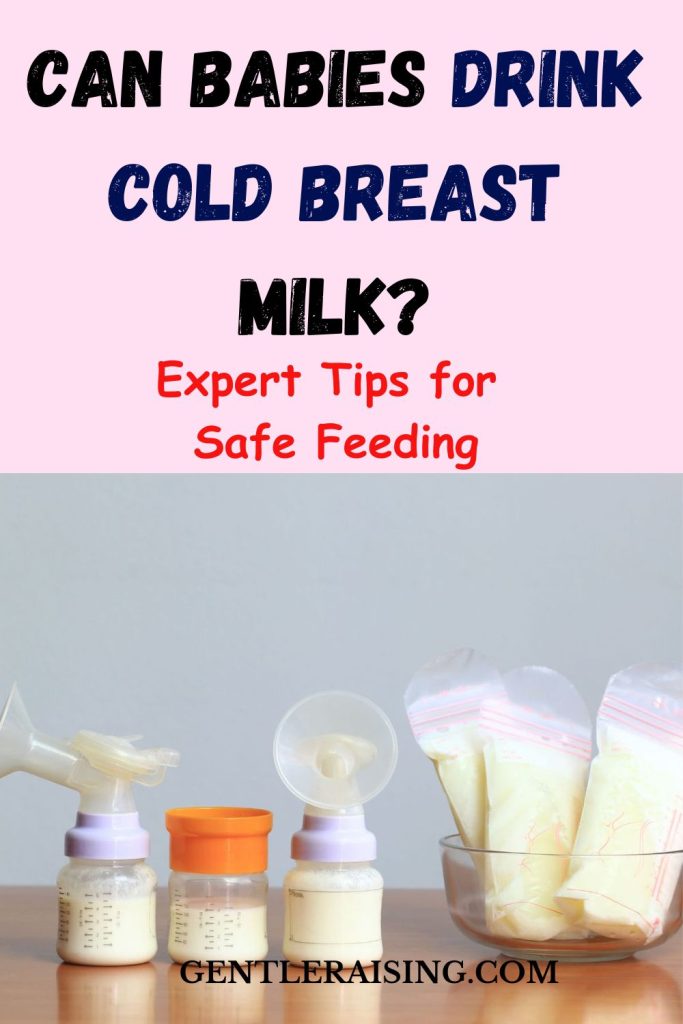
When parents say “cold,” they usually mean milk straight from the refrigerator, around 4°C (39°F). Not frozen. Not icy. Just chilled.
Breast milk that’s been pumped, stored safely, and kept cold isn’t somehow “harsh” or shocking to a baby’s system. It’s still breast milk, alive with antibodies, fats, enzymes, and nutrients that don’t suddenly vanish because the milk feels cool.
Think of it like water from the fridge. Same water. Different temperature.
How Babies Experience Temperature (This Might Surprise You)
Here’s the thing—babies don’t interpret temperature the same way adults do.
Inside the womb, babies are surrounded by amniotic fluid that isn’t exactly warm-bath cosy all the time. Temperature fluctuates. Sensation varies. Their nervous systems adapt.
When babies drink milk, they’re focused on:
- Hunger relief
- Sucking rhythm
- Comfort and closeness
Temperature often comes second, unless it’s extreme.
Some babies gulp cold milk like it’s no big deal. Others pause, squint a little, and decide they’re not fans. Neither reaction is a red flag.
What Actually Matters More Than Temperature
If you remember only one thing, let it be this: milk safety matters more than milk temperature.
Cold breast milk is fine if:
- It was pumped with clean equipment
- Stored according to guidelines (CDC, WHO, NHS all agree on this)
- Used within safe time limits
- Smells normal (breast milk can smell soapy sometimes, that’s lipase, not spoilage)
A warm bottle that sat out too long? That’s the real issue. Not the cold one.
Cold Milk Myths (And Why They Won’t Die)
Let’s clear the air.
Myth 1: Cold milk causes stomach pain
There’s no solid evidence supporting this. Baby digestive systems handle temperature changes better than we assume.
Myth 2: Cold milk causes colic
Colic has many theories, immature gut, gas, nervous system development, but cold milk isn’t a proven cause.
Myth 3: Cold milk “shocks” the baby
If that were true, pediatric wards would be chaos. They’re not.
These beliefs often come from cultural traditions or older medical advice that’s been updated. And traditions matter, but they don’t always equal science.
When Cold Milk Might Be an Issue
Now let’s be fair. There are times when warming milk makes sense.
- Premature babies: Many NICUs recommend warmed milk for preemies, mostly for comfort and energy conservation.
- Babies with strong reflux: Some parents notice warmer milk seems soothing. Not a rule, just observation.
- Babies who clearly dislike cold milk: If your baby grimaces, refuses the bottle, or feeds poorly, listen to that.
See the pattern? Comfort and cues, not blanket rules.
Fridge Milk vs Freshly Pumped Milk
Freshly pumped milk is naturally warm. Some babies get used to that temperature early on, especially if they mostly nurse directly.
When those babies first encounter cold milk, the reaction can be… dramatic. But dramatic doesn’t mean harmful. It just means unfamiliar.
You can think of it like switching from warm oatmeal to cold yoghurt. Same nourishment. Different experience.
What Pediatricians and Lactation Experts Say
Most paediatricians and lactation consultants agree on this:
There’s no medical requirement to warm breast milk.
Organisations like:
- American Academy of Paediatrics (AAP)
- La Leche League
- NHS
All state that cold breast milk is safe for healthy, full-term babies.
What professionals care about is:
- Growth
- Hydration
- Comfort
- Feeding effectiveness
Temperature is optional.
A Small Detour: Tired Parents and Mental Load
Let me pause here, because this matters.
Parents, especially new mothers, carry a massive invisible checklist. Warm the bottle. Don’t microwave. Don’t overheat. Don’t overheat. Check the clock. Check the smell. Check yourself.
If skipping the warming step makes night feeds easier, faster, and calmer, that’s not lazy. That’s survival with a touch of wisdom.
Less stress helps milk supply. Less stress helps bonding. Less stress helps everyone sleep.
Warming Milk Is a Preference, Not a Requirement
If you do warm milk, do it gently:
- Warm water bath
- Bottle warmer
- Swirling (not shaking)
Never microwave. Not because it’s forbidden by the parenting gods, but because it heats unevenly and can destroy helpful components.
But if you don’t warm it? You’re not cutting corners. You’re responding to what works.
How to Tell If Your Baby Cares About Temperature
Babies are excellent communicators once you learn their language.
Signs your baby is okay with cold milk:
- Feeds calmly
- Maintains a latch on the bottle
- Finishes feeds normally
Signs they might prefer warm:
- Pulling away
- Fussing mid-feed
- Refusing the bottle entirely
This isn’t about right or wrong. It’s about reading the room. Tiny room. Loud opinions.
Reflux, Gas, and Digestion. Let’s Simplify This
Cold milk doesn’t cause reflux.
Reflux happens because the muscle at the top of a baby’s stomach is still learning its job. Milk, any temperature, can come back up.
Gas is more about:
- Swallowing air
- Bottle nipple flow
- Feeding position
Temperature plays a minor role, if any.
Special Situations Worth Mentioning
- Preemies: Follow your care team’s guidance.
- Medically fragile infants: Ask before changing routines.
- Transitioning from nursing to bottle: Matching the temperature at first can help.
Context matters. Always.
Breastfed vs Bottle-Fed Breast Milk
This sometimes gets confusing.
Babies who nurse directly always get warm milk. Babies who drink pumped milk experience variety.
That variety can actually be helpful; it makes babies more adaptable later. Less rigid expectations around feeding often mean fewer battles down the road.
Cultural Beliefs About Cold and Babies
In many cultures, cold foods are thought to disrupt balance or digestion. That belief deserves respect; it’s rooted in tradition and care.
But medically, there’s no evidence that cold breast milk harms healthy babies.
You’re allowed to honour culture and follow evidence. They don’t have to fight.
Practical Tips That Make Feeding Easier
A few parent-tested ideas:
- Try cold milk during daytime feeds first
- Keep one bottle prepped in the fridge
- Watch baby cues, not the clock
- Don’t change five things at once
Simple beats complicated, especially at 3 a.m.
Common Mistakes (No Judgment Here)
- Heating milk too hot
- Letting warmed milk sit too long
- Assuming fussiness equals a temperature issue
- Ignoring your baby’s clear preferences
We all learn by doing. Or redoing.
Trusting Yourself (With Science in Your Corner)
Here’s the quiet truth no one says loudly enough:
You’re doing better than you think.
Cold breast milk isn’t a shortcut or a risk. For many families, it’s a perfectly safe, practical choice backed by experts and experience.
If your baby drinks it happily, grows well, and settles afterwards, that’s your answer.
A Gentle Wrap-Up
So, can babies drink cold breast milk?
Yes.
Safely.
Often happily.
Warm it if your baby prefers. Skip it if they don’t. Trust cues. Trust evidence. Trust yourself.
Because feeding a baby isn’t about perfection, it’s about nourishment, connection, and getting through the night with a little grace left over.