There’s a moment, usually late at night, phone glowing in your hand, when you realise you’ve added your tenth swaddle to your baby registry and still haven’t thought about where the baby will actually sleep. It’s exciting. It’s emotional. It’s also a little chaotic.
Building a baby registry feels like a rite of passage. Friends talk about it. Family asks for the link. Algorithms start serving you ads for things you didn’t know existed and now somehow feel essential. A wipe warmer with Bluetooth? A bassinet that rocks itself? Honestly, it can spiral fast.
Here’s the thing, though: a good registry isn’t about having everything. It’s about having enough. Enough to get through the first bleary weeks. Enough to feel supported. Enough to breathe.
Let’s talk about how to build a baby registry that actually works for real parents, new mothers, fathers, partners, and anyone stepping into this season with equal parts joy and nerves.
First, a Small Mindset Reset (This Matters More Than the Products)
Before we talk brands or categories, we need to reframe the whole idea of a registry.
A baby registry is not a performance. It’s not a wish list for strangers to judge. And it’s definitely not a checklist you must complete perfectly to be a “good” parent.
Think of it more like a starter kit. Or maybe a safety net. It’s there so the people who love you can show up in practical ways. That’s it.
Some parents go minimalist. Others feel calmer with backups of everything. Both are valid. The goal isn’t to copy someone else’s registry, it’s to build one that fits your life, your space, and your comfort level.
You’ll change your mind later anyway. We all do.
When Should You Start a Baby Registry?
You’ll hear different answers. Some say after the first trimester. Others wait until the anatomy scan. A few don’t start until someone directly asks, “Do you have a registry yet?”
Here’s the honest answer: start when it feels helpful, not stressful.
Many parents begin casually around 12–16 weeks, just browsing and saving ideas. No pressure. No publishing. Just getting familiar with what’s out there. This early phase is useful because it gives you time to notice patterns. You’ll see the same items come up again and again, and that’s usually a sign they’re actually used.
You don’t have to make it public right away. Let it be messy. Let it change.
Think in Categories Before Choosing Products
One mistake people make is going product by product without zooming out. It’s like grocery shopping when you’re hungry—everything looks necessary.
Instead, start with broad categories. Ask yourself simple questions:
- Where will the baby sleep?
- How will the baby eat?
- How will we handle diapers?
- What do we need to leave the house?
- What do we need to recover and function?
Once you answer those, the product choices become less overwhelming.
Let’s walk through the big ones.
Sleep: Simple Is Often Better
New parents lose sleep over sleep products. The irony isn’t lost.
Babies don’t need much to sleep safely. A flat surface. A firm mattress. A fitted sheet. That’s the core.
Most families choose one main sleep space to start:
- A crib
- A bassinet
- Or a bedside sleeper
If space allows, a bassinet in the early weeks can feel easier, especially for nighttime feeds. Brands like Halo, BabyBjörn, and Chicco come up often because they’re sturdy and intuitive. But plenty of parents use a basic crib from day one and do just fine.
Swaddles are where things get personal. Some babies love them. Others fight like tiny escape artists. It’s smart to register for two or three different styles rather than six of the same one. Velcro, zipper, muslin, variety helps.
You’ll also want:
- 2–3 fitted sheets
- A waterproof mattress protector (quiet ones exist, thankfully)
- A white noise machine if background noise is an issue in your home
That’s enough to start. You don’t need a nursery that looks like a catalogue spread.
Feeding: Flexibility Beats Planning
Feeding is emotional. It’s practical. It’s also one of the areas where parents feel the most pressure.
If you’re planning to breastfeed, your registry can still include bottles. That’s not failure, that’s preparation. Even exclusively breastfed babies often take bottles at some point, whether from a partner, a caregiver, or during a growth spurt when you just need a break.
Consider adding:
- A small set of bottles (don’t register for 12 right away)
- A bottle brush
- Burp cloths (you’ll use more than you expect)
- A drying rack or mat
If breastfeeding is part of the plan, many parents appreciate:
- Nipple cream
- Breast pads (reusable or disposable)
- Milk storage bags
- A comfortable nursing pillow
As for pumps, insurance often covers them, so check before adding one to your registry. Still, accessories and replacement parts can be helpful registry items.
Formula-feeding families might register for:
- A formula pitcher
- Measuring scoops
- Extra bottles
- A simple bottle steriliser, if that brings peace of mind
No feeding method needs defending. Feed the baby. Feed yourself grace, too.
Diapering: You’ll Find Your Rhythm
Diapers are unavoidable. The good news? You don’t need to overthink them.
Many parents register for a mix of:
- Disposable diapers (newborn and size 1)
- Or cloth diapers, if that’s your plan
- Wipes (unscented are usually safest)
- Diaper cream
A changing table is optional. Some families use a dresser with a pad. Others change diapers on the bed, the floor, or wherever they are at the moment. Register for a few portable changing pads, they come in handy.
Diaper pails are a personal choice. Some swear by them. Others use a regular trash can and take it out often. Neither approach makes or breaks your parenting.
Clothing: Less Is More (Really)
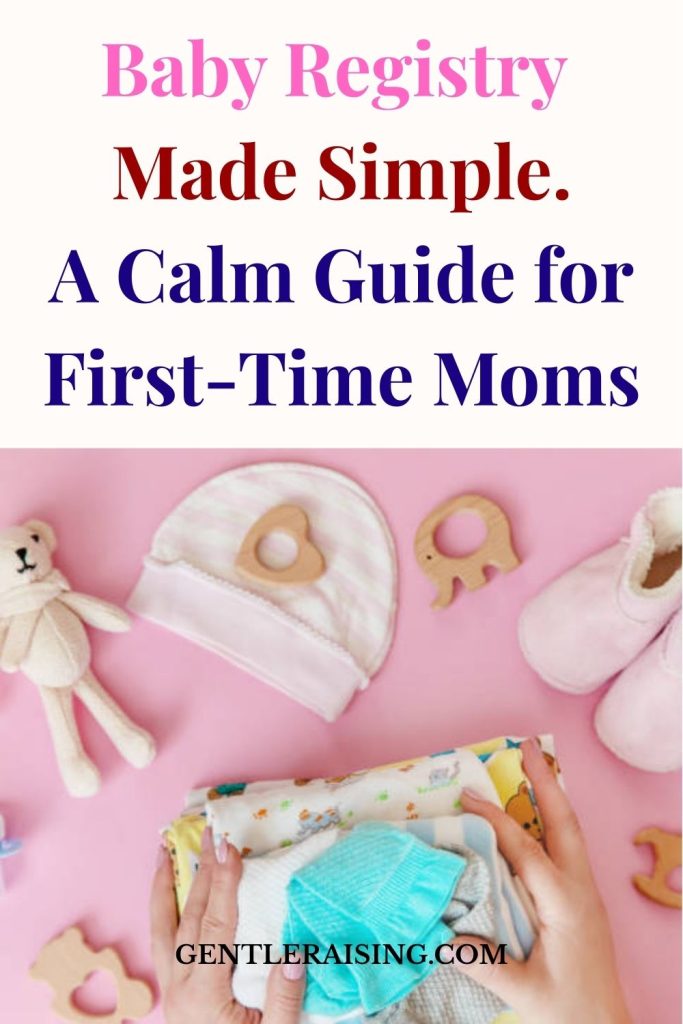
Tiny clothes are adorable. They’re also easy to overbuy.
Babies grow fast. Sometimes shockingly fast. That newborn outfit you love might fit for two weeks. Or two days.
A practical registry includes:
- A few footed sleepers
- A handful of onesies in different sizes
- Socks (even though they fall off)
- A weather-appropriate layer (jacket, sweater, or bunting)
Think about seasons. A baby born in July doesn’t need fleece right away. A winter baby might live in cozy layers.
It’s okay to skip fancy outfits. You’ll receive them anyway.
Gear You’ll Use Daily (And Gear You Might Not)
Some items earn their keep quickly. Others gather dust.
Daily-use items often include:
- A baby carrier or wrap (brands like Ergobaby, BabyBjörn, and Solly are popular)
- A stroller that fits your lifestyle, not someone else’s
- A car seat (often purchased by parents themselves, but still registry-worthy)
Nice-to-have items that depend on the baby:
- Swings
- Bouncers
- Activity mats
Register for one, not all. Babies have opinions. Strong ones.
Health and Safety: Quietly Important
These items aren’t glamorous, but you’ll be glad to have them at 2 a.m.
Consider adding:
- A digital thermometer
- Baby nail clippers or a file
- Saline spray
- A nasal aspirator
- Infant pain reliever (check age guidelines)
A basic baby first-aid kit can be useful, even if you never open it.
Don’t Forget the Parents (Yes, You’re Allowed)
Here’s a gentle reminder that gets overlooked: parents matter, too.
Recovery supplies, especially for birthing parents, are not indulgent. They’re practical. Comfortable underwear. Peri bottles. Cooling pads. These things support healing.
For all parents, small comforts count:
- Easy snacks
- Refillable water bottles
- A cosy robe or blanket
- A night-light for feeds
Some registries now include postpartum care kits or self-care items. If that feels right to you, add them. You’re not being selfish. You’re being realistic.
Registry Etiquette, Group Gifts, and Cash Funds
This part can feel awkward, but it doesn’t have to.
Group gifting is helpful for big-ticket items like strollers or cribs. Many platforms handle this smoothly now.
Cash funds, for diapers, childcare, or meals, are increasingly common. Some families feel weird about it at first. Then the baby arrives, and it makes complete sense.
You don’t owe anyone an explanation. People want to help. Let them help in ways that actually help.
Common Registry Mistakes (You Can Still Avoid These)
Let’s be honest for a moment.
Common regrets include:
- Registering for too many newborn items
- Choosing style over function
- Forgetting about storage and space
- Not adding enough everyday basics
None of these are disasters. Returns exist. Hand-me-downs exist. You will adjust.
A registry is not permanent. It’s a draft.
After the Baby Arrives: You’re Allowed to Edit
Once your baby is here, everything changes. Your needs shift. Your assumptions get challenged. That’s normal.
Most registry platforms let you add items after the birth. Some even offer completion discounts. Use them.
You might realise you need more burp cloths. Or fewer outfits. Or a different carrier. This isn’t failure, it’s feedback.
Parenting is responsive by nature.
A Final Thought (Because You’ll Hear a Lot of Opinions)
You’ll get advice from everywhere. Friends. Family. Social media. Strangers in checkout lines.
Some of it will help. Some of it won’t.
Your baby registry is one of the first places you practice trusting your instincts. There’s power in that, even if it doesn’t feel big right now.
Build a registry that supports your real life, not an imagined one. Build it with room to grow, room to change, and room to breathe.
You’re not behind. You’re preparing.
And honestly? That’s enough.