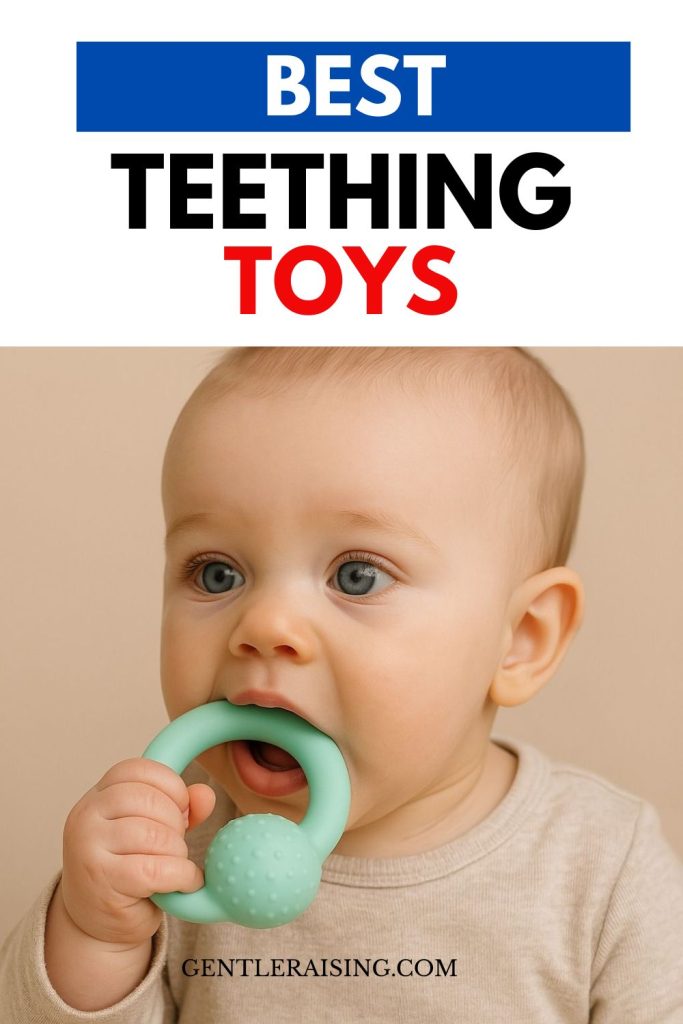
There’s a moment every parent remembers. It usually arrives somewhere in the middle of a Tuesday afternoon—baby’s drooling like a tiny waterfall, gnawing on your knuckles, and suddenly fussy for no obvious reason. You check the diaper. Hunger? Nope. Gas? Burped like a champion. And then it hits you:
Teething has officially begun.
If you’re a new mom, new dad, or somewhere in the thick of parenting small humans, teething can feel like a rite of passage nobody fully prepared you for. One night, things are peaceful, and the next, you’re Googling “why is my baby chewing on the furniture” at 3 am. It’s universal. We’ve all done it.
Teething toys, despite being small and unimpressive at first glance, can become absolute lifesavers. Not because they magically fix everything, but because they give babies a safe, soothing outlet for pressure, sensory exploration, and comfort. And honestly? Sometimes they’re the difference between a meltdown and a five-minute moment of peace. And five minutes can be gold.
This guide is long, detailed, and friendly, like chatting on the couch with another parent who’s been there, survived it, and still remembers the sound of a teething baby grinding their gums on a pacifier clip. Let’s walk through what teething toys really are, how to choose them, which types are helpful, and how to make this whole stage just a little easier.
What Teething Actually Feels Like, For Everyone Involved
A lot is happening inside those tiny gums. Teeth pushing up, nerves firing, inflammation building, and a baby thinking, “Why does my mouth feel weird and why won’t someone fix it?”
It’s not constant—some babies have spurts where everything is fine, and then suddenly a tooth shifts a millimetre and their whole mood shifts with it.
Common signs you might spot (even before a tooth is visible):
- Excess drooling
- Fist or finger chewing
- Restless feeding
- Sudden clinginess
- Slight increase in fussiness
- Gum rubbing
- Night waking
- And occasionally… biting (tiny piranha mode)
From a baby’s perspective, chewing helps relieve pressure, almost like scratching an itch under the skin. They don’t know why it works; they know it helps. That’s where teething toys fit beautifully. They give that relief a safe outlet.
And for parents? Teething usually brings:
- Sleepless nights
- Trying 47 soothing methods in one day
- Constant shirt-soaking drool patches
- A weird emotional mix of “my baby’s growing up” and “dear universe, please let them nap”
But don’t worry. This stage doesn’t last forever, even when it feels like it’s been 900 years. And having a few well-chosen teething toys can soften the ride for everyone.
So What Makes a Good Teething Toy?
Not all teethers are created equal. Some look stunning on Instagram but are impossible to clean. Others are practical but not engaging. You don’t need a drawer filled with 20 different options; usually, 2–6 good ones do the job, but it helps to know what to look for.
Here’s a simple checklist:
Safe Materials
Look for:
- Food-grade silicone
- Natural rubber
- Untreated hardwood (like beechwood or maple)
- Stainless steel spoons (simple, old-school trick)
Avoid:
- Paint that chips
- Plastic that feels flimsy
- Anything with a strong chemical smell
Certifications often seen worldwide include:
- BPA-free
- EN71
- ASTM F963
- FDA-compliant silicone
If a brand is serious about safety, it usually says so loudly.
Good Size & Shape
If it’s small enough to fit entirely into a baby’s mouth, it’s too small. The ideal teether is:
- Easy to grab
- Larger than a closed baby fist
- Not overly heavy
- Rounded with no sharp edges
Remember, babies explore with enthusiasm, so the toy has to be robust.
Texture Variety
Smooth is great. Bumps are great. Ridges are great. The combination is even better.
Different areas soothe different parts of the gum line, and variety keeps babies interested. Some teethers have multiple textures across the same piece, which means babies can choose what feels right that day.
Easy to Clean
Teething toys spend their lives in mouths, on the floor, in the dog bowl (don’t judge—it happens), and sometimes under the couch for three weeks before being rediscovered in a sticky film of mystery lint.
So:
- Silicone can usually be boiled, steamed, or thrown in the dishwasher.
- Wood should be wiped clean, never soaked.
- Rubber should be cleaned gently and allowed to fully dry.
If a toy has complicated little holes, hidden gaps, or seams that trap moisture, think twice.
Comfortable to Hold
Babies have tiny hands, limited manual dexterity, and a strong sense of justice when things slip away. If a toy is too big, too hard to grip, or constantly falling, it becomes frustrating instead of soothing.
Look for:
- Rings
- Loops
- Cut-outs
- Narrow grips
- Flexible body structures
Durable
Because once a teether becomes a favourite, it will be:
- Thrown
- Chewed
- Dropped
- Scraped
- Packed
- Sanitized
- Dropped again
The classics survive all that.
Types of Teething Toys (And Why They Work)
There isn’t just one perfect style. Babies are individuals with different preferences. Some will only chew one shape and refuse everything else. Others happily munch on whatever is nearby, even your phone case.
Here’s an overview of the most helpful teething toy types.
1. Classic Silicone Teethers
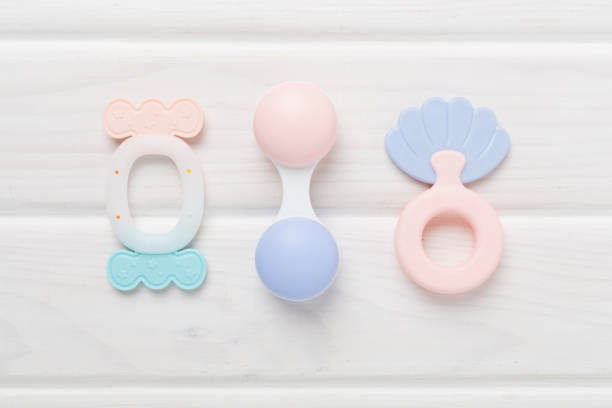
These are some of the most popular, and for good reason. Silicone is flexible, soft enough for sore gums, firm enough to give pressure, easy to clean, and often dishwasher-safe.
Shapes include:
- Rings
- Textured sticks
- Loop clusters
- Animal shapes
- Teething beads
Why babies love them:
- They have satisfying “give”
- They don’t feel cold when used at room temperature
- They’re lightweight
- They often have multiple textures in one piece
Many parents keep one in the diaper bag and one at home. They’re dependable.
2. Wooden Teething Rings
Wood has made a huge comeback in parenting circles. Natural hardwood—like beech or maple—is smooth, firm, and surprisingly comforting for babies who prefer strong pressure.
They’re classic, minimal, and look beautiful in photos (let’s be honest). Babies often love the firmness.
Why they’re popular:
- They’re natural and contain no plastic
- They last forever if properly cared for
- Wood doesn’t trap bacteria the same way plastics can
- They’re simple and durable
But they do require gentle care:
- Wipe, don’t soak
- Occasionally, you polish with food-safe oil like coconut or beeswax
If your baby is aggressive with chewing, wooden rings can be a go-to.
3. Hybrid Teethers (Silicone + Wood Together)
Some parents enjoy a mix—silicone beads strung on a wooden ring, or silicone held within a firm wooden circle. This gives babies a choice: soft on one side, firm on the other.
These work especially well when babies are teething different teeth at once. Sometimes they want pressure; sometimes they want cushioning. A hybrid toy offers both.
Always make sure cords are secure, tight, and won’t fray. A well-made product is key here.
4. Freezer-Friendly Teething Toys
Cold can feel heavenly on inflamed gums. Soteething rings are built to be refrigerated or chilled in the freezer.
These can be:
- Silicone rings
- Water-filled plastic teethers
- Gel-filled designs
But here’s the thing, parents often learn the hard way:
A frozen-solid toy can feel too hard and uncomfortable.
Chill, not deep-freeze, is usually better. A few helpful details:
- 20–30 minutes in the freezer is often enough
- Make sure the toy doesn’t stick to the skin
- Don’t give frozen rubber or wood (they can crack)
When used right, cold can genuinely help calm discomfort.
5. Teething Mitts (Yes, The Chewable Glove)
If your baby:
- Constantly eats their hand
- Drops everything
- Chews while rolling around
…a teething mitt might become their best friend.
These are little wearable wrist-strapped mittens with textured silicone pads on the top. Babies chew their own hands, just to be safe.
They’re great for the early months when grip isn’t fully developed. The downside? They can get damp quickly and need regular washing.
6. Multi-Purpose Toys
Some baby toys double as teethers, things like:
- Rattles with textured edges
- Sensory blocks
- Soft chewable shapes
- Silicone stacking rings
This can be a nice way to combine learning and soothing. Babies don’t always want to pick up something separate; sometimes they just chew what they’re already holding.
Why Cold Helps (Quick Science Without Getting Too Technical)
Inflammation releases chemical signals inside swollen gums. Cold helps by:
- Slightly numbing nerve endings
- Reducing inflammation
- Distracting the brain with a new sensation
This is why people use cold compresses for injuries, and the same principle applies here. The baby version is just cuter and covered in drool.
But here’s a common mistake:
Give a teether that’s rock-hard from the freezer.
It can actually make things worse because:
- It hurts to press hard plastic against sensitive gums
- Babies can’t control biting pressure well
Solution:
- Chill lightly
- Check flexibility
- Always supervise
A simple cold washcloth, lightly wrung out, is still one of the oldest and safest soothers.
Natural Materials: A Tiny Tangent Worth Exploring
There’s a trend toward natural wood and rubber teethers, and it’s not just aesthetics. Many parents feel more comfortable with materials that are:
- minimally processed
- non-plastic
- biodegradable
- traditional
Grandparents used to hand babies wooden spoons, and honestly, they weren’t wrong. Hardwoods have natural antibacterial properties and offer deep pressure bab that sometimes cravess.
But natural doesn’t automatically mean safer. For wooden or rubber toys:
- Look for reputable sourcing
- Avoid harsh varnishes
- Skip dyes that can flake
- Make sure surfaces are totally smooth
A good product has nothing to hide. If labels are vague, that’s a red flag.
Wearable Teething Toys (Convenient, But Let’s Talk Safety)
Some teethers are meant to be worn:
- Silicone bead necklaces
- Wrist-band teethers
- Parent necklaces for baby to chew while being held
They’re convenient because:
- They don’t fall
- They don’t get lost
- They soothe while nursing or cuddling
But, and it’s a big but, not all are safe in all situations.
Do not:
- Let babies sleep wearing them
- Leave them with a baby unsupervised
- Use breakable cords or weak clasps
When used properly, these are great for moms and dads on the go, especially during babywearing.
Household Items That Actually Work (With Caveats)
You know how parents in every culture have their own tricks? Some babies don’t care about toys and just want whatever is handy.
Common safe household soothers:
Cold Spoon
Chill in the fridge, hand it over, and let baby chew. Simple and effective.
Clean Cold Washcloth
This is the parenting equivalent of a Swiss Army knife. Babies love the texture.
Chilled Carrot Stick (Supervised Only)
Not for young babies who can’t sit upright. Large carrot pieces can soothe, but must be watched closely to avoid choking.
Things to avoid:
- Thin items that can snap
- Plastic with sharp edges
- Anything with small, removable parts
Parents have ingenuity; just pair that creativity with caution.
How Many Teething Toys Does One Baby Really Need?
You’ll see posts recommending massive collections, but realistically?
Most babies develop 2–5 favfavourites anddnore the rest. And preferences change:
- One week, they want firm pressure
- The next week, the soft silicone feels better
- Sometimes they want cold
- Sometimes they want warmth
- Sometimes they just want your finger
It’s not indecision. Their gums are literally changing. Having different textures on hand is helpful, but you don’t need a shopping cart-full.
Cleaning & Hygiene, The Annoying Part Nobody Warned Us About
Teething toys get gross fast. No judgment. That’s life with babies.
Silicone
- Boil
- Steam sterilize
- Dishwasher top rack
- Antibacterial baby wipes (short-termly)
Wood
- Wipe clean
- Do not soak
- Treat occasionally with coconut oil, olive oil, or beeswax
Rubber
- Wash gently with warm water
- Don’t boil it, it can break down
- Air-dry fully to prevent mould
When to throw a toy away
- Cracks
- Sticky texture that won’t wash off
- Water trapped inside
- Loose pieces
- Chewed-out seams
When in doubt, get rid of it. Babies will put anything in their mouths; we might as well choose things that are clean and solid.
When Teething Toys Aren’t Enough
Even the best teether can only do so much. Sometimes you need a bit more support:
Gum Massage
Clean finger, gentle pressure, tiny circles. Babies often melt like butter.
Cold Washcloth
Still one of the cheapest and most effective remedies.
Feeding Comfort
Some babies want to breastfeed or bottle-feed more during teething because the sucking motion soothes them.
Bath Time
Warm water relaxes the whole body, gums included.
Topical Gels
Different countries have different rules. Some over-the-counter gels are allowed; some aren’t. Ask a pediatric professional if you’re unsure.
When To Talk to a Professional
Ithe f the baby is:
- Running a high fever
- Not feeding normally
- Irritable for days without relief
- Showing signs of infection
A checkup is wise. Teething causes mild symptoms, but extreme illness usually means something else.
Common Teething Mistakes (No Shame, we’ve all done them)
1. Giving toys that are too hard
A frozen, rock-solid toy can actually hurt.
2. Choosing toys that look cute but can’t be cleaned
Bacteria love complicated crevices.
3. Buying teething toys baby can’t hold
They end up frustrated and crying.
4. Not washing toys often enough
You’d be surprised how fast things get…shirtlinty.
5. Letting babies sleep with wearable teethers
No necklaces or looped toys at sleep time.
6. Thinking teething lasts forever
It doesn’t. It just feels like it.
Little Tricks Parents Swear By
These aren’t scientific—just battle-tested.
- Put a teether in every room. Saves you from running around.
- Keep one clipped to the stroller. Because gravity is real.
- Zip-bag in the diaper bag. Clean toys in, used toys out.
- Have a rotation basket. Babies love novelty.
- Offer different textures during one teething episode. Needs change hour to hour.
Sometimes it’s the tiny, unglamorous hacks that change everything.
A Few Words on the Emotional Side
Teething is physical for babies, but emotional for parents:
- You want to help
- You hate seeing them uncomfortable
- You’re tired
- You want your baby to feel safe and soothed
- You want some sleep, too
And you know what? Wanting both things, baby’s comfort and your sanity, is perfectly normal.
There’s a strange moment when that first little tooth appears and you realise how fast your baby is growing. It’s almost bittersweet. There’s pride, and relief, and maybe even a tiny ache in your chest.
This stage is hard. But it’s short. And before you know it, your gummy baby becomes a tiny person with a grin full of teeth and a personality to match.
Final Thoughts: This Stage Really Does Pass
Teething doesn’t last forever, even though it sometimes feels like a saga with no ending. The right teething toys won’t fix every fuss, but they’ll take the edge off, give babies control over their discomfort, and support sensory development along the way.
A few key reminders:
- Safety first
- Materials matter
- Simplicity often works best
- Babies change preferences as their teeth move
- Don’t overbuy
- A cold washcloth is still a legend in the parenting world
You’re doing a fantastic job, even if it doesn’t feel that way at 2 am. Teething is one of those early parenting challenges that teaches patience, creativity, and how many times a person can wash the same silicone ring in 24 hours.
Hang in there.
The smiles get bigger, the fussiness fades, and the memories become funny stories later. Until then: chew on, little one.