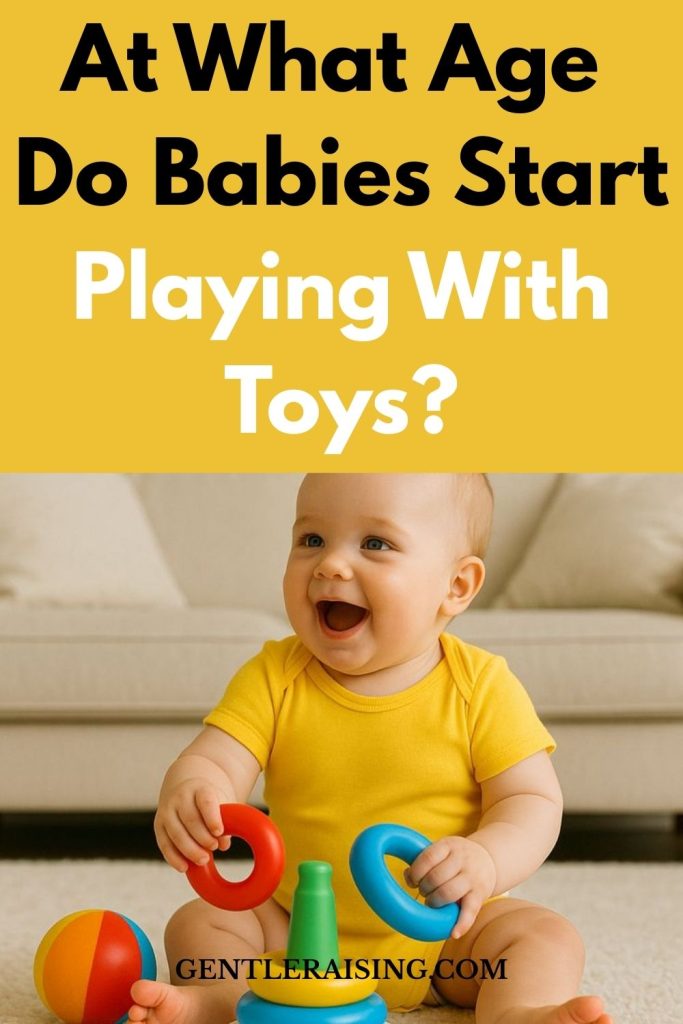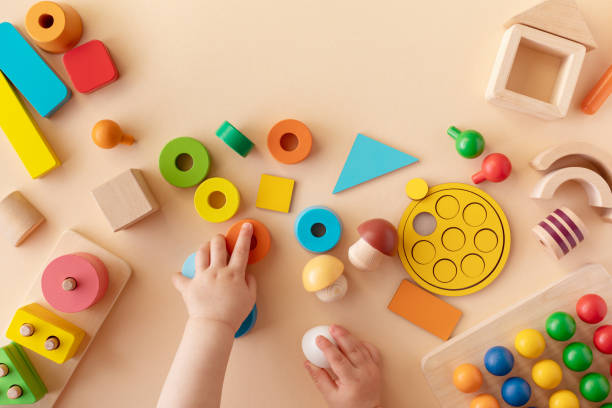
You know that moment when you hand your little one a brightly colored rattle, and they just stare at it like it’s a tiny, alien spaceship? Or when they grab a soft plushie and, surprise!, suddenly it’s part of a teething experiment? Honestly, for new parents, those moments are both adorable and a little nerve-wracking. “Is my baby developing normally?” you wonder. “When should they actually start playing with toys?”
Let me tell you, understanding baby play isn’t as straightforward as a milestone chart might suggest. But here’s the good news: babies do start interacting with toys much earlier than most people think, and there’s a fascinating journey behind it. So, grab a cosy blanket, maybe a cup of tea, and let’s explore the magical—and sometimes messy- world of babies and toys.
Understanding Baby Play: What Does “Playing” Really Mean?
Before we talk about ages and stages, let’s pause for a second. What does “playing with toys” really mean for a tiny human? Is it swatting at a hanging mobile? Squeezing a soft ball until it makes a funny sound? Or is it something more intentional?
Here’s the thing: for babies, play isn’t about winning or building a castle. It’s about exploration. It’s their first experiments with cause-and-effect, learning how objects work, and discovering their own bodies in the process. At first, a toy is just a thing, an object that moves or makes a noise, but gradually, it becomes a tool for learning.
Play is also surprisingly powerful for brain development. Every reach, grab, or shake fires neurons and strengthens motor skills. Those simple actions, rattling a toy, transferring objects hand-to-hand, are quietly building the foundation for problem-solving and coordination later on.
And let’s not forget: play strengthens parent-child bonding. Ever notice how a baby’s giggle seems to make the world stop? That’s their way of saying, “Hey, I’m learning, and I want to share it with you!”
The Timeline: When Babies Typically Start Interacting With Toys
Babies don’t come with a one-size-fits-all instruction manual, but there are typical patterns that can help you anticipate and encourage play. Keep in mind, every baby develops at their own pace. Some might start earlier, others a bit later, and that’s completely normal.
0–2 Months: Visual Fascination
At this stage, your newborn isn’t really “playing” in the traditional sense. Their world is mostly sensory: sights, sounds, and smells.
- They’ll notice high-contrast patterns, black and white or bright colours.
- They may follow objects with their eyes and occasionally bat at dangling toys.
- Mouthing is common; everything goes in their mouth, including a teething ring or soft rattle.
Tip: Simple mobiles, black-and-white cards, or a gentle rattle work well. But don’t stress, just noticing the toy is already a form of play.
2–4 Months: Swiping and Grasping
By the second month, your baby’s reflexive movements start to transform into purposeful ones. They may:
- Swipe at objects repeatedly.
- Hold small, soft toys for a few seconds.
- Start noticing textures and sounds.
Here’s a fun moment: you might hand them a plush toy, and they’ll squeeze it, explore it with their mouth, and toss it (or try to). That’s not chaos, it’s cognitive growth in action.
Parenting nugget: Encouraging swiping and grasping helps develop hand-eye coordination and fine motor skills. Little toys with different textures are perfect at this age.
4–6 Months: Reaching and Exploring
This is where the game starts to feel a little more interactive. Babies become intentional with their movements. You might see:
- Reaching deliberately for toys.
- Transferring objects from one hand to another.
- Investigating different textures, such as rubber, cloth, and wood.
This is also the age when toys that make a sound, like rattles or crinkly books, really capture attention. They’re starting to understand cause-and-effect: “I shake this, it makes noise. Cool!”
Tip: Rotate toys to maintain novelty. Your baby will start preferring certain textures or shapes, which is normal. Don’t worry if one week it’s the rattle and the next week it’s the teething ring; they’re exploring preferences.
6–9 Months: Intentional Play Emerges
By the time your little one hits the six-month mark, play becomes more intentional. This is also when teething becomes a factor, so expect toys to double as comfort tools. Expect to see:
- Repetitive actions like banging toys on the floor.
- Attempting to stack or nest objects (even if they just collapse in a heap).
- Exploring toys with multiple senses: shaking, mouthing, and looking.
You know that adorable moment when your baby shakes a rattle just to hear the sound again? That’s intentional play, and it’s the precursor to problem-solving skills. Cause-and-effect toys are brilliant now, think pop-up toys, busy boards, or anything that makes a predictable response.
9–12 Months: Imitative and Social Play
Now, things get really fun. Your baby is becoming a little person who imitates, experiments, and explores social cues. Look for:
- Dropping and picking up toys repeatedly, hello, “object permanence”!
- Imitating simple actions: banging blocks together, pretending to feed a doll.
- Showing preference for certain toys or games, and even sharing (or attempting to).
Pro parenting tip: Introduce stacking blocks, soft balls, and push/pull toys. These toys support both motor development and creativity.
12–18 Months: Problem-Solving Play
By the first birthday and a few months beyond, play takes on a mini “engineering” vibe. Your toddler:
- Experiments with fitting shapes into shape sorters.
- Pushes, pulls, and rolls toys around.
- Engages in simple pretend play, like feeding a doll or stirring an empty bowl.
At this stage, play becomes more purposeful, and your child learns through trial, error, and repetition. It’s messy, noisy, and sometimes chaotic, but that’s exactly how their brains grow.
Choosing the Right Toys for Each Stage
Here’s the fun part: picking toys that actually fit your baby’s stage of development. Safety first, of course, but also consider the sensory, cognitive, and motor benefits.
0–4 Months:
- Black-and-white books
- Soft rattles
- Mobiles above the crib
4–6 Months:
- Textured teething rings
- Soft stacking cups
- Crinkle books
6–12 Months:
- Pop-up toys
- Busy boards
- Rolling balls, push toys
12–18 Months:
- Shape sorters
- Nesting cups
- Pretend play sets
Brands like Fisher-Price, Manhattan Toy, and Hape offer reliable, safe options. But honestly, everyday items can work too, wooden spoons, plastic containers, or scarves can double as sensory toys. The key is supervision and creativity.
Signs Your Baby Is Ready for More Interactive Play
Sometimes, you might wonder if your baby is “behind.” Here are signs that indicate your little one is ready to move to the next level of play:
- Curiosity: They reach or stretch toward toys.
- Focus: Spending a few minutes exploring the same object.
- Imitation: Trying to mimic your actions.
- Joy: Laughing, squealing, or clapping when the toy reacts.
Notice these cues? That’s your baby’s brain saying, “Let’s try something new!”
Encouraging Play in Everyday Life
Play isn’t confined to a toy basket. Honestly, the world is a playground if you let it be. Here are some natural ways to weave play into daily routines:
- Meal times: Let them explore safe utensils or cups.
- Bath time: Floating toys or cups for pouring water.
- Diaper changes: Soft rattles or songs can make it fun.
DIY or low-cost options work too. Sensory bags with rice or water beads (supervised, of course) can be magical. And never underestimate the value of your presence. Holding a hand, laughing together, or mimicking sounds, they matter more than the fanciest toy.
Sibling interactions, daycare playgroups, or park visits also add layers of social and cognitive growth. Babies learn by watching and copying. So sometimes, just standing back and letting them explore together is golden.
Common Questions & Concerns
“My baby doesn’t seem interested in toys. Should I worry?”
Not necessarily. Some babies prefer faces, voices, or movement over inanimate objects. Rotate toys, introduce textures, or play alongside them. Interest usually develops naturally.
“How much play is enough?”
Quality over quantity. Even 10–15 minutes of focused interaction a few times a day is hugely beneficial.
“Are screens considered toys?”
Short answer: No. Screens don’t provide the same sensory feedback, cause-and-effect learning, or motor skill development. Stick to tactile, interactive play whenever possible.
The Takeaway: Making Play Fun, Stress-Free, and Developmentally Helpful
Here’s the comforting truth: there’s no rush. Babies develop at their own pace. A toy isn’t magical—it’s just a tool. What really matters is curiosity, repetition, and the joy of exploration.
Celebrate small milestones: the first intentional grab, the first giggle when shaking a toy, the first tower that topples over. These moments aren’t just “cute”, they’re your baby learning about the world, about cause-and-effect, and about themselves.
So, go ahead—scatter a few toys on the floor, laugh at the chaos, and marvel at those little hands and curious eyes. Play isn’t just about toys; it’s about connection, learning, and, honestly, a little bit of magic.