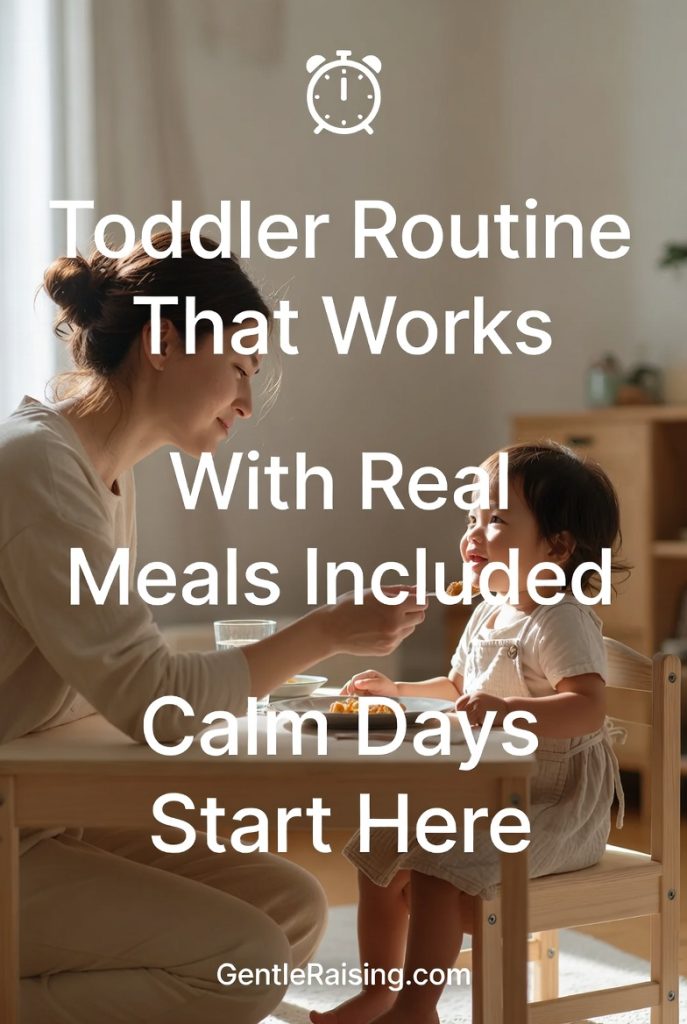
So You Have a Toddler. Congratulations, and I’m Sorry.
Let me set the scene. It’s 7:14 a.m. Your toddler just refused the breakfast you spent ten minutes preparing because, and this is a direct quote, “the banana touched the egg.” You haven’t had coffee yet. This is Tuesday.
Parenting a toddler is, without question, one of the most rewarding and baffling experiences a human being can have. They’re learning at a rate that blows adults out of the water, and they’re doing it while also having very strong opinions about cup colours and sock textures. It’s a lot.
Here’s the thing, though: structure helps. A solid daily routine with meals built in thoughtfully can genuinely make life easier for both of you. Not perfect. Not Instagram-worthy. But easier. And on the days when nothing goes according to plan, having a loose framework to return to is its own kind of lifeline.
This guide is for real parents, new mums navigating toddlerhood for the first time, dads figuring out how to step in more, grandparents who are doing more childcare than they expected, and every caregiver in between. What follows is a full daily routine with meals for toddlers, based on what developmental experts recommend and what, honestly, tends to work in the messy reality of everyday family life.
Why Routine Matters More Than You Think
Before we get into the schedule itself, it’s worth pausing on the why. Toddlers, we’re talking roughly ages one through three, are in a period of rapid brain development. Everything is new. Everything is stimulating. Their nervous systems are still learning how to regulate, which is why the smallest things can tip them straight into a meltdown spiral.
Routine acts like a scaffold. When a toddler knows what’s coming next, not because you told them, but because the same things happen in the same order every day, their brain doesn’t have to work as hard to feel safe. They can redirect that energy into learning, playing, and growing. Studies from early childhood development research consistently point to predictable routines as a factor in better sleep, less fussy eating, and lower anxiety in young children.
This doesn’t mean rigidity. Life happens: dentist appointments, rainy days, travel, a parent who’s sick. Flexible consistency is the goal. Same general shape, different details. Think of it like a recipe: the ingredients can vary, but the method stays the same.
Morning: The Most Chaotic Hour of the Day (and How to Tame It)
7:00 – 7:30 AM Wake-Up and Morning Reset
Most toddlers are early risers; that’s just biology. Their cortisol (the hormone that wakes us up) spikes earlier in the morning than it does in adults. So if you’re getting a 6:30 a.m. wake-up call, you’re not doing anything wrong. That’s just who they are right now.
The first 30 minutes after waking set the tone for the whole morning. Keep it slow if you can. Some toddlers need a transition period, a bit of quiet play in their crib or room, before they’re ready to engage fully. Others are up and at it the second their eyes open. Either way, don’t rush them into breakfast immediately. Give them five to ten minutes to get their bearings.
A diaper change or potty trip, a quick wash of hands and face, these become anchors. Small rituals that say to their nervous system: the day is starting, and it’s safe.
7:30 – 8:00 AM Breakfast
Breakfast is arguably the most important meal for toddlers, not because of some old nutrition cliché, but because their blood sugar drops overnight and they genuinely need fuel to function. A toddler running on an empty tank is a toddler heading for a meltdown before 9 a.m.
What does a good toddler breakfast look like?
You want a combination of complex carbohydrates, a bit of fat, and some protein. That trio keeps energy stable through the morning rather than spiking and crashing. Here are some practical ideas that tend to go over well:
- Scrambled eggs with soft toast soldiers and a few slices of ripe banana
- Oatmeal made with whole milk, topped with a small handful of blueberries and a drizzle of nut butter (if allergies aren’t a concern)
- Full-fat Greek yoghurt with mashed fruit mixed in and a sprinkle of crushed Weetabix or granola for texture
- Avocado on soft wholemeal toast cut into strips, with a boiled egg on the side
- Mini pancakes (you can prep a batch on Sundays and refrigerate them) with mashed strawberries
A word on drinks at breakfast: water is always appropriate. Cow’s milk is fine too — toddlers aged one to two typically need around 350–400ml per day. Avoid juice first thing in the morning; the sugar hit is too fast and doesn’t sustain them.
One thing worth knowing: don’t panic if breakfast gets rejected. Toddler’s appetite is wildly inconsistent. Some days they’ll eat like tiny competitive eaters; other days they’ll take two bites and declare themselves finished. Offer the food, keep the pressure off, and move on.
Mid-Morning: Play, Learning, and That Glorious Pre-Nap Window
8:00 – 10:00 AM Active Play and Exploration
The two hours after breakfast are typically a toddler’s golden window, alert, energetic, and ready to engage. This is prime time for activities that stimulate their brain and use up some of that remarkable physical energy they seem to generate from thin air.
If the weather allows, outdoor time in the morning is a gift. Fresh air, natural light, and physical movement all support better sleep later in the day, and a better-rested toddler is a more settled, better-eating toddler. It’s one of those things that sounds simple and actually is. A trip to the park, a walk around the block, even ten minutes in the garden, does more than most people realise.
Inside, this is a great time for open-ended play blocks, simple puzzles, sensory bins, colouring, and pretend play. The best toddler toys aren’t expensive or elaborate; they’re things that leave room for imagination. A set of wooden blocks or a cardboard box will usually outlast the flashiest battery-operated toy by months.
10:00 – 10:30 AM Morning Snack
Toddlers have tiny stomachs. They genuinely cannot eat enough at a single sitting to fuel themselves through long stretches, so snacks aren’t a treat or a reward; they’re a structural necessity. A mid-morning snack bridges breakfast and lunch without letting hunger get to that whiny, clingy, everything-is-terrible stage.
Good mid-morning snack options:
- Sliced apple or pear with a small amount of nut butter for dipping
- A few rice cakes with cream cheese
- Soft cheese cubes and cucumber rounds
- A small handful of raisins and a few crackers
- Half a banana with a small cup of whole milk
Keep snacks small; you don’t want them to be too full to eat lunch. And snack time works best when it’s predictable: same general time, same calm setting. Sitting down (even briefly) rather than grazing on the go helps toddlers recognise hunger and fullness signals, which matters enormously as they grow.
Nap Time: The Holy Grail of the Toddler Day
10:30 AM – 12:00 PM Nap (for younger toddlers) or Quiet Time
Ah, nap time. Parents of toddlers have a complicated relationship with naps. They are precious. They are sometimes the only hour of the day you get to yourself, to shower without an audience or drink a cup of tea while it’s still hot. And they are, unfortunately, finite.
Most toddlers aged one to two still need one nap per day, typically 60 to 90 minutes. By age three, many are dropping it, but even kids who no longer sleep benefit from a daily quiet time: 30 to 60 minutes of calm, screen-free rest in their room. Looking at books, playing quietly with soft toys, and listening to simple audiobooks. This isn’t just for your sanity (though it is partly for your sanity). Toddler brains genuinely need downtime to consolidate all the learning they’re doing.
Nap timing matters too. Keeping the nap somewhere in the middle of the day, rather than too early or too late, protects nighttime sleep. A nap that starts at 9:00 a.m. often means a tired, cranky child again by early afternoon. A nap that starts at 3:00 p.m. might push bedtime back by two hours. The sweet spot is usually somewhere between 11:30 a.m. and 1:30 p.m., depending on when your child wakes up.
Lunch: Post-Nap Refuelling Done Right
12:00 – 1:00 PM Lunch
Post-nap toddlers are usually in a reasonably good mood, rested, a little disoriented, but generally open to the world. This is a good window for lunch. Their appetite after sleep is often more reliable than it is at other times of day.
Aim for a balanced plate. You don’t have to make it complicated, honestly. The simpler the better at this age. The goal is variety across the week, not perfection at every meal. Toddler nutritionists often suggest thinking in terms of food groups across the day rather than at every single sitting. If breakfast had protein and fruit, lunch can lean toward vegetables and whole grains.
Practical toddler lunch ideas:
- Soft pasta with a simple tomato and vegetable sauce (blend in courgette, carrot, or lentils if you’re trying to boost nutrition)
- Wholemeal pitta with hummus, soft avocado slices, and cucumber
- Mini baked sweet potato filled with cream cheese, served with steamed broccoli florets
- Lentil soup (mild, slightly thickened) with soft bread for dipping
- Egg-fried rice with peas, finely diced carrot, and a scrambled egg stirred through
- Small chicken and vegetable quesadilla on a soft whole wheat tortilla
One of the best things you can do at lunch is eat with your toddler when possible. Children are extraordinary mimics. Watching a parent or caregiver eat a variety of foods calmly, without fanfare, does more for expanding their food acceptance than any clever trick or hiding strategy. It’s modelling, and it works.
Afternoon: Managing the Energy Surge (and the Pre-Dinner Slump)
1:00 – 3:00 PM Afternoon Activities
The early afternoon can go one of two ways: either your toddler is refreshed from their nap and ready to take on the world, or they’re in that slightly fragile post-sleep state where the wrong look from a sibling can trigger a 20-minute drama. You know the one.
This stretch works well for calmer activities, arts and crafts, water play in the sink, simple cooking together (toddlers love stirring things and pouring ingredients, even if the mess is considerable), reading, and sensory play. It can also be when you run errands, do a library trip, visit a friend, or have a playdate.
Screen time, if it’s part of your family’s routine, fits reasonably well here after a nap and before the busy dinner hour. The American Academy of Paediatrics recommends limiting screen time for toddlers aged two to five to about one hour per day of high-quality programming. Shows like Bluey, Sesame Street, or age-appropriate content on platforms like CBeebies are generally considered good choices because they model language, empathy, and problem-solving. That said, every family navigates screens differently, and what works is what works for you.
3:00 – 3:30 PM Afternoon Snack
This is the snack that really matters in terms of preventing the pre-dinner meltdown. A toddler who’s hungry at 5:00 p.m. is a toddler who will not sit patiently at the table; they’ll be climbing the walls or flat on the floor, depending on their temperament.
The key here is timing and portion size. A snack around 3:00 to 3:30 p.m., two hours before dinner, is usually enough to tide them over without killing their appetite. Keep it light: a piece of fruit, a small cup of plain popcorn, some veggie sticks with a simple dip. Something that takes the edge off without filling them up.
- Sliced mango or watermelon (great in warmer months)
- Plain popcorn is surprisingly beloved by toddlers and genuinely a decent snack
- Soft-cooked edamame (without salt if serving to very young toddlers)
- Cherry tomatoes (halved) with a few cubes of mild cheese
- A small smoothie made with banana, yoghurt, and a handful of spinach (they’ll never know)
Dinner: The Meal That Requires the Most Grace
5:00 – 6:00 PM Dinner
Dinner with toddlers has a reputation, and honestly, it’s earned. Late afternoon is when their self-regulation resources are at their lowest. They’re tired. They’ve been navigating a huge world all day. Their blood sugar may have dipped. And now you’re asking them to sit in a chair and eat something that may or may not meet their very specific standards this evening.
Here’s a perspective shift that might help: the job of dinner is not to win the food battle. It’s to offer food, create a calm environment, and model positive eating. Full stop. The Division of Responsibility model developed by feeding therapist Ellyn Satter and widely endorsed by paediatric dietitians puts it beautifully: you decide what’s offered, when it’s offered, and where. Your child decides whether to eat it and how much. Accepting this division really internalising it takes enormous pressure off the meal.
Toddler dinner ideas that tend to work:
- Mild chicken curry (no added salt, go easy on spice) served with soft rice and a couple of small pieces of naan
- Fish fingers (oven-baked) with sweet potato wedges and garden peas
- Mild beef or lentil bolognese on soft pasta, with a sprinkle of cheese
- Homemade mini chicken meatballs with pasta and a simple tomato sauce
- Frittata with vegetables cut small, great for picky eaters because everything is baked in
- Mild vegetable and chickpea stew with soft bread or rice
- Baked salmon with soft mashed potatoes and steamed green beans
A note on salt: toddlers’ kidneys are still developing, which means their salt tolerance is genuinely lower than that of adults. The NHS recommends no more than 2g of salt per day for children aged one to three. This is one reason why batch-cooked homemade meals tend to be nutritionally superior to many commercial options; you control what goes in.
And if dinner gets rejected tonight? Take a breath. Offer a simple fallback (a few pieces of fruit, some plain toast, some cheese) without making it a big production. One bad dinner does not undo good nutrition overall. Consistency across days and weeks is what matters.
Evening Routine: Winding Down for a Better Night
6:00 – 7:30 PM Bath, Story, Bed
The bedtime routine is, in many ways, the most important routine of the whole day, not because of sleep alone, but because of what it signals. A consistent, calm wind-down routine tells a toddler’s nervous system: the day is done, you are safe, sleep is coming.
Bath time is a natural transition. Warm water is genuinely calming for most toddlers (yes, there are exceptions; some children find bath time stimulating rather than settling; if that’s your child, try moving the bath earlier or replacing it with a warm flannel wash). After the bath, low lighting, quiet voices, and reduced stimulation all help melatonin do its job.
Stories are non-negotiable in the best possible sense. Reading to toddlers every evening, even just ten to fifteen minutes, has extraordinary long-term benefits for language development, vocabulary acquisition, and later literacy. It’s also one of the most valuable bonding activities available to parents. And it costs nothing except time.
A small cup of warm milk at bedtime can help some toddlers settle. The warmth is soothing, and the protein provides a gentle satiation signal. It’s not essential, but many families find it a useful part of the routine. Just make sure to do a quick teeth brush afterwards.
Aim for lights out between 7:00 and 7:30 p.m. for most toddlers. Sleep researchers consistently show that toddlers who go to bed earlier tend to sleep longer, counterintuitive but true. The idea that keeping them up later means they’ll sleep in is, for most toddlers, a myth. An overtired child is actually harder to settle.
Your Quick-Reference Daily Routine at a Glance
Here’s a simplified version of the full day, a starting point you can adapt to your own family’s rhythms:
- 7:00 AM – Wake-up, diaper/potty, morning reset
- 7:30 AM – Breakfast (eggs, oatmeal, yoghurt, toast + fruit)
- 8:00 AM – Active play, outdoor time if possible
- 10:00 AM – Morning snack (fruit + protein)
- 10:30 AM – 12:00 PM – Nap or quiet time
- 12:00 PM – Lunch (balanced plate: grains, veg, protein)
- 1:00 PM – Afternoon activities, errands, calm play
- 3:00 PM – Afternoon snack (light: fruit, popcorn, veg sticks)
- 3:30 PM – Continued play or screen time (max 1 hour total)
- 5:00 PM – Dinner preparation and family meal
- 6:00 PM – Bath time
- 6:30 PM – Pyjamas, stories, warm milk (optional)
- 7:00 – 7:30 PM – Lights out
A Word About Picky Eating (Because It Deserves Its Own Moment)
You can follow every guideline in this article, meal prep on Sundays, serve balanced plates at every meal, and your toddler may still look at a perfectly good piece of broccoli like it personally offended them. This is normal. Picky eating is, developmentally speaking, extremely common in toddlers.
There’s actually an evolutionary explanation: toddlers are at an age when they start exploring independently, and being suspicious of unfamiliar foods (a trait called neophobia) is thought to be a protective mechanism. In the ancient world, a toddler who happily ate everything they found on the ground would have had a shorter life expectancy than one who stuck to familiar foods. We’re wired for suspicion, and toddlers are wired more than anyone.
What helps? Repeated, low-pressure exposure. Research suggests it can take anywhere from 10 to 20 exposures to a new food before a toddler accepts it, and “exposure” counts even if they just see it on the plate, touch it, or smell it without eating it. That’s slow progress by any measure. But it works, over time.
Other things that help: involving toddlers in meal prep (children eat what they help make, with remarkable consistency), serving new foods alongside familiar favourites, keeping meals calm and pressure-free, and perhaps most importantly, not giving the rejected food too much attention. The dinner table should not become a negotiation table.
What About You, Though?
It would feel incomplete to write this whole guide without acknowledging something: maintaining a toddler’s routine is, in large part, about managing your own energy and well-being too.
New parents, in particular, are often running on fumes. Sleep deprivation, the pressure to “do everything right,” the endless decision-making fatigue of early parenthood, it adds up. A routine that works for your toddler should also have some predictability built in for you: a window during nap time that’s yours, a meal prep strategy that doesn’t require you to start from scratch every night, and a bedtime that’s early enough to give you an evening.
Batch cooking on weekends, soups, pasta sauces, simple stews, freezer-friendly frittatas can be one of the most practical investments of an hour on a Sunday afternoon. So can accepting help when it’s offered. Or ordering a takeaway on the nights when the routine fell apart and everyone’s tired, and the thought of cooking one more thing is just not happening.
Good parenting doesn’t require perfection. It requires enough consistency that your child feels held by predictability, enough warmth that they feel loved, and enough self-compassion that you don’t burn out before their second birthday.
The Bigger Picture
Here’s what I want you to take away from all of this: there’s no single “correct” toddler routine. The one outlined here is a framework — evidence-informed, practically tested, and genuinely useful as a starting point. But your family is unique. Your child’s temperament, your work schedule, your cultural food traditions, your housing situation, your support network — all of it shapes what’s actually sustainable for you.
The best routine is the one that, more days than not, creates some calm in the chaos. The one that means your toddler isn’t desperately hungry at 4 p.m. or overtired at 8 p.m. The one that gives them something to count on, even when everything else feels uncertain.
Start with the structure. Adjust as you go. Trust yourself, you know your child better than any article does. And on the days when the banana touches the egg and the whole morning unravels before 8 a.m.? Tomorrow is another chance to try again.
That’s what this stage of parenting is, really. A series of fresh starts, strung together with love and a little caffeine. You’ve got this.