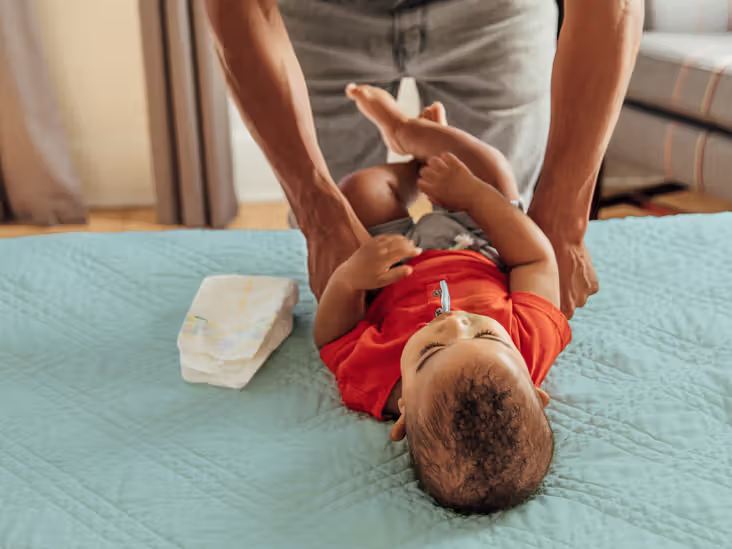
You change a diaper. Then another. Then… nothing. Hours turn into a day. Maybe even two. You start wondering Is this normal? Is something wrong? You’re not alone. Nearly every new parent has looked at their baby, slightly worried, while whispering a silent prayer for a poop.
And the truth is, baby poop can be confusing, frustrating, and even alarming when it suddenly decides to play hide and seek.
So let’s talk about it. Not in a robotic, cold-medical way. But the way parents need it is honest, human, and just a little funny. Because hey, we’re talking about poop here. Might as well smile through it.
Let’s Start at the Bottom: Why Baby Poop Even Matters
It’s weird how invested you become in someone else’s bowel movements. But when it’s your baby, poop isn’t just poop it’s a sign. Of health, digestion, hydration, comfort, and sometimes even happiness.
So when your baby skips a day… or three? Of course,se your mind races.
But here’s the thing: just because your baby hasn’t pooped doesn’t mean your baby can’t or wo,, and it definitely doesn’t mean you’ve failed.
Let me walk you through what’s actually going on in that tiny tummy.
The Scoop on Normal Baby Poop
Newborns
In the first few weeks, babies can poop after every feed, yes, every. Especially breastfed babies. The yellowish, mustardy, seedy stuff? Totally normal. (Weirdly satisfying, right?)
But by week 4 or 5, that starts to shift.
Breastfed Babies
Once feeding settles, breastfed babies can go up to 7–10 days without pooping. Yes, a whole week. Their bodies use up nearly everything in breastmilk, leaving very little waste.
No poop doesn’t equal constipation here. As long as your baby is feeding well, gaining weight, and seems content, you’re probably fine.
Formula-Fed Babies
These little ones might poop 1 to 3 times a day, but it’s also okay if they skip a day. Formula isn’t digested quite as completely as breastmilk, so they tend to poop more often and their stools are firmer and smellier (sorry, truth hu, ts).
So, How Long Is Too Long?
Let’s break it down by age:
0–6 Weeks Old:
- Breastfed: May poop several times daily OR once every few days
- Formula-fed: 1–4 times a day expected
Not pooping for more than 5 days? Worth checking in with your pediatrician, just to be safe.
6 Weeks to 6 Months:
- Breastfed babies can go up to 10 days without a bowel movement. Still normal if they’re happy, feeding, and wetting diapers.
- Formula-fed babies usually don’t go more than 3–4 days without some action.
After Introducing Solids (Around 6 Months):
All bets are off. Their poop will change colour, smell, consistency, and frequency. It might look like adult poop (but in tiny portions), and constipation becomes a more real possibility.
Let’s talk about that next.
When Things Get Backed Up: Is It Constipation?
Honestly? Not always. Constipation isn’t just “not pooping.”
It’s more about how they poop and what it looks like.
Here’s what might point to constipation:
- Hard, pellet-like stools (think goat poop)
- Straining or crying while trying to poop
- A bloated, tight belly
- Fussiness without an obvious reason
- Bloody streaks in stool (due to tiny tears from pushing)
And this one’s subtle but important: a baby who hasn’t pooped and suddenly stops eating or starts vomiting that’s not just constipation. That’s a red flag.
What Causes Poop Pauses Anyway?
A lot of things, honestly.
1. Breastmilk Efficiency
It’s so well-digested that there’s very little waste left. So yes, your breastfed baby can skip pooping like a champ.
2. Formula Differences
Some formulas are harder to digest than others, especially if your baby switches brands or has a sensitivity.
3. Dehydration
Not enough fluids? The body holds onto water even from poop. Result? Harder stools and fewer trips to poop town.
4. Solids (a big one)
Bananas, rice cereal, and carrots are all healthy, but all classic baby constipators. Pair them with little water and you’ve got a recipe for poop delays.
5. Transitions
Travelling, vaccines, growth spurts, and teething can slow down your baby’s system with all kinds of stress. Even emotional changes can affect digestion. Yes, babies are that sensitive.
Okay. But When Should I Actually Worry?
Most of the time? You don’t need to. But certain signs mean it’s time to talk to your doctor:
- No poop AND no wet diapers
- Blood in stool
- Vomiting
- Baby appears in pain for extended periods
- Lethargy or a sudden drop in appetite
- A hard belly that doesn’t soften between feeds
Your doctor might ask you to bring a dirty diaper (if possible), describe the stool, feeding habits, and how the baby’s behaving overall.
What You Can (Gently) Try at Home
Now, listen, don’t reach for suppositories or prune juice right away. Please don’t.
Babies are delicate. The goal is support, not force.
Here are a few safe, gentle remedies that many paediatricians suggest:
Tummy Massage
Use a little baby-safe oil or lotion and rub in slow circles, clockwise. Start near the belly button and work outward. It helps move gas and stool.
Bicycle Legs
Lathe y baby on their back and gently move their legs like they’re pedalling. It’s adorable and effective.
Hydration Check
If your baby is over 6 months, offer sips of water with meals. Still exclusively fed? Keep nursing or offering formula regularly.
Fiber Friends
If baby’s on solids, try adding:
- Pear puree
- Prunes
- Peas
- Oatmeal
AvoAvoid bananasice, and too much dairy during this time.
What NOT to Do
- Don’t give honey or herbal teas
- Don’t try “at-home enemas”
- Don’t panic after one day of no poop
- Don’t start switching formulas every other day
The Parent Side: Let’s Talk Stress, Shall We?
You know what’s exhausting? Tracking poop like it’s your job. But somehow, it becomes o,ne especially in the first few months.
The pressure to “get it right,” to spot every sign, to never miss something… It’s a lot.
And when poop stops, it can feel like something’s broken. Or worse, like you did something wrong.
But please hear this: you didn’t. Babies are unpredictable. Some poop daily, others don’t. It doesn’t mean you’re missing something.
Parenting isn’t about solving every problem iimmediately,lit’s about watching, learning, and knowing when to breathe and when to call for help.
Poop Stories: Every Baby’s Different
One mom might say, “My baby didn’t poop for nine days. She was fine.”
Another? “Mine goes twice a day like clockwork.”
Both are valid. Both are normal.
Babies aren’t robots. They’re tiny humans with weird little systems still figuring themselves out. That’s part of the wild ride.
Wrapping It Up: Trust Your Gut and Baby’s
So, how long can a baby go without pooping?
Breastfed babies? Up to 10 days.
Formula-fed? Maybe 3–4 days max.
Solids introduced? Things get messier literally.
Nopoop, but baby’s happy? Probably okay.
No poobabiesbaby’s in pain? Check with your paediatrician.
Above all, watch the baby, not the diaper. That little face, those sounds, that bell,y they tell you more than a poop ever will.
And if all else fails, repeat after me: This too shall pass eventually.