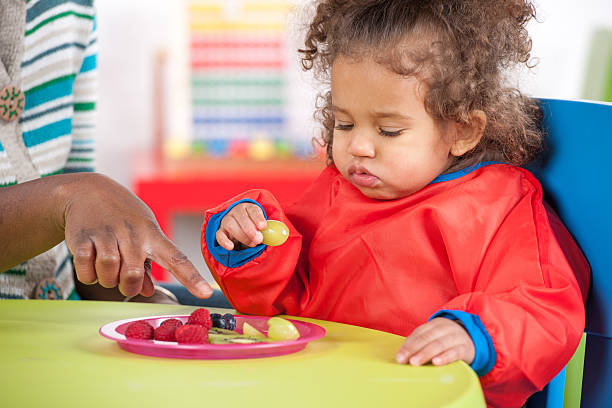
A practical, honest guide for parents navigating the beautiful, messy world of toddler feeding
Let’s be honest. No one really prepares you for the moment your toddler grabs a fistful of spaghetti and flings it across the kitchen with the confidence of a major-league pitcher. You stare at the sauce-splattered wall. You question your life choices. And then, somewhere between cleaning up and laughing about it later, you realise this is actually progress. Messy, chaotic, very much real progress.
Teaching toddlers to eat independently is one of those parenting milestones that sounds straightforward on paper but feels nothing like it in practice. It’s not just about getting food into a small human’s mouth. It’s about trust, patience, and a willingness to let things get a little (okay, a lot) messy in the service of something bigger, raising a child who has a healthy, confident relationship with food.
This guide is for the parent who’s been googling “when do toddlers feed themselves” at midnight, or standing in the kitchen wondering if it’s normal that their two-year-old only wants to eat with the wrong end of the spoon. You’re in the right place. Let’s talk through everything from the science of self-feeding to the practical, on-the-ground strategies that actually work.
Why Independent Eating Matters More Than You Think
Here’s something that doesn’t get said enough: teaching your toddler to feed themselves isn’t just a convenience for you (though, yes, it absolutely is that too). It’s a foundational life skill that shapes how your child relates to food for years, possibly decades to come.
Self-feeding builds fine motor skills. The pincer grip your little one develops picking up peas? That’s the same grip they’ll use to hold a pencil in preschool. The hand-eye coordination required to get a spoon from bowl to mouth? It’s real developmental work happening right there at the dinner table. Occupational therapists often talk about feeding as one of the richest motor learning activities of early childhood, and they’re right.
Beyond the physical, independent eating builds something harder to measure: autonomy. When toddlers are allowed to control how much they eat, when they feel full, and how they interact with their food, they develop an internal sense of hunger and satiety cues that persist into adulthood. Research in pediatric nutrition consistently shows that children who are given appropriate feeding autonomy are less likely to overeat and more likely to self-regulate effectively. That’s not a small thing.
And then there’s confidence. A toddler who successfully spoons yoghurt into their own mouth, even if half of it lands on the tray, is a toddler who is learning “I can do this.” That feeling carries forward. It really does.
When Should You Start? (Spoiler: Earlier Than You’d Guess)
Most parents think of independent eating as a toddler milestone, but the groundwork actually starts in infancy. Around 6 months, when babies begin solid foods, the stage is already being set. Baby-led weaning, the practice of offering soft finger foods from the very start rather than purees, has become increasingly popular for exactly this reason. It gets babies comfortable with self-feeding from day one.
But if you started with purees and spoon-feeding (which is completely fine, by the way), don’t worry. The toddler years, roughly 12 months to 3 years, are the prime time for developing self-feeding skills. Here’s a rough developmental timeline to keep in mind:
12–15 months: Most toddlers can pick up finger foods reliably and attempt to use a spoon, even if the technique is… creative. Let them try. Give them a spoon while you use another one to help.
18 months: Many toddlers can use a spoon with some success. Thick foods like mashed potatoes or oatmeal stay on the spoon better, a helpful trick for this stage.
2 years: Spoon use improves significantly. Forks start to appear in the picture, especially with softer foods. Toddlers this age also love pouring from small pitchers, a great way to build confidence.
3 years: By now, most children can eat fairly independently with utensils. They’re still messy, very messy,y but the fundamental skills are there.
There’s a wide variation in this timeline, and that’s normal. Some kids are motivated self-feeders from the start; others are more cautious and take longer to warm up. Neither is wrong. What matters is that you’re creating the opportunity, not forcing the pace.
The Division of Responsibility: A Framework That Changes Everything
If you haven’t come across Ellyn Satter’s Division of Responsibility in Feeding, stop everything. It’s one of those ideas that, once you understand it, completely reframes how you think about mealtimes with your child.
The framework is simple: parents decide what food is offered, when it’s offered, and where eating happens. Children decide whether they eat and how much. That’s it. Two clear lanes of responsibility, and they don’t overlap.
Sounds almost too easy, right? Except in practice, parents constantly cross into the child’s language. We cajole, we negotiate, we say things like “just three more bites” or “if you eat your vegetables, you can have dessert.” And here’s the thing: all of that pressure, even when well-intentioned, actually undermines the child’s ability to self-regulate. It teaches them to eat according to external cues (“mom wants me to eat more”) rather than internal ones (“I’m full”).
When you apply the Division of Responsibility consistently, something interesting happens. Kids relax around food. Mealtimes become less of a battle. And children, given time, often expand what they’ll eat, because the pressure is off. It doesn’t happen overnight. But it works.
Setting Up for Success: The Environment Matters
Before we get to techniques, let’s talk setup. The physical environment in which your toddler eats has an enormous influence on how successfully they can feed themselves. You know how you work better at a clear, organised desk than a cluttered one? The same principle applies here.
Get the seating right. Your toddler needs to be at the right height relative to the table, with their feet supported. A dangling-feet situation is actually uncomfortable and makes it harder to focus on eating. A good high chair with a footrest, brands like Stokke Tripp Trapp or the IKEA Antilop are both excellent options at very different price points. It makes a real difference. As kids get older, a booster seat with a tray at table height works well.
Use the right tools. Toddler-sized utensils with chunky, easy-to-grip handles are the obvious ones. But also consider: suction bowls (life-changing for the 12–18 month stage), divided plates that keep foods separate (many toddlers strongly prefer foods not touching), and open cups or 360-degree spill-resistant cups rather than sippy cups, which can actually slow the transition to normal drinking.
Embrace the mess strategically. Put a splat mat under the high chair. Accept that clothes will be sacrificed. Some parents do mealtime in just a diaper during the messiest months, and honestly, that’s not a bad strategy. What you don’t want to do is communicate anxiety about the mess to your toddler, because they’ll pick up on that stress and associate it with eating.
Minimize distractions. Screens off, phones down. Family meals where everyone is eating together, without a TV in the background, are consistently shown to support healthy eating habits. Toddlers learn by watching. If they see you eating, engaging with food, and enjoying meals, that’s modelling that matters.
Practical Techniques: The How-To Breakdown
Alright, let’s get into the actual mechanics of teaching your toddler to eat independently. There’s no single magic technique; it’s more a collection of approaches that, used together, create the conditions for success.
Start with finger foods. Long before utensils enter the picture, finger foods are the gateway to self-feeding. Soft pieces of banana, steamed broccoli florets, small cubes of cooked sweet potato, and shredded chicken. These give toddlers control and practice with getting food from the surface to the mouth. The key is size: pieces should be about the size of a fingernail for very young toddlers, graduating to larger pieces as they develop.
Let them practice with a pre-loaded spoon. One strategy that works well in the 1218-monthh window: load the spoon yourself and hand it to your toddler for them to put in their own mouth. This lets them experience the “spoon to mouth” motion without the frustration of scooping. Over time, move the food to the edge of the bowl so they need to scoop slightly before bringing it to their mouth.
Offer foods in varying textures. Toddlers who only eat purees can become resistant to textured foods later. Exposing them to a range of textures early, smooth, chunky, crunchy, soft, helps build comfort and confidence. This doesn’t mean forcing anything; it means consistently offering variety so the exposure happens naturally.
Let them play with food. This is hard for some parents. But toddlers learn through touch, smell, and exploration before they eat. A child who squishes, smells, and pokes their food is actually doing important sensory work that eventually leads to eating. Discouraging that exploration, “don’t play with your food”, can backfire.
Narrate without pressure. “Look at those little carrots! They’re so crunchy.” “You picked up that piece of chicken all by yourself!” Descriptive, positive narration keeps the atmosphere light and reinforces the child’s efforts without turning into performance anxiety. Avoid heavy praise like “AMAZING JOB EATING”, which can feel pressuring; go for warm, matter-of-fact acknowledgement instead.
Involve them in meal prep. Even a two-year-old can wash vegetables, stir a bowl, or place items on a tray. Children are significantly more likely to eat foods they’ve helped prepare. It sounds almost too simple, but the connection between participating in making the food and being interested in eating it is very real. Make it a routine part of your kitchen life when you can.
The Picky Eater Problem And What’s Actually Going On
You can’t talk about toddler independent eating without addressing picky eating, because they’re deeply connected. And here’s something important: most toddler picky eating is developmentally normal, even when it feels alarming.
Around 18 months to 3 years, many toddlers go through a phase called neophobia, a fear of new foods. From an evolutionary standpoint, this makes some sense: as toddlers became more mobile and could potentially eat things they shouldn’t, caution around unfamiliar foods was protective. Your toddler’s refusal to eat the same broccoli they devoured two weeks ago isn’t a personal attack. It’s biology.
The research on food neophobia is pretty detailed on one thing: repeated, pressure-free exposure works. Studies suggest that children may need to be exposed to a new food 10 to 15 times before they’ll accept it, sometimes more. Exposure doesn’t mean eating; it means having the food present, maybe touching it, maybe tasting and spitting it out. Every encounter counts.
The worst responses to picky eating, according to feeding specialists, are the ones that add pressure: making separate meals, bribing with dessert, forcing bites, or showing obvious frustration. These approaches tend to make the problem worse over time, even if they get short-term results. The better path and it’s genuinely harder is to keep offering, stay calm, and trust the process.
That said, there is a distinction between typical picky eating and feeding difficulties that warrant professional attention. If your toddler is losing weight, gagging or vomiting consistently at meals, eating fewer than 20 foods, or showing extreme distress around eating, it’s worth speaking with your paediatrician and potentially a pediatric feeding specialist or occupational therapist. These things exist on a spectrum, and there’s no shame in asking for help when you need it.
Family Meals: The Secret Weapon Nobody Talks About Enough
Here’s something the research keeps showing up over and over: family meals, regular, sit-down meals where everyone eats together, are one of the most powerful tools for supporting children’s healthy development around food. And yet, in the chaos of modern family life, they’re often the first thing to go.
Think about it from your toddler’s perspective. They’re learning everything by watching the people around them. When they see you, a parent, eating a variety of foods, picking up a fork, tasting something new, commenting on how food tastes, they absorb all of that. Family meals create a social context for eating that’s enormously instructive.
You don’t need to make it elaborate. Even five shared meals a week, eaten at the table together, have been shown in studies to have significant positive effects. The food doesn’t need to be complicated. What matters is the shared experience.
And if you can manage it, serve the same meal to everyone. Modified where necessary for safety (no big chunks for a young toddler), but essentially the same food. When your toddler sees that everyone is eating the same thing, the food becomes normalised in a way that a separate “kid’s meal” simply doesn’t achieve.
Handling Setbacks Without Losing Your Mind
Progress with toddler self-feeding is not linear. This is important to say out loud, because the non-linearity of it can feel like failure when it’s actually just how kids develop.
Your toddler might use a spoon perfectly for three days straight and then refuse it entirely for a week. They might eat a huge variety of foods and then narrow to six items for a month. They might have one excellent meal and then throw the bowl across the room the next day. All of this is normal. The trend line, over months and years, is what matters, not the day-to-day fluctuations.
When things feel particularly stuck, and they will feel that way sometimes, a few things tend to help. Step back from the pressure, even a little. Check the basics: is your toddler overtired, sick, or going through a developmental leap? These things all affect eating. Rotate back to foods you know they like alongside new ones. Give them more agency where you can, even small things “Do you want the blue plate or the yellow plate?” can help a toddler who’s feeling powerless regain some sense of control.
And please, be kind to yourself in all of this. Feeding a toddler is genuinely hard. The meals that end up on the floor, the food that gets rejected after you spent twenty minutes making it, the nights when dinner is crackers and cheese because that’s all anyone has energy for, none of that makes you a bad parent. It makes you a real one.
When to Hand Over the Reins (And How)
There’s a moment, somewhere around ages 2 to 3, when most toddlers are ready to take on much more of the self-feeding process. The transition from “letting them try” to “this is now primarily their job” is gradual, but there are some signs to look for.
When your toddler starts resisting your help, pulling the spoon away, pushing your hand aside, saying “me do it” with the conviction of someone who has made a firm life decision, that’s your cue. Even if their technique is chaotic, even if it takes four times as long and results in food in their ears, let them lead. This is the moment. Intervening too much at this stage can actually dampen motivation.
You can still scaffold without taking over. Sit nearby. Narrate. Offer a steadying hand when they seem frustrated, then let go when they push back. Refill the bowl without fanfare. Keep the environment set up for their success without doing it for them.
The end goal isn’t a toddler who eats perfectly, it’s a child who approaches food and mealtimes with curiosity and confidence. The mess, the frustration, the ten thousand dropped spoons along the way? All of that is part of building something that lasts a lifetime.
The Long Game
Teaching your toddler to eat independently is a slow, winding, occasionally sauce-covered journey. There will be meals that feel like complete disasters. There will be surprising victories the day they actually ask to try a new food, the first time they finish a whole meal without any prompting, the moment you realise you haven’t had to fight about eating in two weeks.
The principles that make the biggest difference, in the end, are pretty consistent: give your child appropriate autonomy around food, create a calm and positive mealtime environment, offer variety without pressure, eat together as often as you can, and trust your child’s natural drive to develop and grow. These aren’t revolutionary ideas, but they’re the ones that hold up over time.
You’re not just teaching your child to use a spoon. You’re teaching them that food is safe, that eating is enjoyable, and that they have the ability to take care of themselves. That’s a pretty extraordinary thing to do, one messy meal at a time.
So the next time the spaghetti hits the wall, and it will maybe just laugh. Clean it up. And know you’re doing something that matters.