How a simple tray, a low shelf, and a little trust can transform your toddler’s relationship with food
Here’s something no one tells you before you become a parent: the snack struggle is real. Like, really real. You prep something adorable, little cubes of cheese, a handful of blueberries, maybe some crackers arranged just so, and your toddler looks at it like you’ve placed a live crab on their plate. They push it away, ask for something else, then announce they’re hungry again twelve minutes later. Sound familiar?
What if the problem isn’t the food? What if it’s the setup?
That’s exactly what Montessori-inspired snack setups address. And before you roll your eyes thinking this is another parenting trend cooked up by influencers with too much time and a ring light, hear me out. The principles behind this approach are grounded in real developmental science, the kind that actually makes sense when you watch a two-year-old in action.
This isn’t about perfection. It’s about creating an environment where your toddler feels capable, calm, and genuinely interested in eating. And honestly? It makes your life easier, too.
Wait, What Even Is a Montessori Snack Setup?
Let’s back up for a second. Montessori, as a philosophy, is built on one central idea: children learn best when they can do things themselves. Maria Montessori, the Italian physician and educator who developed this approach in the early 1900s, noticed that children weren’t just small adults waiting to be filled with information. They were active learners craving independence, order, and meaningful work.
In the kitchen and around food, this translates into creating an accessible, child-sized environment where a toddler can make real choices. Not pretend choices. Not the kind where you offer two options and secretly hope they pick the one you want, empowering choices.
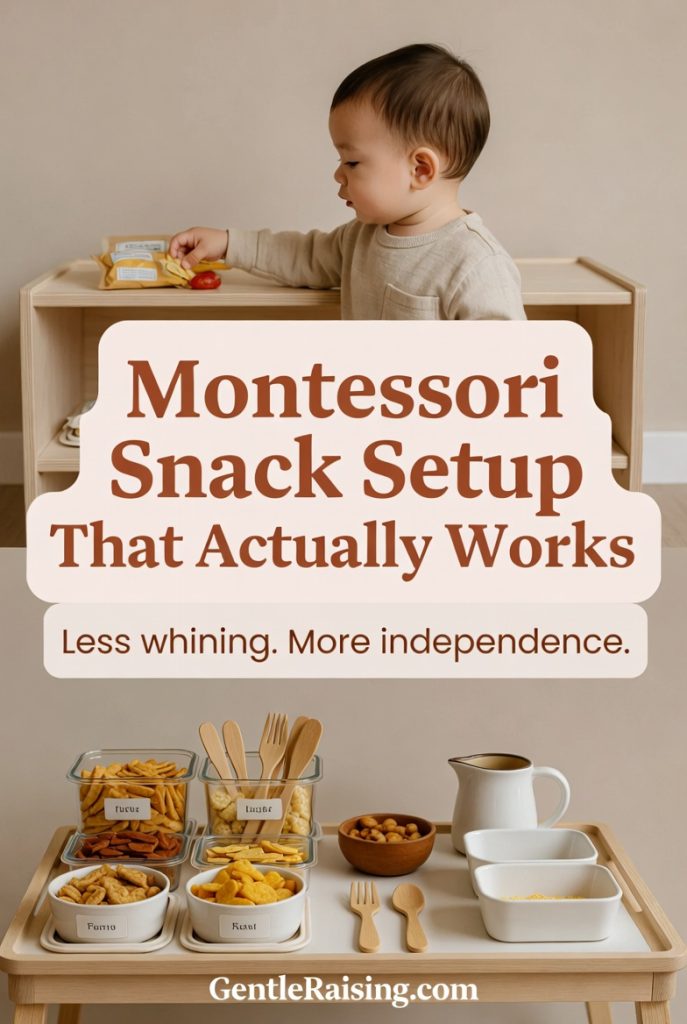
A Montessori snack setup is basically a dedicated space, usually a low shelf, a small table, or even a section of the kitchen counter, where snack items are stored at your child’s level. The idea is simple: when your toddler is hungry, they can go to their snack station, get what they need, and serve themselves. With real utensils. From real containers. And with minimal intervention from you.
Does that sound chaotic? It might be, at first. But give it a few weeks, and something shifts.
The Developmental Case for Letting Them Lead
Toddlers are in a very specific developmental window. Between ages one and three, they’re in what researchers call the “sensitive period” for order and independence. They want to do things themselves. They get frustrated when you do things for them. They fall apart when routines change unexpectedly.
Sound like your kid? Exactly.
When we respect that drive for autonomy around food, something interesting happens. Kids who have control over their snack choices tend to be less anxious about eating. They’re more willing to try new foods because the pressure is off. No adult is hovering, no performance required. It’s just them, the food, and the freedom to decide.
Ellyn Satter, the dietitian behind the Division of Responsibility in Feeding framework, has been saying this for decades: parents decide what, when, and where food is offered. Children decide whether to eat and how much. The Montessori snack station is basically that philosophy made physical. You curate the options; they make the call.
There’s also something worth noting about fine motor development. Pouring water from a small pitcher, spooning raisins into a bowl, peeling a clementine, these aren’t just cute activities. They’re building the precise hand-eye coordination and grip strength your child will eventually use for writing. Snack time, done this way, is practice in disguise.
Setting Up Your Toddler’s Snack Station (Without Losing Your Mind)
Okay, let’s get practical. You don’t need a renovated kitchen, a Pinterest board, or a budget. What you do need is intentionality. Here’s how to put together a setup that actually functions.
Choose the right location.
Ideally, your snack station lives somewhere your toddler can access independently and safely. A low kitchen shelf works brilliantly. So does a small Ikea KALLAX unit positioned at toddler height, or even a cleared bottom shelf in your pantry. The keyword is accessible, no climbing, no asking for help to reach it.
If you have a small home and space is tight, don’t stress. Even a dedicated corner of the kitchen counter paired with a sturdy step stool can serve the same purpose. The physical setup matters less than the intention behind it.
Stock it thoughtfully, not endlessly.
One of the most common mistakes parents make when first trying this? Overstocking. You want variety, yes, but too many options are genuinely overwhelming for a toddler. Their decision-making capacity is still developing, and a shelf full of twelve snack choices is more likely to cause a meltdown than a good meal.
Aim for two to four options at any given time. Mix what you know they love with something slightly newer or less familiar. Keep things manageable.
Good snack station staples tend to include:
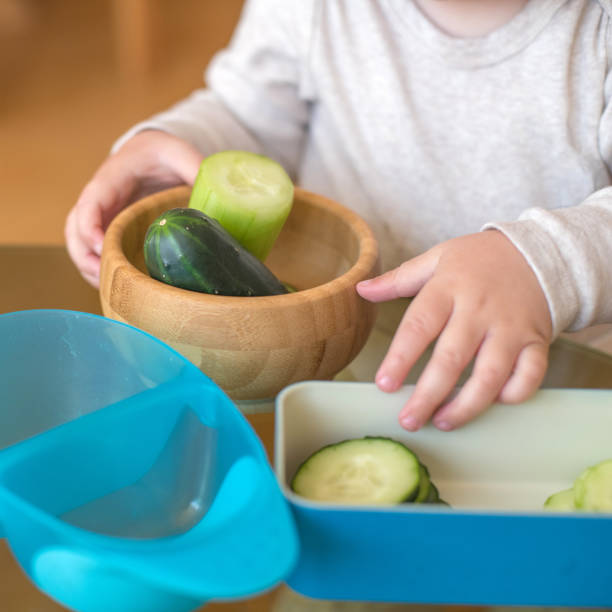
- Soft fruits like banana halves, strawberry halves, or sliced pear
- Cheese cubes or sticks are stored in a small, lidded container. Whole-grain crackers or rice cakes in a small open tray
- Hummus or nut butter in a small dip-sized container with a lid, they can manage
- Dry snacks like raisins, dried mango, or puffed grains in small open bowls or jars
Rotate the options every few days so it feels fresh but not chaotic. Think of it like curating a tiny menu.
Get the right tools and keep them.y
The equipment matters more than you’d think. Adult-sized plates and cups are genuinely hard for toddlers to manage, and failure leads to frustration, which leads to giving up. Small-scale tools that actually work make a huge difference.
Look for a small ceramic or bamboo plate (something with a little weight so it doesn’t slide around), a child-sized pitcher for water (Learning Tower and Montessori Services both sell nice options), a small bowl, and real cutlery scaled down for little hands. Yes, real. Not plastic. The weight and feel of real materials actually help toddlers learn to control their movements better than flimsy plastic ever will.
A small tray to carry everything is a nice touch, too. It gives the whole process a satisfying sense of ceremony. Kids love that.
The Part Nobody Warns You About: Mess
Let’s be honest for a moment. This approach creates a mess. Crackers will be dropped. Water will be poured with tremendous enthusiasm and minimal accuracy. Raisins will end up in places raisins have no business being.
That is part of the process. Not a flaw in it.
What helps enormously is building cleanup into the routine from day one. Keep a small sponge, a dustpan and brush, or a hand towel at your child’s level near the snack station. When something spills, not if, the expectation is that they help clean it up. Not perfectly. Not completely. But they participate.
This isn’t punitive. It’s actually part of the Montessori principle of “grace and courtesy”, the idea that children can learn to take care of their environment when given the right tools and the right modelling. If you calmly wipe up spills alongside them without making a big deal of it, they internalise that the mess is manageable. It’s not catastrophic. It’s just part of life.
Snack Time Isn’t Just About Hunger
Here’s something worth sitting with. When your toddler walks over to their snack station, picks up a small pitcher, carefully pours water into their cup, and then carries their tray to the table, that whole sequence of actions is doing something profound for their sense of self.
They’re learning: I am capable. I can do hard things. My needs matter, and I can meet them.
That’s not a small thing. For a child who spends most of their day being buckled, lifted, redirected, and told what to do, having one domain where they genuinely call the shots is deeply regulating. A lot of what we label as “difficult behaviour” in toddlers is really just a kid screaming (sometimes literally) for some control over their world. The snack station is a low-stakes place to give them that.
You might also notice,e and this surprises a lot of parents, that your child is more willing to try new foods when they’ve been part of choosing and preparing them. There’s a concept in food education called the “neophobia curve,” describing how children warm up to unfamiliar foods through repeated, low-pressure exposure. The snack station provides exactly that. A new food sitting quietly in a small bowl, waiting for curious fingers, is far less threatening than the same food appearing on their dinner plate while you watch hopefully.
How to Introduce the Station Without Making It a Whole Thing
Some parents overthink the introduction. They plan a reveal. They make it ceremonious. And then their toddler is completely uninterested or immediately tries to dismantle everything.
The quieter approach usually works better. Just set it up, mention it casually (“Hey, there’s some cheese and crackers on your shelf if you want a snack”), and let them discover it at their own pace. If they ignore it for a few days, that’s fine. If they immediately raid it also fine, and a good opportunity to walk through the process together.
The first time they use it, do a gentle guided walkthrough. “When you want a snack, you can come here and choose. You put some on your plate like this, and you carry it to the table.” Keep it matter-of-fact. No fanfare needed.
Resist the urge to supervise every single snack. That kind of hovering communicates distrust, even when you don’t mean it that way. Stay within earshot, check in occasionally, but let the process be theirs.
But What About Nutrition? (A Fair Concern)
This comes up a lot, and it’s worth addressing properly. If your toddler is given free access to snacks, won’t they just eat crackers all day and refuse dinner?
Short answer: Maybe, in the beginning. Longer answer: probably not, once the novelty wears off.
The key is what you stock the station with. You control that. If crackers are on the shelf alongside cheese, fruit, and some vegetables with hummus, then even a cracker-obsessed toddler is working within a nutritionally reasonable range. You don’t need to stock it with only what you’d consider “perfect” foods, but you do curate the selection.
It also helps to think of snack time as part of your broader feeding rhythm. Most nutrition experts recommend offering structured snack times mid-morning and mid-afternoon, for example, rather than grazing all day freely. The snack station works beautifully within that rhythm. The station is “open” during snack time, and “closed” (or simply not offered) at other times.
That said, every child is different. If you have a toddler with specific dietary needs, feeding challenges, or a complicated relationship with food, the Montessori snack setup is still worth exploring — but pairing it with guidance from a pediatric dietitian can help you adapt it in a way that makes sense for your family.
Making It Work in a Real Home (Not a Montessori Showroom)
One of the things that frustrates people about Montessori content online is how staged it all looks. Beautiful wooden shelves, linen napkins, ceramics arranged just so. Real life does not look like that. And it doesn’t need to.
You can do this with a dollar-store tray, a low IKEA shelf, and whatever small bowls you already have. The aesthetics genuinely do not matter. What matters is the function: accessible, child-sized, predictable, and stocked with real food.
If you’re renting and can’t install anything, no problem. A small basket on the bottom of a bookshelf works. A picnic basket set on the floor works. Even a dedicated drawer at floor level works, if your kitchen layout allows it.
And if your toddler has an older sibling who might raid the station? That’s a real logistical challenge, and you’re allowed to problem-solve it creatively. Some families use the station only during times when the older child is at school or occupied. Others make a separate, more grown-up snack arrangement for older kids and treat the toddler station as off-limits for everyone else. Whatever you need to make it work.
A Few Things That Help the Whole System Click
Once your snack station is up and running, a few habits make a real difference.
Keep the station consistent. Toddlers thrive on predictability. If the small blue bowl is always where the raisins live, that’s genuinely comforting for a child whose world is still very new and often confusing. Rearranging things constantly, even with good intentions, can be unsettling.
Involve them in restocking. When you’re prepping snacks for the week, bring your toddler along. Let them watch you wash the grapes, help arrange the crackers on the tray, and place the cheese container on the shelf. This builds what Montessori called “practical life skills,” but more than that, it creates a sense of ownership. They helped set it up. Of course, they want to use it.
Name what they’re doing. Not in a quiz-y way, “What colour is that?” but in a running, relaxed commentary. “You’re pouring the water. So careful.” “You picked the crackers today.” “You’re carrying your tray all the way to the table!” That kind of narration builds language, yes, but it also confirms: I see you doing this. You are competent. You are capable.
And let some things go. If they eat standing up occasionally, or bring their tray to the living room instead of the table, or decide to eat only the cheese today, that’s probably okay. You’re building a long-term relationship between your child and food. The goal isn’t perfection at every snack. The goal is a child who grows up feeling comfortable with food, capable in the kitchen, and confident in their own appetite cues.
The Bigger Picture
Parenting is full of moments where you’re doing something that feels small but is actually quite large. Setting up a snack station for your toddler feels like a minor household logistics decision. And in a way, it is. But it’s also a statement: I trust you. I believe you can do this. Your needs are worth organising around.
Those messages, delivered consistently and quietly over thousands of small interactions, shape how a child sees themselves. And how they see food.
It’s not about Montessori as a brand or a philosophy you need to adopt wholesale. It’s about borrowing one good idea: children do better when their environment is set up to support their independence. And there’s perhaps no more powerful place to practice that than around something as fundamental, daily, and emotionally loaded as food.
So start small. Clear a shelf. Find a small tray. Put out three things your kid already likes. And see what happens.
You might just be surprised.