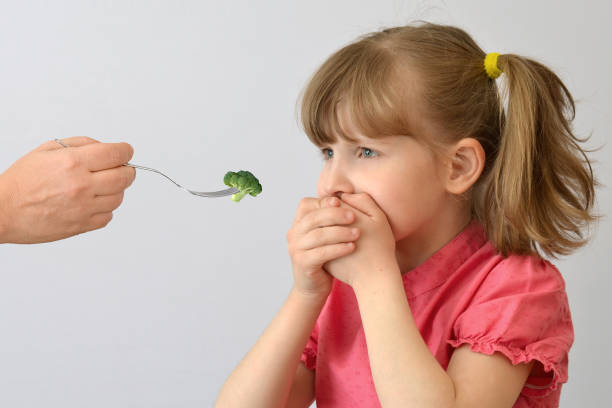
You made a beautiful, colourful plate. Steamed broccoli, cut-up grapes, a little triangle of cheese, the kind of thing that belongs on a parenting blog. And your toddler looked at it, looked at you, and pushed it clean off the table.
Sound familiar?
First of all, you’re not failing. You’re not doing it wrong. Toddler food refusal is so common that it practically deserves its own parenting rite of passage. Right up there with the sleep regression and the meltdown in the middle of the supermarket. But knowing it’s common doesn’t make it less exhausting, and it definitely doesn’t answer the question that’s been spinning in your head: why does my kid refuse to eat?
The answer, as it turns out, is a lot more interesting than you might expect. And once you understand what’s actually going on developmentally, sensory-wise, behaviourally, the whole thing starts to make a lot more sense. Let’s get into it.
It’s Not About the Food. It’s About Control.
Here’s the thing most parents miss: toddlers aren’t refusing food because they’re picky. They’re refusing food because they’re asserting autonomy, possibly for the first time in their short lives.
Think about it. A toddler cannot choose when to sleep. They can’t decide when to leave the park. They can’t control much of anything, honestly. But the moment food arrives on the table? Suddenly, they hold all the cards. Whether something goes in the mouth or gets catapulted across the kitchen is one of the few decisions entirely in their power.
This is the phase where your toddler becomes a tiny, extremely opinionated food critic, usually kicking off between 18 months and 3 years. Developmental psychologists sometimes call it the “autonomy stage.” It’s when children begin forming a sense of self that is distinct from their parents. They’re not being difficult on purpose. They’re just… becoming a person.
Which doesn’t make it less exhausting. But it does make it less personal.
What this means in practice: the more pressure you put on a toddler to eat, the more they dig in. It’s almost counterintuitive. The moment you say, “Just try one bite,” that bite becomes the most loaded, politically charged piece of food in the history of your household.
Neophobia Is a Real Thing (And It’s Perfectly Normal)
You’ve probably never heard the word “food neophobia” before. But you’ve absolutely seen it. It’s the technical term for the fear of new foods, and it peaks, quite dramatically, between the ages of two and six.
From an evolutionary standpoint, this actually makes total sense. Young children who had just become mobile and were starting to explore the world independently? The ones with a healthy suspicion of unfamiliar foods were more likely to survive. Eating a random berry off a bush could be fatal. So the brain learned to be cautious.
Your toddler isn’t being irrational. Their brain is running a very old, very effective safety program. The fact that the “unfamiliar food” in question is a piece of courgette rather than a poisonous berry is… not information their primal instincts have caught up to yet.
Research suggests children may need to be exposed to a new food somewhere between 10 and 15 times before they’re willing to try it. And “exposed” doesn’t mean forced. It means seen. Present on the plate. Around. Familiar.
Honestly, that’s a long game. Longer than any of us want to play when we’re just trying to get dinner done. But knowing that the goal is familiarity, not consumption, that’s a real shift. It takes the pressure off both of you.
The Sensory Side of Things (This One Surprises a Lot of Parents)
Not all food refusal is behavioural. For some toddlers, texture is a genuine sensory experience and not in a pleasant way.
A toddler who gags at mushy food, or who only eats crunchy things, or who loses their mind when two foods touch on the plate, that’s not drama. That’s a sensory system that is working harder than most. Some children are hypersensitive to touch, which extends to the way food feels in their mouths. The squish of a banana. The slime of a cooked mushroom. The stringy pull of chicken breast. These textures that adults barely register can be genuinely distressing for sensory-sensitive kids.
Temperature, colour, smell, all of it feeds into whether a food feels “safe” or threatening. Some toddlers won’t touch food that’s too hot. Others refuse anything green on sight alone, long before it reaches their mouth. (The colour thing is more common than you’d think and again, probably rooted in those old evolutionary instincts about which plants were safe to eat.)
If your toddler’s food refusal seems extreme, if their diet has shrunk to a very narrow range of foods, and they’re distressed beyond typical toddler stubbornness, it’s worth mentioning to your paediatrician. Occupational therapists who specialise in feeding can be genuinely helpful here. It’s not about being dramatic; it’s about getting the right support early.
Why Toddlers Eat Well One Day and Refuse Everything the Next
One day, your toddler devours an entire bowl of pasta. Next, they look at the same pasta as if it personally offended them. What is going on?
A few things, actually.
Toddler growth isn’t linear. There are periods of rapid growth, growth spurts when their appetite genuinely increases, followed by stretches where their growth slows, and they need far fewer calories. Their appetite self-regulates in ways that feel totally random to us but make perfect biological sense to their bodies.
Then there’s mood, illness, teething, tiredness, and overstimulation from the day, all of which affect appetite. A toddler who had a wild morning at nursery might be too wired to sit still, let alone eat. One who’s coming down with something might suddenly become more restrictive than usual.
Context matters enormously, too. Who else is at the table? Is it loud or quiet? Are they being watched? Toddlers are acutely aware of adult attention, and eating can become tangled up with all sorts of social dynamics in ways that don’t always work in your favour.
The erratic eating isn’t a problem to solve. It’s just… toddler biology doing its thing.
Okay, But What Actually Works? (Here’s the Practical Bit)
Right. You’ve heard the theory. Now, for what you actually came here for: strategies that real parents use, that feeding specialists recommend, and that don’t require turning every meal into a PhD project.
Ellyn Satter’s Division of Responsibility
If you’ve done any reading on toddler feeding, you’ve probably come across this. Ellyn Satter is a dietitian and family therapist whose feeding model has been widely adopted by paediatricians and speech therapists for decades. The core idea is simple:
- Parents decide what food is offered, when it’s served, and where eating happens.
- Children decide whether to eat and how much.
That’s it. The moment parents stop trying to control the “whether” and “how much” and start trusting the child to regulate their own intake, the whole dynamic shifts. It sounds incredibly simple. In practice, it takes time to trust. But the research behind it is solid.
Serve the New Alongside the Familiar
Instead of introducing a new food on its own, serve it beside something you know your toddler already likes. A few pieces of unfamiliar roasted sweet potato next to the bread and butter they love? That’s far less threatening than a plate of only sweet potato.
The goal isn’t for them to eat the new thing today. It’s for the new thing to become familiar. Keep offering it, without pressure or fanfare. Eventually, curiosity usually wins.
Let Them See You Eating It
Toddlers are watching you constantly. They’re social learners; they take cues from the people they trust about what’s safe, what’s good, what’s worth trying. Eating the same food yourself, without making a big deal of it, is one of the quieter but more effective strategies out there.
Siblings work especially well for this. If an older child eats something enthusiastically, younger children often follow. You know how kids will try something at a friend’s house that they’d never touch at home? Same principle. Less pressure, different social context, suddenly the food is interesting.
Involve Them in the Process
This one feels like a lot of extra effort in the moment, but it genuinely pays off. Toddlers who help prepare food, washing vegetables, tearing lettuce, stirring something in a bowl, are more likely to engage with it at the table. There’s ownership there. Pride, even.
Even just letting them choose between two options, “Do you want the peas or the corn?” gives them enough autonomy to feel less like eating is something being imposed on them. It’s a small thing, but it matters.
Make Mealtimes Feel Safe, Not Tense
Children pick up on parental anxiety faster than you’d like to believe. If mealtimes have become charged if there’s negotiating, bribing, pleading, or visible worry, kids will feel that tension, and it will make eating harder, not easier.
The most powerful thing you can do is make the table a low-stakes place. Serve the food. Eat your own meal. Chat about something else entirely. Not eating the broccoli has no comment, no consequence, no big reaction. It’s just… there. When food stops being a battleground, a lot of toddlers gradually start engaging with it more.
What About Nutrition? (The Worry Behind the Worry)
Let’s name the real fear here. It’s not just that your toddler won’t eat the broccoli. It’s that you’re worried they’re not getting enough nutrition. That you’re somehow failing them nutritionally. The doctor will raise an eyebrow at the next check-up.
Here’s some genuine reassurance: toddlers are remarkably good at self-regulating over time. Paediatricians often advise looking at what a child eats across an entire week, rather than day to day. On that scale, most toddlers, even the seemingly impossible ones, get a reasonable spread of nutrients.
That said, there are a few nutrients worth keeping an eye on for toddlers going through restrictive phases: iron, zinc, calcium, and vitamin D are the ones most commonly flagged. If you’re genuinely worried, a toddler-specific multivitamin can offer peace of mind while you work through the food acceptance process. Just check with your GP or paediatrician first.
If your toddler has dropped significant weight, or their restricted eating is affecting their growth trajectory, or they’re refusing entire food groups entirely, that’s worth a proper conversation with a professional, not just a blog article. Trust your instincts on that.
The Things That Tend to Backfire (Even When They Feel Like They Should Work)
You’ve probably tried some of these already. That’s okay, most parents do, because they seem logical in the moment. But it’s worth understanding why they often make things worse in the long run.
“Just one bite”
This one feels so reasonable. It’s just one bite! But for many toddlers, this becomes a power struggle, and the more you push, the more they push back. It can also teach them to associate certain foods with conflict, which is the opposite of what you want.
Using Dessert as a Reward
“Eat your vegetables, and then you can have dessert” sounds fair, but research consistently shows it backfires. It elevates dessert to a special, desirable status and makes vegetables feel more like a punishment to endure. The gap between “bad food” and “reward food” widens every time you do this.
Hiding Vegetables in Other Foods
The “sneak it in” approach, blending spinach into a smoothie, hiding courgette in a muffin, isn’t without merit as a short-term nutrition strategy. But it doesn’t help your toddler actually learn to eat and accept those foods. And if they figure out what you’ve done, trust can take a hit. It’s better used as a stopgap, not a long-term solution.
Separate “Kid Food” Meals
Cooking a second meal when your toddler refuses the first one, however kind the impulse, tends to reinforce refusal as a reliable strategy for getting something more appealing. It’s a hard line to hold. But serving the same meal to everyone, with at least one thing on the plate you know they’ll eat, is usually more effective long-term.
A Quick Note on “Picky Eating” vs. ARFID
Most toddler food refusal is completely normal, if maddening. But for a smaller group of children, restrictive eating is something more significant. ARFID (Avoidant/Restrictive Food Intake Disorder) is a feeding condition where the restriction isn’t about preference or wilfulness; it’s driven by anxiety, sensory aversion, or fear of negative experiences like choking or vomiting.
ARFID looks different from regular picky eating: it’s more persistent, more severe, and often affects a child’s growth, nutritional status, and quality of life. If your toddler’s diet has narrowed to fewer than around 20 foods and is continuing to shrink, or if mealtimes involve significant distress, it’s worth bringing up with your paediatrician. It doesn’t have to be a crisis to be worth investigating.
The Long View (Because This Won’t Last Forever)
You know what’s genuinely comforting? Most children grow out of the worst of it. The food neophobia that peaks at two and three typically starts to ease by age five or six as children become more socially influenced by classmates, by culture, by curiosity. The toddler who lived on beige food for a year will very likely become a child who surprises you with their appetite.
That’s not a guarantee, obviously. Some picky eaters stay picky. But the research on children who grow up in low-pressure eating environments where food is offered consistently, eaten without drama, and never weaponised, is fairly encouraging. They tend to develop healthier relationships with food than children who grew up at battleground tables.
The goal isn’t a toddler who eats everything. The goal is a child who grows into an adult with a healthy, comfortable relationship with food. That long game is worth playing even when tonight’s dinner ended up on the floor.
Hang In There, Honestly
Feeding a toddler is legitimately hard. Not “hard” in a way that gets enough acknowledgement, either it’s the kind of daily grind that chips away at you quietly, meal after meal. You’re doing more right than you think.
The fact that you’re reading this, that you’re trying to understand what’s happening rather than just fighting it, already puts you in good shape. Understanding why toddlers refuse food doesn’t solve it overnight. But it changes the dynamic. And changing the dynamic, even slightly, is often where things start to shift.
Keep offering. Keep the table calm. Trust the process, even when the process involves a lot of rejected broccoli. You’ve got this.
The Short Version, If You Need It
- Toddler food refusal is almost always developmentally driven by autonomy, neophobia, or sensory sensitivity.
- Pressure makes it worse. Low-stakes, consistent exposure works better over time.
- Your job: offer the food. Their job: decide whether to eat it.
- Involve them, model eating, and keep the table calm and neutral.
- Look at nutrition over a week, not a day. Most toddlers balance out more than it seems.
- If refusal is severe, persistent, and affecting growth, speak to your paediatrician. Trust your gut.