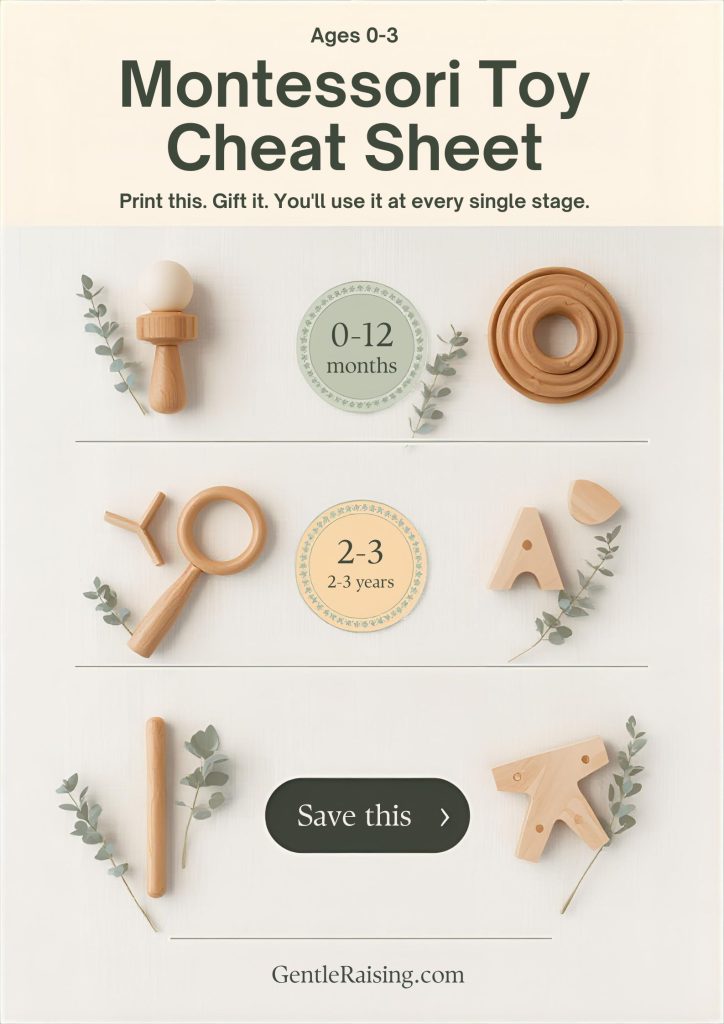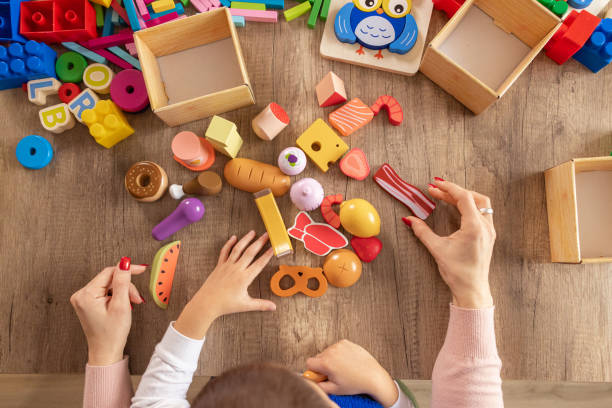
If you’ve ever watched a baby stare intensely at a ceiling fan for five straight minutes, you’ve already witnessed something fascinating: the human brain learning at lightning speed.
The first three years of life are… well, they’re extraordinary. A child’s brain forms more than one million neural connections per second. That sounds almost unbelievable, yet pediatric neuroscientists repeat that number often.
During this window, babies and toddlers aren’t simply playing; they’re building the architecture of their minds.
And that’s where Montessori toys come into the picture.
Not because they’re trendy. Not because they look nice on Instagram. But because they’re designed to support how young children naturally learn: through curiosity, movement, and hands-on exploration.
So if you’re wondering which Montessori toys actually matter between birth and age three, you’re in the right place.
Let’s walk through it together, stage by stage.
What Are Montessori Toys, Really?
Before we get into age recommendations, it helps to understand what makes a toy “Montessori.”
The approach comes from Italian physician and educator Maria Montessori, who spent decades observing how children learn when adults simply step back and let them explore.
Her conclusion? Children don’t need constant instruction.
They need freedom within structure.
Montessori toys follow a few simple principles:
• They encourage independent play
• They focus on one skill at a time
• They are usually made from natural materials
• They are simple and purposeful
You’ll notice something else, too: most Montessori toys don’t flash, sing, or beep.
That’s not a flaw. It’s intentional.
When toys are quiet and simple, children become active participants, not just the audience.
And honestly, parents often discover something surprising: kids play longer with simpler toys.
One Quick Reality Check (Because Parenting Isn’t a Formula)
Age guides are helpful. But babies aren’t robots following a manual.
Some children walk at 10 months. Others at 16 months.
Some toddlers love puzzles early. Others prefer stacking blocks until they’re three.
So treat the age ranges below as gentle guidelines, not strict rules. Watch your child. Follow their curiosity.
That’s actually very Montessori.
Montessori Toys for Babies (0–3 Months)
Newborns may look tiny and sleepy, but their brains are already hard at work.
At this stage, vision is still developing. Babies see best with high contrast patterns and slow movement.
Which is why the classic Montessori mobile is such a brilliant first toy.
Great Montessori Toys for 0–3 Months
1. Munari Mobile
This black-and-white geometric mobile is often a baby’s first visual experience. The contrast captures attention and helps develop early focus.
2. Octahedron Mobile
Around six weeks, babies begin noticing colours. This lightweight mobile gently moves in the air, helping babies track motion.
3. Gobbi Mobile
Made of colored spheres arranged in a gradient, it encourages depth perception and visual discrimination.
It may sound fancy, but at its core, it’s just helping a baby practice looking, noticing, and wondering.
And yes, that matters more than you might think.
Montessori Toys for 3–6 Months
Around three months, something exciting happens.
Babies discover their hands.
Suddenly, everything gets grabbed, shaken, and, let’s be honest, chewed.
This stage is all about grasping and coordination.
Helpful Montessori Toys
• Wooden rattles
• Grasping bead toys
• Montessori bell rattle
• Soft fabric balls
One classic option parents love is the wooden bell rattle made by Hape. The sound is soft and satisfying, not overwhelming.
Babies learn a simple but powerful lesson here:
When I move my hand, something happens.
That tiny cause-and-effect discovery is the beginning of scientific thinking.
Montessori Toys for 6–9 Months
At this stage, babies start sitting, rolling, and exploring everything within reach.
Curiosity explodes.
This is also when children begin developing object permanence, the understanding that things still exist even when hidden.
If you hide a toy behind your back, your baby now searches for it.
Which leads us to one of the most famous Montessori toys.
The Object Permanence Box
This toy lets babies drop a ball into a hole and watch it roll out again.
Simple? Absolutely.
But developmentally, it’s huge. Babies learn:
• cause and effect
• prediction
• problem solving
Many parents buy versions made by Lovevery, a company known for age-based Montessori play kits.
Another wonderful option is the treasure basket.
This isn’t a toy you buy, it’s one you create.
Fill a shallow basket with safe household objects:
• wooden spoon
• silicone spatula
• soft brush
• large shell
• fabric squares
Babies love real textures. Honestly, sometimes more than plastic toys.
Montessori Toys for 9–12 Months
By now, your baby is moving, crawling, scooting, maybe even pulling up to stand.
Their hands are getting more precise, too.
They want to stack, drop, and experiment.
You’ll probably notice one slightly funny behaviour: babies throwing things repeatedly from the high chair.
It’s not mischief. It’s physics.
Good Montessori Toys for This Age
• Stacking rings
• Simple wooden puzzles
• Rolling balls
• Push toys
Wooden stacking rings from PlanToys are especially popular because they’re sturdy and sized perfectly for small hands.
And yes, dropping toys again and again is part of learning.
Gravity experiments happen daily at this age.
Montessori Toys for 12–18 Months
Welcome to toddlerhood.
This stage is… energetic.
Walking begins. Independence explodes. Curiosity triples overnight.
Toddlers want to do everything themselves, even things they probably shouldn’t.
Montessori education actually encourages this urge for independence.
Instead of stopping it, the philosophy gently guides it.
Best Montessori Toys for 12–18 Months
• Shape sorters
• Peg boards
• Wooden stacking cubes
• Pull toys
• Simple kitchen tools
This is also a great time to introduce practical life activities.
Not toys exactly, real tasks.
Examples:
• transferring beans with a spoon
• wiping spills with a small cloth
• putting toys into a basket
Toddlers feel proud when they help.
And that pride builds confidence.
Montessori Toys for 18–24 Months
At this point, imagination starts waking up.
Your toddler may pretend to feed a stuffed animal or drive a wooden car across the floor.
It’s the beginning of symbolic play.
Fine motor skills are improving rapidly, too.
Wonderful Toys for This Age
• Wooden building blocks
• Animal figurines
• Beginner puzzles
• Musical instruments
• Simple dollhouses
Animal figures from Schleich are especially loved because they’re realistic.
That realism matters in Montessori philosophy. It helps children connect play with the real world.
Montessori Toys for 2–3 Year Olds
Two-year-olds are fascinating little humans.
They’re talking more. Asking questions. Testing boundaries.
Their hands are stronger now, which opens the door for more detailed activities.
Excellent Montessori Toys for This Stage
• knob puzzles
• counting toys
• stacking blocks
• threading beads
• art supplies
Open-ended art tools are fantastic here:
• crayons
• washable paints
• chunky chalk
Creativity blooms when kids have materials, not instructions.
And yes, things might get messy.
That’s part of the process.
How Many Toys Do Kids Actually Need?
Here’s something surprising.
Children often play longer and more deeply when they have fewer toys.
Too many options can overwhelm a young brain.
Montessori environments usually feature toy rotation.
Only a handful of toys stay on the shelf at a time. The rest are stored away and swapped every couple of weeks.
The result?
Kids rediscover toys with fresh curiosity.
It’s a simple trick, but it works.
Setting Up a Montessori Toy Shelf
A Montessori play area isn’t complicated.
In fact, it’s intentionally simple.
A good setup includes:
• low shelves
• 6–8 toys at a time
• baskets or trays
• easy access for toddlers
Children should be able to choose and return toys independently.
And honestly, it makes cleanup easier too.
Common Toy Mistakes Parents Make
Let’s be honest, modern toy stores are overwhelming.
And marketing doesn’t help.
Three common issues pop up often:
Too Many Toys
More toys don’t equal more learning.
Sometimes the opposite happens.
Battery-Powered Toys
Flashing lights and loud music often turn kids into passive observers.
Montessori toys keep children actively engaged.
Adult-Controlled Play
When adults constantly direct play, kids lose the chance to experiment.
A little freedom goes a long way.
Brilliant DIY Montessori Toys
You don’t need expensive gear to follow Montessori ideas.
Some of the best learning tools are already in your kitchen.
Try things like:
• a muffin tin with wooden balls
• stacking plastic cups
• pouring water between small pitchers
• clothespins and cardboard
Simple. Affordable. Surprisingly engaging.
Montessori Toy Brands Parents Often Recommend
If you prefer ready-made toys, a few brands consistently receive good reviews:
• Lovevery – subscription-based Montessori play kits
• Melissa & Doug – classic wooden toys and puzzles
• Hape – durable wood toys
• PlanToys – eco-friendly Montessori-style toys
You don’t need every toy they sell.
But many parents appreciate their thoughtful designs.
Final Thoughts: Simple Toys, Powerful Learning
Here’s the quiet truth about early childhood.
Kids don’t need mountains of toys.
They need space to explore, objects to handle, and adults who trust their curiosity.
Montessori toys work because they respect how children naturally learn.
They invite experimentation.
They reward patience.
And sometimes, they remind parents of something important too:
The best moments of childhood aren’t complicated.
They’re simple, blocks on the floor, tiny hands stacking rings, a toddler proudly carrying a wooden spoon across the kitchen.
Small things.
But they build big minds.