You know that moment when your toddler has “that look” in their eyes, the one that says, “I need to play…now”, and you realise you have exactly five minutes before chaos descends? Honestly, we’ve all been there. Between spilt snacks, crayon disasters, and the ever-present laundry mountain, adding yet another activity might feel impossible.
But here’s the thing: sensory play doesn’t have to be complicated, messy, or Pinterest-perfect. In fact, minimalist sensory bins are perfect for toddlers 18 months and older, and you can have one ready in about five minutes flat.
Sounds like magic, right? Well, it’s not. It’s just smart, simple, and incredibly effective.
Why Minimalist Sensory Bins Work So Well
Before we get into the “how,” let’s talk about the why. Toddlers are tiny explorers, wired to touch, taste, smell, and test literally everything literally literally. Sensory bins stimulate their tactile, visual, and fine motor skills—without needing a tiny lab setup.
Here’s what happens when you set up a minimalist sensory bin:
- Focus improves: Even a few small items can hold their attention for longer than a TV show.
- Imagination blossoms: Toddlers invent stories with scoops, blocks, or even a stray spoon.
- Calmness emerges: The rhythmic motion of pouring, stirring, or shaking can be strangely soothing for little minds.
You know what? Sometimes less really is more. Instead of bombarding your child with dozens of toys, a few well-chosen items can spark hours of creativity. And as a parent, you get to enjoy watching them explore without feeling frazzled or overwhelmed.
Choosing Your Base Material
Alright, so what goes into your minimalist sensory bin? The base material is your canvas, the stuff your toddler will touch, sift, scoop, and sometimes taste (don’t worry, we’ll talk safety).
Safe and simple options:
- Dry rice or pasta (plain or dyed with food colouring)
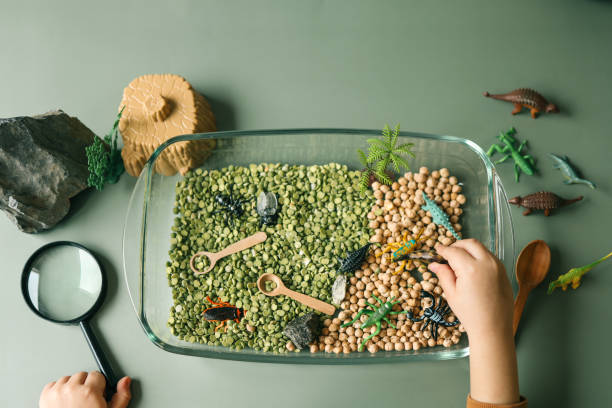
- Dried beans (split peas, lentils)
- Water beads (make sure they’re non-toxic and age-appropriate)
- Cornmeal or flour (great for tactile digging)
- Sand alternatives like kinetic sand
Here’s a little parent tip: texture matters more than quantity. A few scoops of smooth rice feel entirely different from soft, squishy water beads. Rotating textures weekly keeps play fresh and your toddler engaged.
And yes, toddlers will taste everything. So if there’s even a hint of an allergy risk, steer clear. Honestly, you don’t need a million fancy fillers; simple is safer, quicker, and often more fun.
Picking Toys and Tools (Less Is More)
Now, here’s where the minimalist approach really shines. Forget buying every tiny shovel, scoop, or animal figurine in the store.
Stick to these essentials:
- Small cups, spoons, or funnels
- Toddler-safe blocks or animals
- Measuring spoons or tiny bowls
Why? When there are fewer choices, toddlers explore more creatively. Think of it like giving them one crayon instead of the entire box. They learn to experiment with the tools they have instead of getting overwhelmed.
Pro tip: Look around your kitchen. Sometimes a tiny whisk or a mason jar lid works just as well as a toy store purchase.
The 5-Minute Setup, Step by Step
Okay, here’s the good part: actually setting up the sensory bin. Five minutes. That’s it.
- Choose a container. A shallow plastic bin, a big Tupperware, or even a baking dish works. Ideally, something easy to carry and clean.
- Add your base material. A cup or two is plenty, remember, less is more.
- Introduce your toys/tools. Just a handful, think two cups, one animal, one spoon.
- Hand it over to your toddler. Step back and watch the magic happen.
Seriously, you’ll be done before your coffee gets cold. And cleanup? Keep a small mat underneath to catch spills, or make it part of the fun. Toddlers love helping with “dumping back in the bin.”
Safety and Supervision. Without Being Paranoid
At 18 months, curiosity and taste-testing are at an all-time high. So yes, keep an eye on them. But no need to hover like a hawk.
- Avoid small items that can be swallowed.
- Keep the bin on a stable surface.
- Rotate items frequently to prevent boredom and maintain hygiene.
Toddlers will explore with gusto; you just need to make sure the materials are age-appropriate. That’s it. Nothing scary, nothing complicated.
Keeping It Fresh and Engaging
Even a minimalist sensory bin can get stale after a few sessions. Here’s how to keep things interesting:
- Swap out textures weekly: rice one week, beans the next.
- Add seasonal touches: leaves in fall, colored sand for spring, or small ornaments during holidays.
- Rotate tools: try spoons one week, cups the next.
Honestly, you might end up playing more than your toddler. And hey, that’s not a bad thing.
Learning Through Play
This isn’t just about fun. Sensory bins are little learning labs.
- Cognitive skills: sorting, pouring, counting, problem-solving.
- Emotional growth: patience, frustration management, curiosity.
- Social interaction: if siblings or friends join, they practice sharing, turn-taking, and cooperation.
It’s basically brain-boosting disguised as fun. And the best part? It’s all happening while you’re sipping your coffee, feeling like a parenting genius.
Troubleshooting and Common Mistakes
Even the simplest sensory bin can go sideways. Here’s what to watch out for:
- Overfilling: Less is more; tiny spills are easier to clean.
- Unsafe materials: Keep an eye out for choking hazards.
- Overcomplicating: Resist the urge to buy every gimmick. Minimalism = clarity and calm.
Remember, the goal isn’t Pinterest-perfect. The goal is engaged, happy toddlers and parents who aren’t losing their minds in the process.
Quick Cleanup Hacks
Cleanup can feel daunting, but it doesn’t have to be. A few simple hacks:
- Place a mat or old towel underneath the bin.
- Use a shallow cookie sheet for catching spills during play.
- A handheld vacuum or small brush helps reclaim stray rice or beans quickly.
Make cleanup part of the game: toddlers love “dumping it back” into the bin. It teaches responsibility and saves your sanity.
Wrap-Up: Less Stress, More Play
Minimalist sensory bins prove that parenting doesn’t have to be complicated to be enriching. A few simple materials, a handful of tools, and five minutes is all it takes to spark creativity, learning, and calm, both for toddlers and parents.
You don’t need a huge budget, endless storage, or Pinterest-worthy setups. You just need a container, a base material, and a little imagination.
So, next time your toddler gives you that look, grab a bin, toss in a few items, and watch the magic unfold. Trust me: it’s fun, it’s quick, and you might just find yourself wishing playtime lasted a little longer.
And hey, sometimes the simplest moments are the ones we remember the most.
Bonus: 5 Minimalist Sensory Bin Themes for the Week
- Colour Exploration: Red rice + red cups + small red animals
- Nature Touch: Dry leaves, small pinecones, tiny rocks
- Water Fun: Small water beads + cups + funnels
- Counting & Sorting: Colored pasta + mini cups + measuring spoons
- Seasonal Twist: Pumpkins in fall, pinecones in winter, flower petals in spring
Rotate weekly. Watch curiosity, and joy, soar.