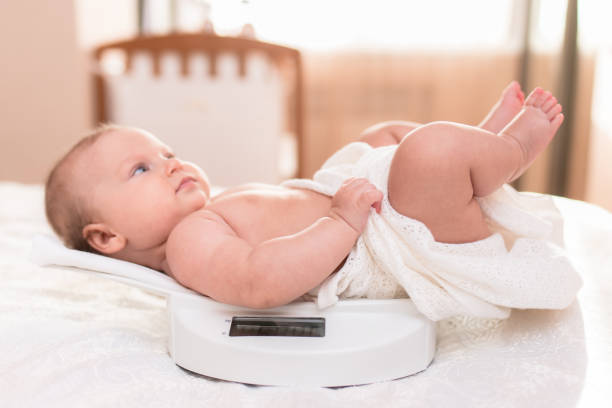
Let’s be honest, few things mess with a new parent’s head like the number on a baby scale.
You can be calm all day, rocking your newborn in the soft half-light of early morning, convinced everything is fine… and then one weigh-in sends your stomach flipping. Too low. Too slow. Too something.
Suddenly, you’re replaying feeds, Googling at 2 a.m., and wondering if you missed a sign you were supposed to catch.
If that sounds familiar, you’re not failing. You’re parenting.
Steady weight gain in newborns matters, yes, but not in the rigid, hyper-precise way social media and parenting forums sometimes make it seem. It’s more fluid than that. More human. More forgiving.
So let’s talk about what steady weight gain actually means, how it shows up in real babies (not textbook ones), and how to tell the difference between normal variation and something that needs attention.
And we’ll do it without panic.
Why Weight Gain Feels So Personal
Here’s the thing no one says out loud: newborn weight gain doesn’t just feel medical. It feels emotional.
A baby’s growth becomes a stand-in for questions parents don’t always know how to voice.
Am I feeding them enough?
Am I doing this right?
Is my body, if I’m breastfeeding, enough?
Even for fathers and non-birthing parents, that number can feel like a verdict. You’re protecting something tiny and fragile, and the scale seems to be grading your effort.
That’s why conversations about weight need context. Numbers alone don’t tell the story.
What “Steady Weight Gain” Actually Means
Let me clear up a quiet misconception right away: steady doesn’t mean constant.
Newborns don’t gain weight in a neat upward line. They zigzag. They pause. They surge. Sometimes they hang out at the same number for days and then jump overnight like they were waiting for a cue.
In general terms, many healthy newborns gain:
- About 20–30 grams per day (roughly ⅔ to 1 ounce) after the first week
- Around 150–200 grams per week in the early months
But those are averages, not rules carved into stone.
A baby gaining slightly less, but feeding well, producing wet diapers, and appearing alert, may be doing just fine. Another baby might gain quickly and still struggle in other ways.
Steady weight gain is about the trend, not perfection.
The First Days After Birth: That Initial Drop Everyone Panics About
Almost all newborns lose weight in the first few days. Yes, almost all.
Typically, babies lose 5–10% of their birth weight within the first week. This happens because they’re shedding extra fluid and learning how feeding works in a brand-new environment.
For parents, though? It feels alarming.
You’re exhausted. Your milk may still be transitioning. Your baby feeds often but unpredictably. And then someone tells you the baby has lost weight.
Here’s the reassuring part: most healthy newborns regain their birth weight by 10–14 days of life. Some do it sooner. Some take a little longer, especially breastfed babies.
That early dip isn’t a failure. It’s physiology doing its thing.
How Weight Gain Usually Unfolds (With Plenty of Wiggle Room)
After that initial adjustment period, babies tend to settle into a rhythm, though “rhythm” might be generous language for something that still feels chaotic.
Weeks 2–6: The Catch-Up Phase
Once feeding is established, weight gain often becomes more noticeable. Babies may:
- Feed frequently (every 2–3 hours, sometimes more)
- Have rapid gains followed by brief plateaus
- Grow out of clothes shockingly fast
Months 2–4: Growth Spurts and Surprises
This is when many parents think, Wait, are they eating nonstop?
Growth spurts can temporarily increase feeding frequency without immediately showing on the scale. Weight gain might lag, then suddenly jump.
After 4 Months: A Slight Slowdown
Weight gain naturally becomes less dramatic. Babies are more active, burning calories as they kick, roll, and explore.
Again, steady doesn’t mean fast forever.
Breastfed vs Formula-Fed Babies: Different Roads, Same Destination
This comparison causes more stress than it deserves.
Breastfed babies often:
- Gain weight a bit more slowly in the early weeks
- Feed more frequently
- Show more variation day to day
Formula-fed babies often:
- Gain weight more predictably early on
- Have slightly larger early gains
- Feed on more structured schedules
Neither path is better. They’re just different metabolic patterns.
What matters is whether your baby is following their curve, not whether they match someone else’s baby or a chart screenshot you saw online.
Hunger Cues Matter More Than Ounces
Parents love numbers because numbers feel concrete. But babies communicate in behaviour long before they communicate in words.
Signs your newborn is feeding well often include:
- Regular wet diapers (usually 6–8 per day after the first week)
- Relaxed hands and body after feeds
- Periods of alertness
- Gradual growth in length and head circumference
A baby who drains a bottle but seems tense and unsettled may not be satisfied. Another who feeds for shorter stretches but seems calm and content might be doing perfectly well.
The scale can’t capture that nuance. You can.
Growth Spurts, Cluster Feeding, and “Is This Normal?” Moments
Honestly, newborn feeding patterns can feel unhinged.
Cluster feeding, where babies feed repeatedly over several hours, is common, especially in the evenings. It doesn’t mean your baby isn’t getting enough. It usually means they’re:
- Building supply (for breastfed babies)
- Preparing for a growth spurt
- Seeking comfort and regulation
During these phases, weight gain may temporarily slow, then rebound. Parents often worry during the pause, not realising the jump is coming.
Babies don’t send calendar invites for growth spurts. They just show up hungry.
When Weight Gain Slows (And Why It’s Often Okay)
Here’s a mild contradiction that’s true: steady weight gain can include slow periods.
Illness, developmental leaps, or even changes in feeding routines can temporarily affect the scale. A week of minimal gain isn’t automatically a crisis.
What clinicians look for is pattern over time:
- Is the baby consistently dropping percentiles?
- Are there other symptoms like lethargy or poor feeding?
- Is growth in length and head size continuing?
One off week rarely tells the full story.
Red Flags Worth Noticing (Without Spiralling)
That said, some situations do deserve closer attention. It’s not about fear, it’s about awareness.
Reach out to a healthcare provider if:
- Your baby hasn’t regained birth weight by about two weeks
- Weight continues to decline after the first week
- Feeding is consistently difficult or exhausting
- Diaper output is low
- Your instincts keep nudging you that something isn’t right
Parental intuition isn’t mystical, but it’s informed by constant observation. Trust it.
Growth Charts: Useful Tools, Not Moral Judgments
Growth charts are reference maps, not report cards.
They compare your baby to a large population, which means some healthy babies will naturally sit near the edges. Percentiles don’t measure parenting skill. They show relative size trends.
A baby tracking steadily at the 15th percentile can be just as healthy as one at the 75th.
Context matters. Genetics matter. Feeding method matters. Even the timing of weigh-ins matters.
The Emotional Weight Parents Carry
Let’s pause for a second and talk about you.
Monitoring a newborn’s growth can quietly drain parents. Every feed becomes a calculation. Every cry becomes a question. Comparison sneaks in, especially online.
You might hear:
- “My baby gained two pounds in a month!”
- “Are you sure your milk is enough?”
- “Have you tried topping up?”
Some of that advice is well-meant. Some of it is noise.
Your job isn’t to raise a chart-perfect baby. It’s to raise your baby, fed, loved, and responsive to their needs.
Practical Ways to Support Healthy Weight Gain
Most of this is refreshingly simple, even if it doesn’t always feel easy.
- Feed responsively, not rigidly
- Watch the baby, not the clock
- Get feeding support early if something feels off
- Rest when you can; parental exhaustion affects feeding dynamics
- Keep appointments, but don’t obsess between them
Tools like lactation consultants, public health nurses, and paediatricians exist to support, not judge, you.
Cultural Myths and Well-Meaning Advice
Depending on where you live or your family background, you might hear ideas like:
- “A chubby baby is a healthy baby”
- “Crying means hunger, always”
- “Formula helps babies sleep longer”
Some of these contain a grain of truth. Others oversimplify complex biology.
Babies come in many shapes. Health isn’t measured only in rolls.
The Long View: Trusting the Process
Here’s what experience teaches, even if it takes time to feel it: babies grow.
Not always evenly. Not always predictably. But growth happens when feeding is supported, stress is reduced, and parents are guided, not pressured.
If you’re paying attention, asking questions, and showing up day after day, you’re already doing the hard part.
A Quiet Reminder Before You Go
If you’re worried about your newborn’s weight, that worry doesn’t mean something is wrong. It means you care.
Steady weight gain isn’t about chasing numbers. It’s about nourishment, connection, and patience, three things that don’t always show up on a scale.
You’re allowed to ask for reassurance. You’re allowed to need support. And you’re allowed to breathe.
Your baby is growing. And so are you.
