Bathing a newborn sounds simple. Warm water. Tiny towel. Cute moment, right?
And yet, your first time standing over a sink or baby tub, holding a slippery, squirmy human who’s barely been on Earth a few days, it suddenly feels like you’ve been handed a task without instructions. You might even think, Should someone be supervising me right now?
You’re not alone. Newborn baths sit right at that awkward intersection of love, fear, and responsibility. You want your baby clean and comfortable, but you also don’t want to mess this up. The good news? There’s less to “get wrong” than people make it seem. The better news? Once you understand a few key ideas, the rest becomes… manageable. Even peaceful.
Let me explain.
1. Timing Isn’t a Small Detail. It’s the Whole Thing
Here’s the thing most people don’t say loudly enough: newborns don’t need frequent baths. Not at first. And definitely not right away.
If your baby still has their umbilical cord stump attached, full immersion baths are usually off the table. Paediatricians often suggest sponge baths until the stump dries up and falls off naturally. That can take a week or two. Sometimes longer. And that’s fine.
Honestly, it can feel strange not bathing a baby right away. We’re adults; we associate cleanliness with water, soap, and routine. But newborn skin works differently. Their protective oils are still doing important work, and washing them too often can cause dryness or irritation.
So how often is “often enough”?
For most newborns, two to three times a week is plenty. On non-bath days, you’re not ignoring hygiene. You’re just spot-cleaning. A warm cloth for the neck folds, hands, and diaper area does the job.
You know what? There’s also an emotional side to timing. Babies get tired easily. A bath when they’re overtired or hungry can turn into a loud, tear-filled event, for both of you. Some parents swear by evening baths as part of a bedtime rhythm. Others prefer mornings, when the baby is calm and alert.
There’s no universal rule here. Just patterns. And your baby will tell you, in their own way, what works.
2. Water, Warmth, and the Myth of “Perfectly Clean”
Let’s talk water. Specifically, how warm it should be, because this is where many parents freeze up (pun intended).
You’ll hear “lukewarm” a lot. Helpful, right? Not really. Think closer to body temperature. Around 37°C (98–99°F). If you don’t have a thermometer, and many people don’t, your elbow or wrist is a reliable gauge. If it feels comfortably warm to you, not hot, not cool, you’re likely right on track.
And no, you don’t need a deep tub. A few inches of water is enough. Newborn baths aren’t about soaking. They’re about gentle washing while keeping most of the body supported and warm.
Now, about being “clean.”
Newborns don’t get dirty in the way toddlers do. They’re not rolling in mud or spilling juice on themselves. Most of what you’re cleaning off is milk residue, spit-up, and diaper-related messes. That’s it.
Which means—you don’t need to scrub. At all.
A soft washcloth. Gentle strokes. Slow movements. That’s more than enough. Over-washing can actually make skin issues worse. Dry patches, redness, flaking. Sometimes parents bathe more often because of dryness, not realising the baths are part of the problem.
And here’s a quiet truth: babies don’t care about smelling “fresh.” They care about feeling safe. Warm water, steady hands, a calm voice, that’s what they notice.
3. Skin Is Sensitive. So Products Matter (and Fewer Is Better)
Walk into any baby store, and you’ll see shelves packed with baby washes, shampoos, lotions, oils, and powders. It’s overwhelming. And it sends a subtle message: you need all of this.
You don’t.
Newborn skin is thin, absorbent, and still adjusting to life outside the womb. Many pediatric dermatologists suggest using plain water alone for the first few weeks. If you do use a cleanser, it should be mild, fragrance-free, and made specifically for babies.
Brands like Cetaphil Baby, Aveeno Baby, or Eucerin Baby are often recommended because they keep formulas simple. No heavy scents. No unnecessary extras.
A quick side note on shampoo: newborns don’t need separate hair products at first. Their hair, if they have any, is fine and delicate. A gentle cleanser used sparingly is enough.
And lotion? Only if needed. If your baby’s skin looks fine, skip it. If you notice dryness, apply a small amount while the skin is still slightly damp. That helps seal in moisture.
Honestly, this is one of those areas where parents sometimes do more out of anxiety than necessity. We want to do something. But with newborn skin, restraint is often the kinder move.
4. Safety Isn’t Just Rules. It’s Confidence in Your Hands
Let’s address the big fear: dropping the baby.
Newborns are slippery when wet. That’s not in your head. Which is why positioning and support matter more than technique.
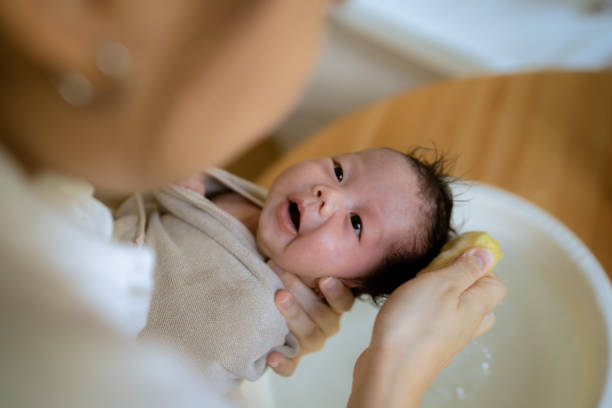
Always support the head and neck. Whether you’re using a baby tub, a sink, or a basin, one hand should be doing the job of steadying your baby. The other hand washes. This isn’t a two-handed task, and that’s okay.
Keep everything within reach before you start. Towel. Clean diaper. Clothes. Because stepping away, even for a second, isn’t worth the risk. Babies don’t roll at this stage, but water changes things.
And about crying, yes, some babies cry during baths. Loudly. It doesn’t automatically mean you’re doing it wrong. New sensations can be startling. The key is how you respond. Calm voice. Slow movements. No rushing. Babies feed off your energy more than we like to admit.
Here’s something people don’t say enough: you will get better at this quickly. The first bath feels like a performance. The fifth feels like a routine. By the tenth, you’re adjusting water temperature with confidence and chatting to your baby like it’s second nature.
There’s a learning curve. You’re allowed to be on it.
A Gentle Wrap-Up (Because This Is Personal)
Bathing a newborn isn’t about perfection. It’s about presence.
Yes, there are guidelines. Yes, there are safety points worth remembering. But there’s also intuition. That quiet sense you develop when you’ve spent hours holding, feeding, soothing, and watching your baby breathe.
Some days the bath will be calm and sweet. Other days, it’ll be quick and practical. Both count. Both are parenting.
So if you’re standing there, towel over your shoulder, baby in your arms, wondering if you’re ready, honestly? You are. You care. You’re paying attention. And that matters more than flawless technique ever could.
You’ve got this. And if it feels awkward at first, well… welcome to parenthood.