If you’ve ever stood in the kitchen holding a half-empty sippy cup, wondering how the day got away from you before noon—welcome. You’re not failing. You’re parenting.
Organisation hits different after kids. What used to feel like a personal trait (“I’m an organised person”) suddenly feels like a moving target. The mess regenerates. The calendar fills itself. Your brain holds fourteen tabs open, and none of them are playing music.
So let’s say this out loud first: being a more organised mom isn’t about becoming a new version of yourself. It’s about building small habits that work with your real life, not against it.
And yes, this applies whether you’re a new mother, a seasoned parent, or a dad who somehow became the household logistics manager without applying for the job.
First, Let’s Redefine “Organized” (Because the Old Version Is Rude)
Somewhere along the way, “organised mom” got tied to colour-coded bins, spotless counters, and planners that look untouched by chaos. That image is… unhelpful.
Organisation, in real family life, is simply this:
- You can find what you need most days
- You’re not constantly reacting
- Your brain gets to rest occasionally
That’s it. No aesthetic required.
Honestly, organisation is less about how your house looks and more about how your days feel. Less frantic. Less last-minute. Fewer “Why didn’t I remember this?” moments.
You know what? That’s a worthy goal.
The Invisible Weight: Mental Load Is the Real Clutter
Before we talk about habits, we need to talk about the thing nobody can see.
The mental load.
It’s remembering diaper sizes, dentist appointments, snack preferences, school spirit days, gift birthdays, laundry cycles, grocery gaps, and whether the baby last napped at 10:40 or 11:10 (because apparently that matters now).
You can’t organise a home without addressing the fact that your brain is already doing unpaid project management.
So the habits below aren’t about adding more to your plate. They’re about taking things off your mind and putting them somewhere safer, paper, routines, shared systems.
Let me explain.
Habit #1: Reset Spaces, Don’t Perfect Them
Perfection is exhausting. Resets are doable.
A reset is a quick return to neutral. Ten minutes. Maybe five. Sometimes, thirty seconds while waiting for the kettle to boil.
Think:
- Clearing the counter, not scrubbing it
- Tossing toys back into bins, not arranging them
- Resetting the diaper caddy, not restocking everything
This habit works because it’s repeatable. You’re telling your brain, “We’re just getting back to baseline.”
Many parents swear by a “closing shift” mindset, borrowed straight from restaurant work. The house doesn’t need to shine. It just needs to be ready for tomorrow.
Habit #2: Write It Down (Yes, Even If You Hate Lists)
If it’s in your head, it’s not organised. It’s haunting you.
Writing things down isn’t about being type-A. It’s about external memory. CEOs do it. Nurses do it. Air traffic controllers definitely do it.
Use whatever doesn’t annoy you:
- A Notes app
- A paper planner
- A whiteboard on the fridge
- Sticky notes that migrate (it’s fine)
One running grocery list alone can cut decision fatigue in half. Same with a shared family calendar, Google Calendar is popular for a reason.
The trick? Don’t aim for pretty. Aim for reliability.
Habit #3: Time Blocking, but Make It Parent-Friendly
Traditional time blocking assumes silence and control. Parenting offers neither.
So instead, block types of time:
- Morning survival
- Midday reset
- Late afternoon chaos
- Evening wind-down
Attach routines to these blocks, not exact minutes. For example, “after lunch = quick tidy + prep for dinner.” Not at 1:00 sharp. Just… after lunch.
This gives your day rhythm without rigidity. And rhythm, for families, matters more than precision.
Habit #4: Let Your Systems Be a Little Ugly
This one’s freeing.
Some of the best home systems are visually boring, or downright awkward. Shoes by the door in mismatched baskets. A laundry sorter that doesn’t match the walls. A paper tray that lives on the counter because that’s where the mail actually lands.
Form follows function. Always.
If the system works but isn’t cute, keep it. An organisation that survives real life beats an organisation that photographs well.
Habit #5: The One-Touch Rule (For Decisions, Not Just Stuff)
You’ve probably heard this with mail: touch it once. But it applies to so much more.
When possible:
- Decide immediately
- Put the item where it belongs
- Say no instead of “later”
This habit reduces piles, physical and mental. Fewer half-decisions mean fewer open loops in your head.
Of course, this won’t happen every time. That’s okay. The goal is less, not zero.
Habit #6: Prep the Night Before (Your Morning Self Will Thank You)
Mornings with kids are a contact sport.
A small evening habit can change everything:
- Lay out clothes
- Prep bottles or lunch containers
- Check tomorrow’s calendar
Think of it as a favour to Future You, the version of you who hasn’t had coffee and is negotiating with a toddler about socks.
Even ten minutes helps. Especially ten minutes.
Habit #7: Make Organisation a Family Skill, Not Your Job
Here’s a mild contradiction: being organised sometimes means letting go of control.
If you’re the only one who knows where things go, you’re not organised, you’re the system.
Teach kids (and partners) simple rules:
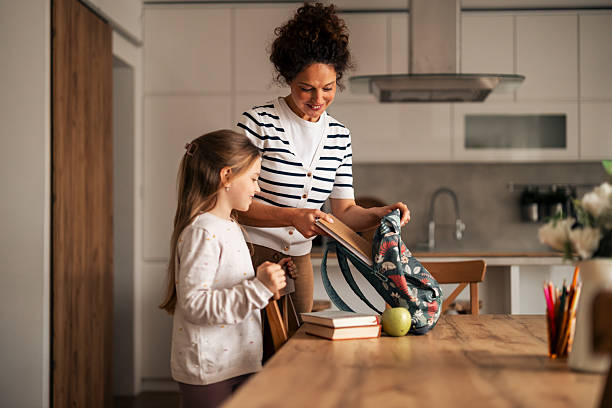
- Backpacks go here
- Shoes live there
- Dishes go straight to the sink
It will be messy at first. Slower, too. But long-term? This habit changes everything.
And yes, it counts as parenting, not nagging.
Habit #8: Do Seasonal Resets Instead of Constant Overhauls
Life shifts with seasons, school schedules, daylight, and energy levels.
Every few months, pause and ask:
- What’s not working anymore?
- What feels heavier than it should?
Maybe the diaper station needs moving. Maybe bedtime routines need tweaking. Maybe lunches need simplifying because everyone’s tired.
These gentle reviews keep systems relevant. Organisation isn’t static. It breathes.
The Emotional Side Nobody Talks About
Let’s be honest for a moment.
Disorganisation often comes with guilt. Comparison. That quiet voice that says, “Other parents handle this better.”
But here’s the thing, most organised homes you admire didn’t happen by personality. They happened by habit. Small ones. Built slowly and adjusted often.
And sometimes? Disorganisation is a season, not a flaw. New babies. Illness. Growth spurts. Life happens.
Grace belongs here, too.
How Organisation Changes as Kids Grow
What works with a newborn won’t work with a toddler. What works in preschool may fall apart in elementary years.
That’s normal.
Babies need access and simplicity. Toddlers need visibility and boundaries. Older kids need responsibility and reminders.
If a system stops working, it’s not because you failed. It’s because your family changed.
Adjust. Don’t abandon.
A Quiet Truth Before We Wrap Up
Being a more organised mom doesn’t mean you’ll never forget picture day or lose a shoe. It means those moments don’t define your days.
It means your home supports you, rather than draining you. It means fewer frantic mornings and more space to breathe, even when the house is loud.
Start with one habit. Just one.
Build from there.
You’re not behind. You’re building something real.
