If you’ve ever watched your kids giggle over the tiniest things, like the way bubbles catch the light or how a pancake looks a bit like a cloud, you already know something magical: children notice joy long before adults remember how. But the funny thing is, even grown-ups can relearn that skill with the right ritual. And for many families, that ritual begins with a simple glass jar sitting on the kitchen counter.
That’s the charm of a family gratitude jar. It’s not fancy. It’s not high-tech. It’s not something you need instructions printed on heavy cardstock for (although, let’s be honest, Pinterest would totally approve). It’s a quiet, almost tender practice that helps you collect small, everyday joys before they slip through the cracks of a busy household.
And whether you’re a brand-new mom running on three hours of sleep, a dad juggling morning drop-offs, or a parent right in the thick of toddler chaos, this little jar can become a grounding point, one that brings everyone back to themselves and back to each other.
Before we build the big list of gratitude jar ideas, let me walk you through a quick outline of where we’re going so this feels smooth and not like a cluttered junk drawer of ideas.
Quick Skeleton of What’s Ahead
- Why gratitude jars matter in a home (especially with kids)
- How to choose a jar and set up the family ritual
- 30+ gratitude jar prompts for kids and parents
- Seasonal gratitude jar themes
- Gratitude ideas for toddlers, school-age kids, and teens
- Jar variations: affirmation jars, kindness jars, memory jars
- How to turn the practice into a long-term family tradition
- What to do with the notes at the end of the month or year
- A few unexpected tangents, because that’s how humans write
Let’s begin.
Why This Little Jar Makes a Big Difference
There’s something oddly grounding about writing down a moment you’re grateful for. It’s a pause, not a dramatic one, just a small breath that helps your mind wrap itself around something meaningful. Parents often tell me it’s like their day takes a slight shift, not a huge emotional turnaround, just…a soft click into place.
The same thing happens with kids. When children write something good that happened that day, it trains their brains to look for those moments again tomorrow. It’s a skill that grows quietly in the background, almost like how you don’t notice plants reaching toward the sun until suddenly they’re tall.
Here’s the thing, though: gratitude jars aren’t only for the picture-perfect families you see in lifestyle blogs. They’re for messy homes. Loud homes. Homes where someone can’t find the left sho, and the milspilted again. That’s exactly where this ritual thrives, because gratitude doesn’t ask for silence, order, or perfect hair. It asks for attention.
And attention is something kids crave as deeply as affection.
Setting Up Your Family Gratitude Jar (Without Overthinking It)
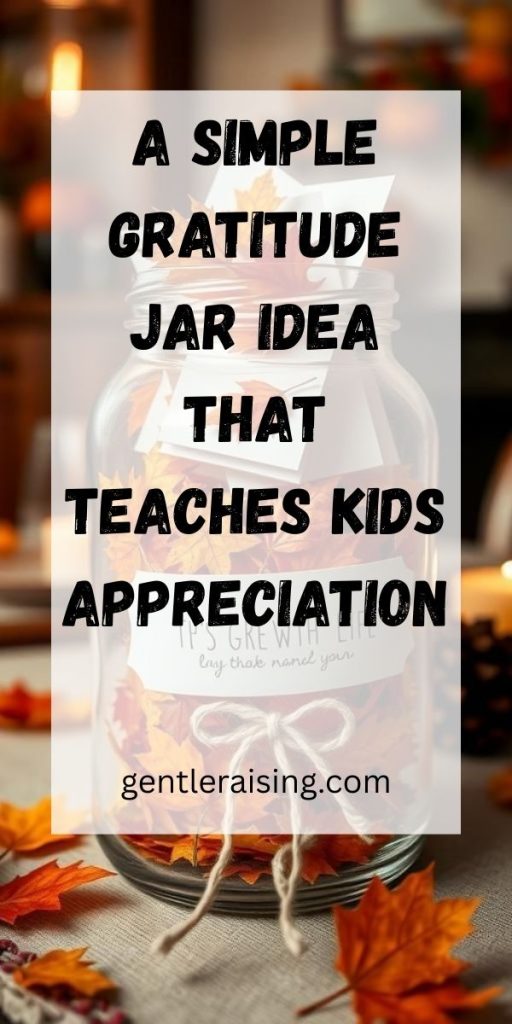
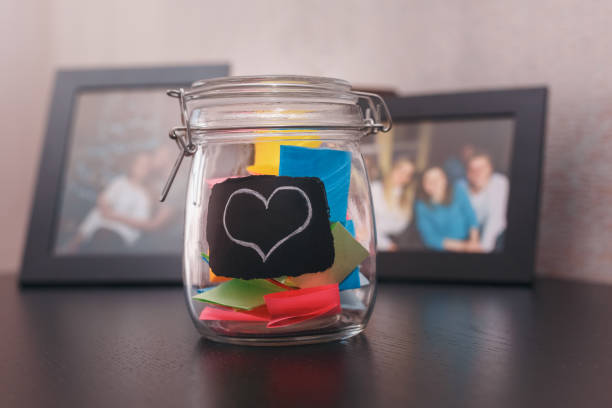
You don’t need anything fancy. A mason jar, an empty pasta sauce jar, a wooden box, or even a plastic container left over from baby formula, all good. The charm is in the notes, not the container. Although if you’re the crafty type, you can wrap twine around it or add a handwritten label. Kids actually love decorating it with stickers; the more chaotic, the better.
What goes next?
A spot for the jar. The trick is choosing a place you walk past at least five times a day (kitchen counter, dining table, entryway shelf). If it’s hidden behind your blender, you’ll forget it exists, and the jar slowly turns into decor instead of a habit.
Some families write gratitude notes after dinner. Others do it before bed, especially parents who love those casual nighttime conversations when kids are a tiny bit more open. And for households with a newborn? You write whenever you remember. Seriously. Survival mode comes first.
When everyone’s ready, grab colourful scraps of paper or cut an A4 sheet into little squares. Adults tend to write longer notes, while kids will write something charming like “I love biscuits,” which honestly carries more sincerity than half the motivational quotes online.
30+ Gratitude Jar Prompts for Families
Sometimes the hardest part isn’t writing, it’s thinking. Prompts help.
Prompts For Kids
- Something that made you laugh today
- A friend who was kind
- Your favourite snack (yes, food totally counts)
- A moment when someone helped you
- Something you learned that felt exciting
- A sound you loved hearing
- Something small you’re happy about (like “my crayons”)
Prompts For Parents
- A moment, your child surprised you
- Something your partner did that made life easier
- A small win you had today (folding laundry also counts)
- A peaceful or funny moment
- Something your family did together
- Something that reminded you of your own childhood
- A moment you handled better than expected
Prompts For The Whole Family
- Something you’re proud of
- Something nature showed you today
- Something you’re looking forward to
- Someone who makes you feel safe
- A habit you’re grateful for (sleep schedules, we love you)
- A smell or taste that made you smile
- Something silly that brightened your day
Seasonal Gratitude Jar Themes (Because Rhythm Helps Kids)
Kids remember rituals more easily when they match seasons or holidays. It also keeps the practice from feeling repetitive.
1. Autumn Gratitude Jar
Think war colours, cosy evenings, and the smell of cinnamon.
Prompts can include:
- Something warm you loved today
- A moment that felt cosy or comforting
- A new routine you’re grateful for
2. Winter Gratitude Jar
Perfect for long, quiet evenings when everyone’s wrapped in blankets.
Prompts:
- A person who made you feel loved
- A kindness you saw or shared
- Something that felt calm today
3. Spring Gratitude Jar
Fresh starts everywhere;e, kids feel this as much as adults.
Prompts:
- Something new you tried
- Something beautiful you noticed outside
- A moment that felt hopeful
4. Summer Gratitude Jar
Think big, messy, joyful energy.
Prompts:
- A fun moment from your day
- Your favourite outdoor activity
- Something that made you feel free or excited
Ideas For Different Age Groups
Let’s be honest: a toddler’s idea of gratitude is wildly different from a teen’s. And that’s the beauty of it.
Toddlers (Ages 2–4)
They may not write yet, so try:
- Stickers to represent their favourite part of the day
- Drawings of people they love
- You’re writing their words verbatim (these are hilarious and priceless)
School-Age Kids (Ages 5–10)
They love routines and showing off new writing skills, so:
- Encouraging one short sentence a day works well
- Introduce weekly themes (“people I appreciate,” “things I learned,” etc.)
- Let them decorate the jar every few months
Tweens & Teens
This age group loves autonomy; don’t force it.
You can:
- Give them small folded cards so they can decorate or write privately
- Add optional prompts related to confidence, friendships, or accomplishments
- Create a second jar labelled “Wins I’m Proud O”, teens respond well to confidence-boosting habits
Gratitude Jars With a Twist
Sometimes families want more than one angle of reflection. These variations keep things fresh.
1. The Affirmation Jar
Each family member writes a positive sentence about themselves.
Great for kids who struggle with confidence.
2. The Kindness Jar
Instead of gratitude, you write down something kind you did or witnessed.
Perfect for nurturing empathy.
3. The Memory Jar
Anytime something memorable happens, funny, sweet, or surprising, you add a note.
This version becomes a priceless “family timeline.”
4. The Goal Jar
Parents love this one.
Every Sunday, each person writes a small goal (like “drink more water” or “be patient with homework time”).
At the end of the week?
You add a note celebrating progress, no matter how tiny.
How To Make This a Long-Term Family Tradition
Let me explain something that surprised a lot of parents: you don’t need consistency to build a tradition. You need intention.
There might be weeks when your family doesn’t add a single note. Then suddenly someone slips one in, and everyone remembers the jar again. That ebb and flow is normal. Rituals aren’t meant to be rigid; they’re meant to hold you gently.
A few habits help keep the practice alive:
- Choose one evening a month to read the notes
- Refresh the jar seasonally
- Allow kids to “own” the jar (kids love responsibility)
- Write even the tiniest things, and the small notes become the most meaningful.
Sometimes a note as simple as “Mom hugged me after school” carries more emotional weight than paragraphs.
What To Do With The Notes Later
There’s something comforting about opening the jar at the end of the year and watching your family’s joys scatter across the table like confetti. Some people turn them into scrapbooks; others keep the notes in envelopes labelled by year.
A few ideas:
- Create a “Year of Gratitude” photo album
- Glue notes into a memory journal
- Let your kids choose their favourites for their bedroom corkboard
- Keep the best ones in a box you revisit every New Year’s Eve
And if you’re sentimental, you already know how much these small snapshots of family life will mean a few years from now.
A Few Tangents We Don’t Talk About Enough
You know what? Sometimes gratitude feels forced. There, I said it. Some days, kids are cranky, parents are tired, and the jar feels like one more thing on a never-ending list. But that’s exactly why this practice matters. Gratitude isn’t about pretending everything’s wonderful; it’s about remembering that something was wonderful, even for a moment.
There’s also the unexpected side effect: kids start reminding you to fill the jar. It becomes their ritual as much as yours. And in a culture that runs at full speed, these tiny anchors matter.
Closing Thoughts: A Jar That Holds More Than Paper
A gratitude jar is really a jar of tiny pauses, tiny smiles, tiny memories, little things that stack up into something real and grounding. And the best part? You’re teaching your kids a mindset that will serve them long after they grow out of booster seats.
Not every family tradition needs planning or matching outfits. Some traditions come from scraps of paper, a jar that used to hold pickles, and a few quiet minutes at the dinner table.
And honestly? That’s what makes it beautiful.