If you’ve ever stood in the middle of your living room, baby on one hip, laundry basket on the other, and thought, “How is this house messy again? Didn’t I just clean?” you’re not alone. Honestly, that moment might even be the official initiation into parenthood.
When you’re raising kids, newborns, toddlers, school-age whirlwinds, or teenagers who somehow generate clutter by breathing, cleaning no longer feels like a task. It feels like a living organism you’re battling regularly.
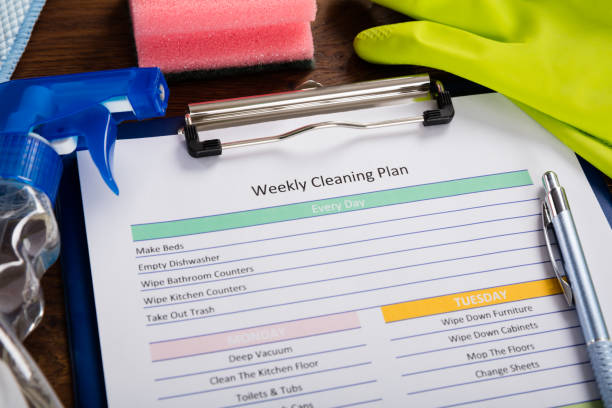
You know what, though? A family cleaning schedule (especially a printable one) helps tame that wild creature. Not perfectly, because no system beats real life, but enough to keep your home functional, breathable, and maybe even peaceful on most days.
Let me explain why it works and how to build one that fits your actual family, not some Pinterest-perfect fantasy household where everyone colour-codes their socks.
Why Families Need a Cleaning Schedule (Even If You Think You Don’t)
Families survive on rhythm, not perfection.
You’ll notice that the weeks where everyone seems calmer usually have some sort of routine: bedtime follows a loose structure, meals rotate predictably, and laundry isn’t a mysterious mountain.
A cleaning schedule works the same way. It gives the house a heartbeat.
But the real reason parents need a schedule is?
Decision fatigue.
By noon, you’ve already made a hundred micro-decisions:
- What’s for breakfast?
- Is this diaper suspicious?
- Did the toddler just paint the dog?
- Why is the 10-year-old wearing my shirt?
- Is that the doorbell or my imagination?
That’s before lunch.
A cleaning schedule removes at least 20% of the extra thinking. Instead of staring at a mess, asking, “Where do I start?” you simply look at the day’s line.
No drama. Nspiralling.
Just: “Oh, it’s Tuesday. We deal with dusting today.”
The Family Cleaning Schedule Printable: What Problem Does It Actually Solve?
Three things, really:
1. Household transparency
Everyone in the home finally knows what needs doing, no guesswork or nagging.
2. Predictability
Knowing what chore belongs to which day reduces overwhelm. Consistency beats intensity here.
3. Shared responsibility
The printable becomes a neutral party. It’s not you assigning chores, it’s “the schedule.”
Kids and partners respond better to neutral paper than frustrated reminders; it’s a strange psychological quirk, but it works.
Before Creating a Schedule: The Questions Parents Forget to Ask
You don’t start by writing the chores.
You start by observing your life.
Ask yourself, quickly, casually, no need for a spreadsheet:
- How many people live here?
- How messy is the household on an average day?
- What’s your tolerance level for clutter? (Be honest.)
- How many hours do you realistically have for cleaning?
- Which rooms get messiest fastest?
- Do you prefer doing a little each day or having a longer cleaning day?
- What chores do you absolutely hate?
- What chores does your partner hate? (This matters.)
- Do you have little kids who like “helping” but don’t actually help?
You can build the most beautiful cleaning schedule in the world, but if it doesn’t match your family’s rhythm or energy, it’ll die by week two.
How to Build a Cleaning Schedule That Actually Works for Families
A functional schedule boils down to one guiding idea:
Do less in a single day so things stay manageable.
Most parents try to cram too much into weekends, then spend the entire time cleaning instead of resting. A printable schedule divides the load gently.
Here’s how to structure it:
Daily
Quick reset tasks. Think 5–10 minutes.
Weekly
Tasks that keep the house in “presentable shape.”
Monthly
Deep-clean areas you never remember until they’re gross.
Seasonal
Bigger resets that align with weather changes, school terms, or holidays.
Simple. Flexible. Forgiving.
Daily Tasks (The Small Things That Do the Heavy Lifting)
Daily chores shouldn’t drain you. They should feel like a reset button.
Daily Quick-List Examples
(Feel free to tailor.)
- Make beds (or at least pull the duvet halfway—small wins count)
- Wipe bathroom counters
- Wipe kitchen surfaces after meals
- Load/unload dishwasher
- Tidy living room hotspots
- One laundry cycle (wash → dry → fold… or fold “eventually,” which is fine)
- Empty trash if needed
These tasks keep the house functioning, even when life feels like a circus.
You know what? Doing just one laundry cycle a day might be the most underrated parenting hack. It keeps chaos from snowballing.
Weekly Tasks (The Things You Don’t Want to Think About but Feel Amazing When Done)
Weekly tasks bring a sense of tangible progress, almost like pressing refresh on the house.
Here’s a sample rotation:
Monday — Bathrooms
Quick scrub, mirrors, toilet, fresh towels.
Tuesday — Dusting
Shelves, nightstands, picture frames, and ceiling fans, if you’re feeling heroic.
Wednesday — Floors
Vacuum high-traffic areas; mop if needed.
Thursday — Kitchen Deep Clean
Microwave wipe, appliance fronts, stovetop, fridge handles.
Friday — Bedrooms
Sheets, small declutter, reorganise kids’ drawers.
Saturday — Laundry Catch-Up + Any Forgotten Tasks
Because something always gets missed.
Sunday — Rest
Yes, rest. Floors can wait.
Monthly Tasks: The “I Should Do That Soon…” Zone
These are the chores you don’t notice until something feels off.
- Clean inside the fridge
- Vacuum under couch cushions
- Wash windows (just the visible smudges, don’t torture yourself)
- Rotate toys
- Wipe baseboards
- Clean oven
- Descale the kettle/coffee maker
- Wash shower liners
- Organize pantry
You know when you randomly open a pantry and feel like everything wants to fall out? Monthly resets stop that from becoming a household crisis.
Seasonal Tasks: Life Has Seasons. Your Cleaning Should Too
This is where you tackle the heavy stuff without burning out.
Spring
- Declutter wardrobes
- Wash curtains
- Clean porch/outdoor toys
Summer
- Deep clean car (the crumbs… why so many crumbs?)
- Clean fans
- Wash windows fully
Fall
- Prepare for school routines
- Clean closets
- Swap seasonal clothes
Winter
- Clean heaters/vents
- Deep-clean playroom
- Organise holiday decor
Seasonal cleaning touches the things that make your home feel refreshed, even if you don’t consciously notice the difference.
Age-Appropriate Chores for Kids (That They Can Actually Do)
Kids want to help, sort of. Mostly when they’re little. Teenagers require more negotiation, maybe snacks.
Here’s a realistic guide:
Ages 2–3
- Put toys in a bin
- Wipe low surfaces with a safe cloth
- Carry laundry to the basket
Ages 4–6
- Make bed (ish)
- Set napkins and forks on the table
- Feed pets (supervised)
- Help sort laundry
Ages 7–9
- Sweep
- Fold simple laundry pieces
- Empty small trash bins
- Help clean bathrooms
Ages 10–12
- Vacuum
- Wash dishes
- Clean the room fully
- Water plants
Teens
Everything above +
- Manage their own laundry
- Assist with weekly deep cleaning
- Cook a simple meal now and then
Giving kids chores isn’t punishment; it’s survival training for adulthood.
How to Use Your Family Cleaning Schedule Printable Like a System
Printables look simple, but they work best when treated like a living document.
Here’s how to keep yours alive:
1. Post It Somewhere Central
The fridge, family command centre, or hallway, anywhere people can’t miss it.
2. Assign Colours or Initials
Everyone knows what’s theirs.
3. Use Checkboxes
It’s weirdly satisfying.
4. Keep It Visible, Not Hidden
A schedule in a drawer is a schedule that doesn’t exist.
5. Update Seasonally
Refresh it when life changes, new baby, school year, weekly sports surprises.
6. Make It Forgiving
If you miss Thursday’s chore, move it. No guilt allowed.
Digital vs. Paper Printables: Which One Is Better for Families?
You’d think digital would win automatically, but not always.
Paper Printables
- Visible at all times
- Great for kids
- Encourages routine
- Easy to check off physically
Digital Versions
- Perfect for phones and tablets
- Easy to edit
- You can share with older kids
- Syncs with apps like Notion, Google Keep, or Trello
Most families end up using a mi:, paper in the kitchen, digital on phones.
Sample Family Cleaning Schedule (You Can Plug Straight Into Your Printable)
DAILY:
– Make beds
– Quick tidy
– Dishes / counters
– One laundry load
– Sweep kitchen

MONDAY: Bathrooms
TUESDAY: Dusting
WEDNESDAY: Floors
THURSDAY: Kitchen deep clean
FRIDAY: Bedrooms
SATURDAY: Laundry catch-up
SUNDAY: Rest / family day

MONTHLY:
– Clean fridge
– Baseboards
– Windows
– Declutter toys

SEASONAL:
– Wardrobe reset
– Pantry clean
– Car deep clean
– Holiday decor organization
Simple. Predictable. Doable.
Gentle Motivation for Tired Parents
Let me say something you might need to hear:
You are not supposed to keep the house spotless with kids.
The goal isn’t perfection; it’s function.
A cleaning schedule doesn’t magically turn chaos into calmness, but it does help you breathe, rest, and stop feeling like you’re failing.
You know what? Even if you follow only 60% of the schedule, your home will still feel dramatically easier to manage.
Consistency matters. Perfection doesn’t.
Final Thoughts: Your Home Should Serve You, Not the Other Way Around
A family cleaning schedule printable is more than a sheet of paper. It’s a small structure that helps you reclaim your time, your energy, and your peace.
Parenthood is demanding, noisy, beautiful, messy.
Your home doesn’t need to be flawless; it needs to work for the people living in it.
And a simple, realistic cleaning schedule?
It’s one of the easiest ways to lighten the mental load.