If you’re a new parent, you probably already know the truth about pacifiers: they spend as much time on the floor as they do in your baby’s mouth. You can sanitise one, blink twice, and suddenly it’s rolling under the couch collecting dust bunnies you’re pretty sure weren’t there yesterday.
And honestly? It gets old fast. Keeping pacifiers clean starts feeling like this extra chore you didn’t sign up for but somehow got stuck with anyway.
But here’s the thing, keeping pacifiers clean doesn’t have to feel like a full production. You don’t need a separate calendar reminder or a colour-coded system. You just need a few reliable tricks that fit into your real life, not some idealised version of parent life that only exists on Pinterest.
And you know what? You’re already doing better than you think.
Let’s take the pressure down a notch and walk through some surprisingly simple, actually manageable pacifier cleaning hacks that even the most sleep-deprived parent can remember.
Let’s Be Honest: Pacifiers Hit the Floor… Constantly
There’s a moment all new parents experience. It’s almost universal. Your baby is finally calm, maybe even drifting off, and, plop, the pacifier hits the ground. Again. Babies have a talent for launching pacifiers from every angle, almost like they’re training for an invisible sport the rest of us can’t see.
And then we stand there wondering:
Does it need a full wash? A quick rinse? Will a wipe do? Do I just… blow on it?
Let me explain something that makes life easier: not every drop requires the same level of cleaning. There are really three categories:
1. Quick cleaning
For a pacifier that touches a fairly clean surface (like your stroller seat), a simple rinse works.
2. Everyday cleaning
This is your once-or-twice-a-day routine: warm water, mild soap, done.
3. Sterilising
This is deeper cleaning, usually for:
- newborns
- babies with weakened immune systems
- sickness in the house
- after the pacifier falls somewhere… questionable
Keeping these categories straight saves a ton of stress. Because sometimes we’re boiling water at 11 p.m. when a simple rinse would have been enough.
And here’s a little reassuring truth: babies are exposed to everyday microbes constantly, and that’s okay. Their immune systems actually learn through these small encounters. Of course, that doesn’t mean we stop cleaning pacifiers; it just means we can breathe a little while doing it.
Your Daily-Clean Toolkit (Super Simple, I Promise)
Most parents end up building a cleaning “kit” without even trying. It’s basically the stuff you reach for without thinking.
A good pacifier-clean routine usually includes:
- Mild dish soap (think Babyganics, Seventh Generation, or any fragrance-light one you already use)
- A soft-bristle brush for the creases
- Boiling water for occasional sterilising
- Pacifier wipes (brands like Dr Brown’s, NUK, Munchkin)
- A UV steriliser (Munchkin Mini UV is a cult favourite for good reason)
You don’t need everything on this list; just find what fits your rhythm.
Some parents love the dishwasher. Some swear by boiling. Some want a method that requires the least amount of brainpower, which is why sterilisers have become a modern-day miracle. You literally pop it in, close the lid, and 60 seconds later… done. It’s almost suspiciously easy.
But let’s make things even easier.
The Real Hacks You’ll Actually Remember
Because let’s be real: you’re not going to memorise a 10-step sanitising chart when you’re running on four hours of broken sleep.
Here are the hacks parents actually repeat to friends:
1. Use a Mesh Laundry Bag in the Dishwasher
This one’s so simple it almost feels fake.
Throw all your pacifiers into a small mesh laundry bag, zip it up, and place it on the top rack. Pacifiers don’t fall through, don’t melt, and don’t get flung around like tiny projectiles.
This also keeps small bottle parts together, a double win.
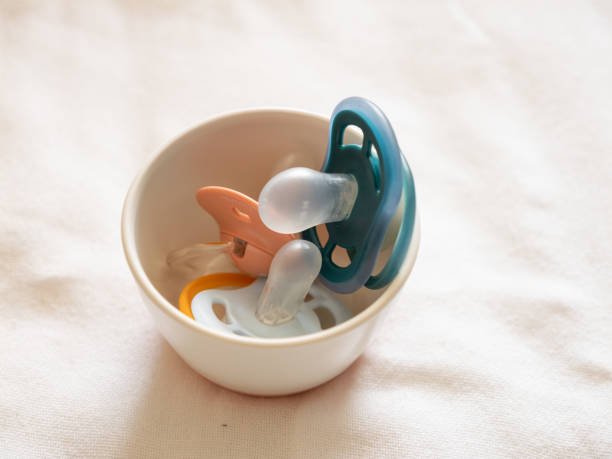
2. Keep a “Clean Zone” Bowl on the Counter
It doesn’t have to be fancy. A small ceramic bowl works.
Every time you sterilise or wash pacifiers, toss them into the bowl. It keeps them:
- visible
- clean
- off counters that might have crumbs or cooking splatter
It becomes this little pacifier haven, and your tired brain knows: If it’s in the bowl, it’s good to go.
3. Reuse a Snack Cup as a Pacifier Keeper
You know those snack cups with the flexible silicone opening? The ones toddlers shove their chubby hands into? Those.
They’re amazing “clean containers” for pacifiers:
- They block dust
- They’re easy to open with one hand
- They can store two or three pacifiers
- They’re soft, so nothing breaks in your diaper bag
It’s not their intended purpose, but sometimes parenting is 90% repurposing objects.
4. The Thermos Trick
This one’s for outings.
Before leaving the house, fill a small thermos with warm water. If a pacifier drops, swirl it in the thermos for a soft rinse, shake it dry, and you’re back in business.
It’s shockingly effective and feels almost luxurious compared to wiping it on your shirt (don’t worry, we’ve all been there).
5. Keep Two or Three “Emergency Clean” Pacifiers in the Freezer Bag
Not the freezer, the freezer bag.
Just place a few pacifiers in a clean zip-top bag labelled“clean.” Replace as needed. This trick saves you when:
- you’re at the park
- You’re in the car
- You’re at Grandma’s and can’t find the sink
A clean backup solves most pacifier emergencies.
On-the-Go Cleaning: Because Babies Drop Stuff at Target Too
You can have 20 sterilised pacifiers at home, but somehow your baby will drop the one pacifier you brought on the one day you didn’t pack wipes.
Let’s talk about realistic cleaning while out and about.
1. Pacifier Wipes (Actually Safe Ones)
Brands like:
- Munchkin
- NUK
- Dr. Brown’s
These are safe for oral contact, not the same as disinfecting wipes. They’re not magic germ-killers, but they remove dirt safely.
2. Portable UV Sterilisers
These little things have taken over modern diaper bags.
They:
- weigh almost nothing
- clean pacifiers in seconds
- require zero water
And they’re great when you’re travelling or hiking or just trying to survive a grocery trip.
3. Microwavable Sanitising Bags
Think Medela Quick Clean bags.
You toss a pacifier (or several) in with water, microwave for a few minutes, and boom — sterilised.
These are also fantastic in hotel rooms or at grandma’s house, where you’re not sure about pots, pans, or sponge cleanliness.
4. The “Cranky Baby at Restaurant” Method
Here’s a slightly silly, but surprisingly useful hack:
Order a cup of hot water.
Let it cool for a minute or two, then dunk the pacifier for a quick clean. It’s not lab-gradesterilisationn, but it absolutely beats sticking it in your mouth.
Speaking of which…
Things Not to Do (Even If Your Aunt Suggests Them)
You’ll hear lots of “old-school” suggestions, and some of them are totally fine. Others? Not so much.
Let’s clear the air.
Don’t Put the Pacifier in Your Mouth
I know. It’s fast. It’s convenient. We’ve all thought about it at least once.
But adult mouths carry bacteria that babies don’t need.
No Bleach Solutions
Even heavily diluted bleach isn’t ideal for items that go into a baby’s mouth daily.
Avoid Essential Oils
They’re potent, hard to rinse fully, and many aren’t safe if ingested.
Check Dishwasher Compatibility
Not all pacifiers can handle high heat. Some warp. Some low-quality ones crack.
If the brand says “dishwasher safe,” you’re good.
Deep Cleaning Without Losing Your Mind
Sometimes you do need a thorough clean, like after a cold, a drop in a questionable location, or every week or so.
Here are the easiest deep-clean methods:
1. Boiling Water Method
Still the gold standard.
- Bring a pot of water to a rolling boil.
- Drop pacifiers for five minutes.
- Cool on a clean towel.
Just don’t forget about them on the stove; more pacifiers have been “cooked to death” this way than we’ll ever admit.
2. Dishwasher (Top Rack Only)
Many silicone pacifiers are dishwasher safe.
Pro tip: Place them in a mesh bag first.
3. Electric Steam Sterilisers
Brands like:
- Philips Avent
- Dr. Brown’s
- Baby Brezza
If you already have one for bottles, pacifiers can go in too.
4. Vinegar Rinse (Natural Hack)
Mix equal parts water and white vinegar.
Soak for 30 minutes.
Rinse well.
This removes lingering scents and cloudy buildup.
5. Know When to Replace
Pacifiers don’t last forever.
Replace them when you see:
- cracks
- tears
- sticky spots
- loss of shape
Most silicone pacifiers last 4–6 weeks.
Special Cases Parents Ask About
Some pacifiers need slightly different care.
1. Babies With Thrush
Clean pacifiers:
- after every use
- sterilize daily
- replace frequently
Thrush yeast loves warm, moist surfaces, so consistency here matters.
2. Teething Pacifiers
These have textured surfaces, so a soft brush is essential to reach crevices.
3. Latex Pacifiers
These degrade faster and absorb odourss more easily.
Sterilize less often, but replace more frequently.
4. Pacifiers With Plush Animals Attached
Like Wubbanub.
These can’t go in boiling water.
Clean the pacifier tip normally, but the plush part usually needs:
- spot cleaning
- gentle hand washing
- air drying
Check the label; fabric care varies.
Storage Hacks So You’re Not Constantly Rewashing
A lot of pacifier cleaning stress comes from not having a place to store the clean ones.
A few easy fixes:
- Pacifier pods (clip to diaper bags)
- Small containers with vents
- Glass jars on the counter for clean-only pacifiers
- For twins or multiples, label with a washable pen
The simpler the system, the more likely you’ll stick with it.
Real-Life Routines From Actual Parents
Here’s what many parents end up doing without even planning to:
- Daily: warm soapy wash
- Weekly: dishwasher or boiling
- On-the-go: keep two or three clean backups
- Night routine: rinse all pacifiers used that day
It works because it’s realistic. No spreadsheets. No rigid schedules.
And honestly, your routine might look completely different, and that’s fine.
The goal isn’t perfection. It’s safety. And sanity.
You’re Doing Just Fine, Truly
Pacifier cleaning can feel like one of those tiny-but-constant tasks that quietly drain your energy. You’re soothing a baby, wiping a counter, folding laundry, answering texts, trying to drink water like a responsible adult… and somewhere in the mix, you’re expected to sterilise things too.
But you’re doing it. Maybe imperfectly, maybe not the same way every day, but you’re doing it.
And your baby is loved, safe, and comforted. That matters more than the exact cleaning method you use.
So next time that pacifier hits the floor for the fifteenth time in one afternoon, take a breath. Touch the counter. Grab a backup. Pull out a wipe. Use the thermos trick. Whatever works.
You’re not falling behind. You’re just parenting, and that’s messy and beautiful and unbelievably human.
