You know how everyone talks about breastfeeding like it’s just an “instinct”? As if your body simply hands you a guidebook the moment your baby is born? And sure, plenty of things do fall into place over time, but then you get home with this tiny human and suddenly you’re Googling things like “how long can breast milk sit out because I forgot a bottle on the counter???” at 3 a.m.
If that’s you, breathe. You’re in the right place.
Safe breast milk storage doesn’t have to feel intimidating. Once you understand the rhythm, the fridge times, the freezer differences, and the labelling quirks, it becomes something you’ll do half-asleep (which, let’s be honest, you probably will).
Think of this guide as a soft, reassuring hand on your shoulder. A parent-to-parent chat about keeping your baby’s milk safe, potent, and easy to manage… even when your brain is running on 42 minutes of sleep and cold leftovers.
Before we get deep into the how-to, let’s map out where we’re going.
Quick Outline (Just To Keep Us Grounded)
- Why safe breast milk storage matters
- Understanding the “science-y but simple” parts
- Freshly expressed milk rules
- Refrigeration, the sweet spot
- Freezing breast milk, short and long term
- Containers: bags, bottles, or… mason jars?
- Thawing and warming without losing nutrients
- Labelling, organising and avoiding “Oh no, this expired.”
- Travelling with breast milk
- Pumping at work and storing milk safely
- Common mistakes (and how to fix them)
- Real-life workflow examples for tired parents
- FAQs from moms, dads, and the exhausted
- Final reassuring thoughts
(If you skim, I won’t take it personally. Truly.)
1. Why Safe Storage Really Matters. Beyond Just “The Rules”
Breast milk isn’t just food; it’s a living tissue. A bit like blood plasma but less dramatic and far cuter in intention. It’s full of enzymes, antibodies, fats that rise to the top like a latte, and tiny immune fighters that don’t like being mistreated.
Safe storage keeps all those components intact.
When milk is handled well:
- It keeps its nutrients
- It protects against bacterial growth
- It stays safe for your baby’s still-developing gut
Plus, there’s a hidden benefit: peace of mind.
When you know the rules, you don’t second-guess every bottle.
2. The Simple Science (I Promise It’s Simple)
Let me explain this in the least intimidating way possible:
Breast milk doesn’t spoil as quickly as formula or cow’s milk because it naturally contains antibacterial properties. But those protective qualities don’t last forever.
Temperature is everything.
Here’s the easy version:
- Warm = bacteria grow faster
- Cool = bacteria slow down
- Frozen = bacteria stop (but nutrients slowly degrade over time)
Your job? Keep milk in a temperature zone that preserves the nutrients and slows any unwanted growth.
3. Freshly Pumped Breast Milk: The Golden Window
You just pumped. You’re exhausted. Your shirt is probably still half undone. What now?
Here are the safe guidelines:
At room temperature (up to 25°C / 77°F):
4 hours is ideal, 6 hours max.
If your house is warm or humid, stick to 4.
In an insulated cooler with ice packs:
Up to 24 hours.
Great for travel days or unpredictable doctor’s appointments.
A small note: If the milk smells “soapy,” don’t panic. That’s lipase, an enzyme that helps break down fat, and it’s totally normal. Babies usually don’t mind, though some get picky.
4. Refrigerating Breast Milk. The Real Workhorse
The fridge is where most parents live, not literally, though some nights it feels that way.
Best temperature: 4°C (39°F) or colder.
How long does milk last in the fridge?
- 4 days safely
- Some guidelines say 5, but 4 keeps the quality higher
A little tip from parents who’ve been there:
Store milk in the back of the fridge, never the door. The temperature in the door fluctuates every time someone goes hunting for juice.
If your baby starts childcare, you’ll become very familiar with the fridge rules; they’re usually sticklers, but for good reason.
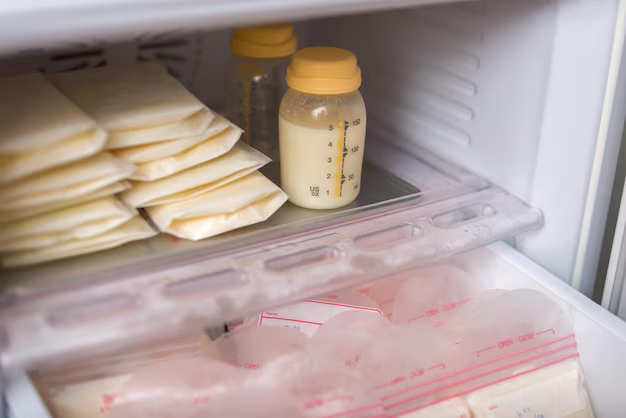
5. Freezing Breast Milk. Your Backup Plan (and Sanity Saver)
Freezing feels like a small victory. You made extra. You’re basically a milk-production superhero today.
In a standard freezer (attached to fridge):
Up to 6 months is solid.
You can push to 12 months, but the quality slowly declines.
In a deep freezer (chest or upright):
12 months easily.
Power outages, however, are the natural enemy of frozen milk.
A quick seasonal side note:
If you live somewhere with frequent blackouts (looking at you, rainy season), keep the freezer full. A packed freezer stays cold much longer.
6. Containers: Bags vs. Bottles vs. Whatever You Found in the Cupboard
This is where parents get passionate. Everyone has an opinion.
Breast milk storage bags
- Space-saving
- Freezer-friendly
- Cheap
- But it can sometimes leak (and that heartbreak is real)
Brands’ parents often like:
- Medela
- Lansinoh
- Kiinde
- Dr. Brown’s
Plastic bottles
- Reusable
- Sturdy
- Great for frequent pumping
- Take up more space
Glass bottles
- Keep milk very fresh
- Easy to clean
- Eco-friendly
- But heavy and not great for freezing (they can crack)
Mason jars
People use them. They’re cute. But:
- They must be freezer-safe
- They need a lot of space
- Not ideal for pumping at work
Use what works for your lifestyle, not what Instagram swears by.
7. Thawing Breast Milk Without Killing the Good Stuff
Heat is the enemy. Too much heat destroys nutrients.
So, here’s how to thaw safely:
Best method:
Move from freezer → fridge overnight
(About 12 hours, depending on size)
Faster method:
Place the sealed container under warm running water
Or in a warm water bath
Never:
- Microwave breast milk
- Boil it
- Shake it aggressively
Both can destroy antibodies and cause hot spots.
Once thawed:
Use within 24 hours if kept in the fridge.
At room temperature, it lasts 1–2 hours.
Never refreeze thawed milk. (I know. It hurts.)
8. Labeling & Organizing. Because Mommy Brain Is Real
You think you’ll remember which bag is from which day. You won’t.
No shame here — it happens to everyone.
On each storage bag or bottle, write:
- Date
- Time (optional but helpful)
- Baby’s name (if going to daycare)
- Volume
Some parents also add:
- What they ate that day
- If the baby was sick
- Pumping session (AM milk is different from PM milk)
A simple system keeps things smooth:
- Put the newest milk in the back
- Use first-in, first-out rotation
- Keep one small bin in the fridge for “Today / Tomorrow” bottles
If you’re a “Pinterest organisation” parent, you’ll have fun with this.
If you’re a “throw it in and hope for the best” parent, that works too, just label clearly.
9. Travelling With Breast Milk. Airlines, Cars, and Chaos
Good news: Breast milk is protected in airports.
Most countries allow unlimited quantities of breast milk, formula, and baby food, even over the usual liquid limits.
Travellingg tips:
- Use a good cooler with solid ice packs (Yeti, PackIt, or Munchkin work well)
- Keep frozen bags together so they stay frozen longer
- Tell security it’s breast mi;k, they may do a quick test
- Don’t rely on hotel mini-fridges; they’re unpredictable
Car travel is easier:
- Keep milk in a cooler
- Bring extra ice packs
- Don’t leave milk in the car (cars heat like ovens)
Some parents swear by the Ceres Chill bottle; it’s pricey, but itit keepsold for hours.
10. Pumping at Work.A Storage Workflow That Keeps You Sane
Going back to work is emotional enough. Let’s make the milk part easier.
Here’s a realistic workflow many moms use:
At Work:
- Pump 2–4 times, depending on the schedule
- Store milk in the work fridge or a personal cooler
- Use sealed storage bags or bottles
At Home:
- Combine the same-day milk once chilled
- Refrigerate for next-day feeds
- Freeze extra from high-production days
A small side note:
Work fridges can get crowded. A storage caddy or small tote can help you avoid the awkward “whose salad is this, ocking my milk?” moment.
11. Common Mistakes. And How to Fix Them
Every parent makes at least two of these. Usually in the same week.
Mistake 1: Leaving milk out too long
Fix: If in doubt, toss it. Painful, but safe.
Mistake 2: Overfilling bags
Milk expands when frozen. Leave room. Or be ready for leaks.
Mistake 3: Storing milk in the fridge door
Move everything to the back.
Mistake 4: Mixing warm milk with cold milk
Always cool fresh milk before adding it to already-chilled milk.
Mistake 5: Heating milk too quickly
Warm gently, think spa day, not boiling pasta.
12. Real-Life Storage Routines (Because We All Need Examples)
Routine for a stay-at-home mom:
Morning pump
→ fridge
→ freeze excess at night
Routine for a working mom:
Pump at work
→ cooler
→ fridge at home
→ freeze only the extra
Routine for exclusive pumpers:
Pump around the clock
→ store in fridge
→ combine once chilled
→ freeze big batches every day or two
→ keep a “milk map” or freezer inventory
Routine for low-supply moms:
Store smaller portions (2–3 oz) to avoid waste
Keep fridge milk athe s the main supply
Freeze only the occasional surplus
13. FAQs Parents Ask At 2 A.M. (Literally)
“Can I mix milk from different pumping sessions?”
Yes — only after both are the same temperature.
“Why does my milk separate?”
Totally normal. Fat rises. Just swirl gently.
“My baby refuses thawed milk. Help?”
Some babies react to high-lipase milk. Scalding before storage can help, but ask a lactation consultant first.
“Can I rewarm milk more than once?”
No. Warm only what you expect the baby to drink.
“Do breast milk colours matter?”
Not usually. Milk can look:
- Yellow
- Blue
- Pinkish (sometimes from food you ate)
- Green (hello, spinach smoothie)
It’s wild but normal.
14. A Final Word. Because You’re Doing Better Than You Think
If you’ve read this far, or skimmed and landed here, let me tell you something honestly:
Breast milk storage looks complicated at first, but it becomes second nature.
You’ll get confident. You’ll build your own rhythm. You’ll learn tricks that people forget to write in guides. And you’ll know exactly how to keep your baby safe and fed.
And on those nights when you’re standing in the kitchen at midnight, staring at a bottle wondering, “Did I put this in the fridge three hours ago or six?”, know this: every parent has had that moment.
You’re doing a remarkable job.
Truly.