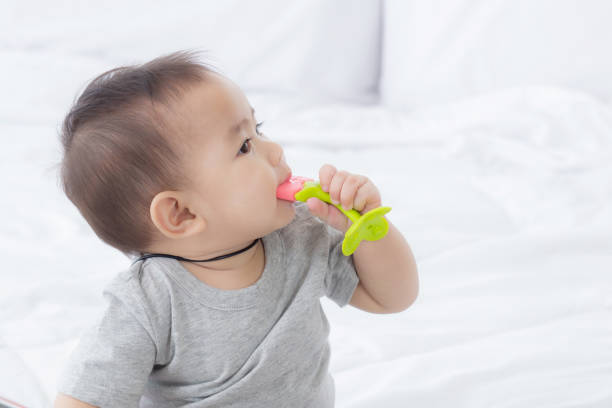
If you’re reading this with a baby gnawing on your shirt collar, you’re in the right place. Teething may be one of the most universal parenting experiences; everybody goes through it, yet somehow it still manages to surprise us. One day, your baby is all smiles; the next day, they’re drooling like a tiny bulldog and waking up every 45 minutes. You start scrolling through your phone at 3 am, typing things like “Why is my baby screaming when the tooth isn’t even out yet???” And honestly, every parent has been there.
This guide is meant to help you breathe. Teething doesn’t last forever, although when you’re buried in sleepless nights and bibs soaked through with drool, it certainly feels like time has taken a week off. But once you understand what’s happening, why it hurts, and what actually helps (not just what your cousin’s coworker’s grandmother swore by), things get easier.
So grab a cup of tea, if your baby will let you, and let’s walk through real teething solutions, parent to parent.
When Teething Actually Starts (And Why Babies Don’t Follow the Timeline)
Many books say teething starts around six months. That’s neat. The reality? Babies couldn’t care less about the textbook.
Some get their first tooth at three months.
Some don’t get one until after their first birthday.
Some seem to get five teeth in three weeks.
Others take months growing one tiny tooth that refuses to make an appearance.
Typical teething window? Roughly 4–24 months.
But here’s the thing many parents need to hear: teething is not a milestone that needs to be “on schedule.” Genetics, feeding type, growth patterns, and even temperament might influence it. Maybe your baby was an early crawler. Maybe another is late with teeth, but will talk before everyone else. Babies are beautifully uneven like that.
What matters is that the gums look healthy, development continues, and there are no concerning symptoms. If those boxes are ticked, your baby’s timeline is just fine.
Spotting Teething Signs Like a Detective
Some babies show every possible sign when teething. Others pop out teeth like it’s nothing—suddenly you go to wipe mashed banana off their face and notice a little white ridge you swear wasn’t there yesterday.
But generally, the most common signs include:
- Chewing on fingers, toys, blankets… even your shoulder
- Irritability or fussiness
- Drooling (sometimes endless drooling)
- Swollen or sensitive gums
- Sleep interruptions
- Rubbing their mouth or face
Some babies refuse food, especially if sucking hurts their gums. Others eat more because the pressure helps.
There are also “confusing” signs parents talk about:
- Ear tugging
- One-sided fussiness
- Red cheek on one side
- Occasional mild cough (from drool)
These can appear because the nerves in the gums connect with those in the jaw and ear area. So a baby might pull on their ear when the pain is actually in the gum.
However…
If your baby has:
- Fever over 38°C (100.4°F)
- Diarrhoea lasting more than a day
- Vomiting
- A rash that spreads
- Lethargy
- Dehydration signs
- High-pitched crying that seems unusual
…it’s probably not teething alone, and a healthcare provider might need to weigh in.
What’s Actually Happening Under There? (The Science in Real People Language)
Imagine a tooth as a stubborn houseguest trying to push up from below the floor. The gums get irritated and stretch, and that pressure hits the nerves underneath. Since babies haven’t experienced much physical discomfort before, it comes as a shock. Sudde, only they’re dealing with inflammation, soreness, and weird sensations they can’t describe.
Now add a few more factors: does
Why does teething hurt more at night
Pain signals feel louder when everything else is quiet. Your baby is lying there, not distracted by toys or siblings or the dog. Their nervous system is still learning what to prioritise. The brain locks onto the discomfort and amplifies it. That’s why nighttime can feel like the “teething apocalypse.”
Proven Teething Hacks That Actually Help
Every parent eventually ends up with a “teething toolkit”, some predictable, some surprisingly inventive. Let’s go through what genuinely helps, starting with the easiest.
Cold Relief Hacks (The Classics That Work)
Cold helps because it numbs the sore area and calms inflammation. But you don’t need special products to make it work.
1. The Frozen Washcloth Trick
Twist a clean washcloth, dampen it with water, and place it in the fridge or freezer. When it firms up, give it to your baby to chew. It’s simple, safe, and effective.
2. Chilled Teething Toys
Notice the wording—chilled, not rock-hard frozen. Frozen toys can bruise delicate gums.
Fridge temperature is usually perfect.
3. Breastmilk Popsicles
If your baby is breastfed, freeze small portions in:
- ice cube trays
- silicone molds
- tiny reusable food pouches
Babies who refuse food due to teething discomfort sometimes accept milk better this way.
4. Cold Spoon
A metal spoon chilled in the fridge offers firm, soothing pressure. It’s a basic hack some grandparents still swear by.
Pressure-Based Relief (Because Babies Want to Chew EVERYTHING)
Chewing helps shift pressure in the gums and distracts the nervous system, like scratching an itch you can’t quite reach. Parents who’ve watched their babies chew on their own fists know this well.
5. Gum Massage
Wash your hands and gently rub the swollen area with your finger. Some parents say babies open their mouths like tiny puppies waiting for the next round.
6. Silicone Teething Toys
Look for ones that:
- They are easy to grip
- Don’t have holes that trap moisture
- Have textured surfaces
Even older-style soft wooden toys (unfinished wood made for babies) can work, as long as the surface is safe.
7. Silicone Baby Toothbrushes
These aren’t for brushing yet, more for supervised chewing. They help babies get accustomed to tooth care early, too.
Food-Based Relief (For Babies Eating Solids)
If your baby is already exploring food, certain textures help relieve gum pressure while also giving a snack.
Good options include:
- Chilled cucumber sticks
- Hard (but manageable) fruit slices
- Cold yogurt
- Plain teething biscuits
The key is supervision and safe shapes that reduce choking risks.
Breastfeeding + Teething: The Biting Problem
A lot of breastfeeding parents experience a shocking moment: the baby bites down. The first time hurts. The second time hurts more because you know it’s coming.
Babies usually bite:
- When they’re frustrated
- When they’re not hungry but want comfort
- When they’re trying to relieve gum pressure
- When the milk letdown is slow
How to redirect biting
- Gently unlatch it if the baby bit; do t yank.
- Offer a cold teether right before feeding.
- Try adjusting the nursing position; sometimes pressure feels different in a football hold vs a cradle hold.
Some parents get nervous that biting will become a permanent habit. It rarely does.
Natural Remedies Parents Have Used for Generations
Parents throughout history have tried countless teething solutions. Some are gentle and reasonable. Others… let’s just say we’re not doing those anymore.
Here are natural approaches people commonly use, along with notes on safety.
Chamomile
Chamomile is a popular calming herb. Some parents:
- Use chamomile tea pops (lightly brewed and frozen)
- Rub cooled tea on the gums
- Give tiny amounts from a spoon for comfort
Of course, babies should only have small, appropriate amounts and never hot tea.
Clove Oil (Very Common But Needs Caution)
Clove oil is strong and has been used traditionally as a numbing agent. But it must be:
- Very diluted
- Applied sparingly
- Only used after speaking with a healthcare provider
Straight clove oil is far too strong for baby gums and can irritate the mouth.
Amber Teething Necklaces
This one deserves a calm, honest discussion.
Some parents believe amber releases natural chemicals when warmed by the skin, offering relief. Scientifically, there’s no strong evidence supporting the claims. The bigger concern is safety:
- Necklaces can pose a strangulation risk
- Small beads can become choking hazards if the string breaks
If parents choose to use one, it should never:
- Be worn unsupervised
- It is worn during sleep
- Be long enough for the baby to twist around their neck
Many parents simply decide that the risks outweigh the potential benefits.
Teething Gels
Some herbal and over-the-counter gels provide temporary relief. However:
- Ingredients matter
- Babies absorb things faster
- Numbing gels should be used with medical guidance
If a product promises to “numb instantly” and the ingredients seem long enough to have their own ZIP code, it’s worth asking a professional first.
Medication: When Is It Reasonable?
Some parents avoid medication completely. Others decide that when the gums are inflamed and the baby has been miserable for days, a little relief is appropriate. Both approaches are valid—and each family chooses based on values, comfort level, and advice.
Common pain relief choices include:
- Acetaminophen
- Ibuprofen (for babies over six months)
If a parent chooses medication, the guidance should always be based on:
- The baby’s weight
- Age
- Professional dosing instructions
Never guess, eyeball pour, or use adult formulas.
And, of course, medication is not a replacement for medical advice.
Teething at Night: The Emotional Battlefield
Pain always seems worse when the world goes quiet. Babies feel it, parents feel it, and sometimes the house starts to feel like a night shift emergency room. You’ve already changed a papyjamaet, rocked for 40 minutes, offered milk, cuddled, paced the hallway, repeated the lullaby, and now your eyes are twitching from exhaustion.
Why does teething ruin sleep?
- Less distraction
- Pressure increases when lying flat
- Babies release stress through crying
- They want comfort from the person they love most
So what helps?
1. A short soothing routine
- Gentle cheek or jaw stroking
- A minute of gum massage
- Rocking or nursing
- Singing softly
- Lyingbathe by back down once calm
2. Keep lights low
Babies wake fully if the light says “party time.”
3. A chilled teether before bed
Sometimes, five minutes of chewing can reduce later discomfort.
4. Understand that some nights will just… be long
Not every night has a solution, and that doesn’t mean the baby is forming terrible habits or you’re doing something wrong. Sometimes teething is just messy.
And parents matter too. If you need to tag your partner out at a2:30 am and hide in the bathroom for five minutes to breathe, that’s not weakness; that’s survival.
Teething and the Parent Mental Load
Teething does something that many parenting challenges do: it makes parents second-guess themselves.
Is it something I did?
Should I have known sooner?
Did I miss a sign?
Why is she crying again?
Teething brings unfair pressure because sleep is disrupted. Babies can’t explain what they feel. And lack of sleep makes everything bigger.
Here’s the truth every new parent needs to hear:
Teething is tough on your baby, but it’s also tough on you. You’re learning just as much as they are, day by day, tooth by tooth. There is no perfect strategy. Only what works this week, in this house, with this child.
Sometimes that’s a chilled teether and a cuddle.
Sometimes that’s taking turns with a partner so one person gets two hours of uninterrupted rest.
Sometimes it’s tearing open a new packet of baby biscuits and thinking, “We’ll try vegetables tomorrow.”
No guilt needed.
What NOT to Do (For Safety and Sanity)
Here are a few methods that should stay in the past or come with strong caution:
Alcohol on gums
People used to rub whiskey or brandy on a baby’s gums. This can be dangerous, no matter how tiny the amount.
Frozen solid toys
These can bruise gums or get stuck to the lip or tongue.
Honey for babies under one
Even tiny amounts can carry the risk of botulism.
Teething toys with removable parts
If a baby can bite off a piece, it’s a choking hazard.
Herbal solutions without understanding the ingredients
“Natural” doesn’t automatically mean “gentle.”
When in doubt, ask someone qualified.
Does Teething Cause Fevers, Rashes, and Diarrhoea?
This is one of the most debated parenting topics on the internet. Here’s what research generally suggests: mild
A mild temperature rise can happen
Because of inflammation. But not high fever.
Drool can irritate skin.
This may cause a rash or redness around the mouth or chest.
Poops may get looser
Swallowed saliva can change digestion slightly.
But…
If the fever is high
If diarrhoea lasts
If the baby is unusually tired
If symptoms seem more intense than “mild”
…it may not be teething alone.
Babies often catch their first colds, ear infections, and viral bugs around the same age they start teething, which creates a confusing overlap.
If something feels off, parents are always right to get advice.
Teething Products Actually Worth Having (Without Naming Brands)
Without being salesy, here are categories of products parents tend to find genuinely useful:
- Silicone teething toys
Easy to clean, safe textures, no complicated parts. - Soft wooden grasping teethers
Old school but effective. - Refrigerator-safe teething rings
Offer cooling without freezing too hard. - Silicone baby toothbrush-style teethers
Introduce oral hygiene early while soothing gums. - Teething mittens
Especially helpful for younger babies who struggle to grip. - Mesh food feeders
Let babies gnaw on chilled fruit without large chunks breaking off.
Not every family needs every item, but having two or three dependable ones can make long nights a little less chaotic.
How Different Cultures Support Teething Babies
It’s fascinating how teething, though universal, is approached so differently around the world.
Some traditional African communities
Sometimes use herbal rubs (applied in tiny amounts) and place great focus on soothing touch—back rubbing, skin-to-skin contact, songs passed down generations.
In parts of East and South Asia
Cool metal household items, like spoons, have been used for years to soothe gums, long before refrigerators became common.
In some European households
Gentle herbal teas have been part of baby care for centuries.
Modern Western families
Tend to explore purpose-made teething toys, gels, and frozen washcloths.
Each approach reflects history, environment, and available resources. And while not every tradition fits modern safety standards, the universal thread is the same:
Parents everywhere are trying to help their babies feel better.
How Long Does Each Tooth Hurt?
Parents always ask this, often while staring bleary-eyed over a baby monitor at 1 a.m. Unfortunately, the answer is unpredictable—but there are patterns:
- Some babies feel discomfort for a couple of days.
- Others struggle weeks before the tooth finally surfaces.
- Pain usually spikes right before the gum opens.
And yes, teething can stop and start again, making everyone think the phase is done… until another tooth announces itself with a fresh round of drool and crankiness.
Simple Teething FAQ
Why is my baby chewing everything except the teething toy I bought?
Because babies have opinions. Sometimes the TV remote, your watch strap, or a wooden spoon feels better in the mouth than the perfect toy parents spent 20 minutes reading reviews for.
Can teething mess with sleep?
Absolutely. Even the best sleeper can have a rough phase.
Why does my baby drool so much?
Teething stimulates saliva production. Some babies drool so much they soak three bibs before lunch.
Is it normal for a baby to refuse food?
Yes, sucking or chewing might hurt. Cold, soft foods usually help.
The Reminder Every Parent Needs
There is a simple truth you don’t feel in the moment:
Teething ends.
One day yo your baby wakes u a tooth has popped through, the fussiness has faded, and you almost feel confused because there’s… silence. No crying. No constant drool cleanup. No midnight pacing with the baby nested on your shoulder.
And then, you guessed it, another tooth starts.
But each time, you learn a little more. Your baby learns a little more. You figure out which tricks work, which ones don’t, and how to get a five-minute shower without hearing imaginary crying.
And eventually, all twenty baby teeth arrive. That toothy smile? You helped get them through every one of those.
No one remembers the sleepless nights later. But they do remember the comfort.
And if you’ve read this far, you’re doing great, even if right now you’re holding a grumpy, irritated, half-drooling little human who looks like they’re about to start chewing the coffee table.
You’re right where every other parent has stood. And you’re getting through it, one hack and one tiny tooth at a time.
Final Thoughts
Teething feels overwhelming because it happens in waves, interrupts sleep, causes confusion, and leaves parents wondering whether they’re missing something. But babies aren’t fragile creatures; you’re not messing this up. You’re helping a tiny person learn how to cope with their very first type of pain.
If you try different solutions and stay patient, things get easier. Cold helps. Pressure helps. Cuddles help. Being kind to yourself helps even more.
And one day, not too far away, you’ll look back and think, “Oh wow, we survived that.”
(You probably will. And probably sooner than you think.)
