Ever feel like your toddler is always curious, always moving, and honestly… a little out of reach sometimes? One minute, they’re giggling beside you, the next, they’re halfway up the counter trying to “help” you chop vegetables. Sound familiar? Well, here’s the thing: that endless curiosity?
It’s pure gold. And the kitchen, yes, that often chaotic, sauce-splattered space, is actually the perfect place to turn it into learning.
You might be thinking, “Montessori in the kitchen? Isn’t that a fancy method that requires pricey toys and tiny child-sized equipment?” Nope.
Honestly, you can start today with things you already have at home. Montessori is less about gadgets and more about approach: independence, focus, and hands-on learning.
By the end of this read, you’ll have five no-cost activities that encourage practical skills, concentration, and, most importantly, confidence in your little one.
And trust me, the pride on their face when they pour, stir, or wash something all by themselves? Absolutely priceless.
1. Pouring Practice: Tiny Hands, Big Control
Have you ever noticed how toddlers are fascinated by water? It’s mesmerising, the sound, the movement, the splash. Pouring is one of those classic Montessori exercises because it teaches hand-eye coordination, fine motor skills, and concentration. But here’s the beauty: it’s free. All you need are bowls, cups, pitchers, and water—or even dry items like rice or beans.
How to start:
- Set up two bowls: one filled with water or beans, the other empty.
- Let your child try transferring the contents from one to the other. Yes, some will spill, and that’s okay. Spills are part of the learning!
- Encourage slow, deliberate movements. Watch them pause, focus, and finally pour. It’s like a tiny science experiment right in your kitchen.
You know what’s magical? Watching them figure out gravity, volume, and control, all while giggling because something inevitably splashes. And honestly, it’s a little zen for us too. The rhythm of pouring and the quiet focus is oddly calming in the middle of a busy day.
Tip: Use a tray or towel underneath to catch spills. Less stress for you, more freedom for them.
2. Sorting and Matching: Colour, Size, Texture
Toddlers are natural organisers, they just don’t know it yet. Sorting and matching is a Montessori staple because it helps kids develop observation skills, problem-solving, and cognitive categorisation. And here’s the kicker: you can do it with items lying around the kitchen.
Think fruits, vegetables, lids, spoons, or even pasta shapes. Invite your child to match colours (“Can you put all the red tomatoes here?”), sizes (“Which bowl is the smallest?”), or textures (“Soft beans or hard pasta?”).
Here’s a little anecdote: I once watched my niece quietly sort carrot sticks and peas into separate piles for nearly 20 minutes. No screen, no toys, just focus and tiny hands working methodically. She was calm, absorbed, and glowing with pride when she finished.
Montessori tip: Keep the items accessible at the child’s level. Low shelves or little trays make them feel in control, like the kitchen belongs to them just as much as it belongs to you.
And the best part? They’re learning independence while having a surprisingly good time.
3. Scooping, Transferring, and Spoon Practice
Once pouring becomes old hat, it’s time to level up with scooping and transferring. These exercises are excellent for refining fine motor skills, hand-eye coordination, and precision.
Here’s what you’ll need: small bowls, spoons, scoops, and dry items like rice, beans, or lentils. Place a pile in one bowl and let your toddler transfer it to another.
Want a fun twist? Try different shapes or sizes of containers. Some will require more skill and attention, which keeps their brains engaged. It’s surprisingly satisfying to watch, a tiny meditation of movement and focus. And honestly, it’s almost like mindfulness training… for both of you.
Pro tip: encourage repetition. Let them scoop over and over. They might repeat the same motion for a while, but that’s how skills are honed.
4. Washing Vegetables and Fruits: Sensory + Responsibility
Here’s where things get really “real” Montessori style: letting your child contribute to meal prep. Washing vegetables and fruits is an excellent sensory experience and teaches responsibility.
All you need is:
- A shallow bowl or sink of water
- Soft brushes or cloths
- Fruits or vegetables that can be easily handled
Invite your child to gently scrub potatoes, carrots, or tomatoes. Encourage descriptive language: “How does the carrot feel? Is it smooth or bumpy?” They’ll learn textures, smells, and even a little science as they observe water and bubbles.
And the pride? Unmatched. My own sister swears her little one suddenly became obsessed with “helping” in the kitchen after just one session. The feeling of contributing to a family task, no matter how small, builds confidence and a sense of purpose early on.
Extra tip: drying the veggies afterwards can be part of the activity. Count pieces washed or towels used, it’s early math disguised as play.
5. Simple Spreading and Stirring: Hands-On Independence
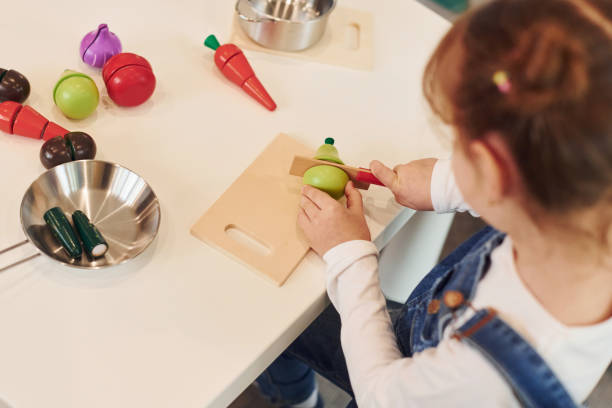
Finally, let’s talk about spreading, stirring, and mixing, basics that give kids a sense of control over their world. Montessori emphasises practical life skills, and spreading butter on bread or stirring a bowl of salad dressing is the perfect practice.
Use:
- Child-safe knives or spreaders
- Wooden spoons
- Small bowls or containers
- Soft spreads like butter, hummus, or yoghurt
Let them experiment. Let them make mistakes. Let them get messy. Because here’s the thing: that mess is where learning happens. Every spread, every stir, is a lesson in cause and effect, coordination, and even early math (measuring, pouring, estimating).
And the payoff? Watching your toddler beam when they taste something they helped make. Honestly, it’s one of those small joys that makes the chaos of the kitchen totally worth it.
Tips for Making Kitchen Activities Montessori-Friendly
Here’s the practical side of Montessori at home:
- Safety first: Always supervise. Use child-sized utensils and non-slip mats.
- Organisation matters: Keep bins and shelves at toddler height so they feel empowered.
- Patience is key: Let them explore at their own pace; avoid rushing.
- Clean-up as part of learning: Teach responsibility from the start. It’s not punishment, it’s part of the process.
Remember: perfection isn’t the goal. The process is. If a cup tips over or rice spills on the floor, it’s fine. Every spill, every mistake, is a tiny lesson in independence.
Common Questions Parents Ask
Isn’t this messy? Yes. But honestly, mess = learning. Use trays, mats, or just embrace it.
How long should they play? Short bursts, usually 10–15 minutes, but repeated daily. Toddlers’ attention spans are tiny—they learn best in short, focused sessions.
What if they lose interest? Rotate materials, change colours or textures, or simply observe. Sometimes, the quiet observation itself teaches more than active participation.
Every child is different. Montessori is flexible. Some toddlers dive in immediately; others need gentle encouragement. The key is consistency, patience, and support.
Conclusion: Start Today, Watch Them Shine
So there you have it: five easy, no-cost Montessori kitchen activities that build independence, focus, and confidence. Pouring, sorting, scooping, washing, spreading, it’s all right there in your kitchen, waiting for tiny hands to explore.
Next time you’re stirring soup or chopping vegetables, remember: they’re not just playing, they’re learning life skills that will stick. And who knows? These tiny kitchen adventures might just become some of the sweetest parenting memories.
Start with one activity today. Observe quietly. Celebrate the small successes. Because honestly, it’s not just about learning, it’s about growing together.