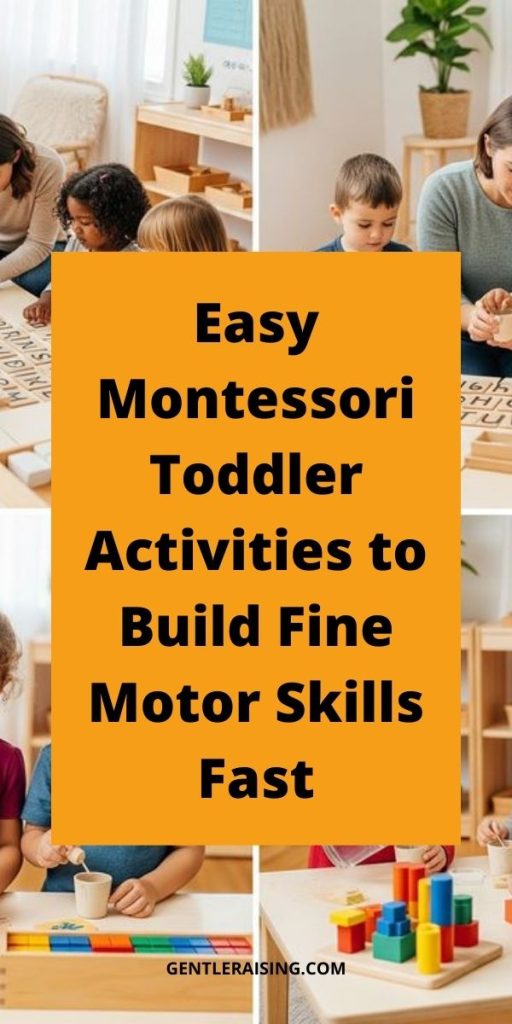
A calm, hands-on guide for parents who want learning to feel natural
Those tiny hands are busy for a reason
If you’ve spent any time watching a toddler with a crumb on the floor, you already know this: little hands are serious business. The way they pinch, poke, rub, and stubbornly try again says more about brain growth than most milestone charts ever will.
Fine motor skills, those small, precise movements using fingers, wrists, and hands, aren’t flashy. They don’t announce themselves like first steps. But they quietly shape how your child feeds themselves, holds a crayon, buttons a shirt, and later, writes their name with confidence instead of frustration.
And here’s the part that often surprises new parents: fine motor development isn’t about drills or fancy toys. It grows best through ordinary, meaningful activity.
The kind toddlers already want to do. Montessori noticed that a long time ago.
Montessori, minus the pressure
Let’s clear something up early. Montessori doesn’t mean a perfectly beige playroom or shelves arranged like a magazine spread. It’s more of a mindset than a setup.
At its core, Montessori focuses on:
- Respect for the child
- Real materials, not just plastic toys
- Independence is supported at the child’s pace
- Hands doing real work
Honestly, it’s refreshingly practical. No flashing lights. No batteries. Just children using their hands the way humans have always learned, by doing.
And when it comes to fine motor development, Montessori-inspired activities fit naturally into daily life. You’re not adding more to your plate; you’re simply slowing down enough to let your toddler participate.
Here’s the thing: toddlers want to help. Even when it makes everything take longer.
Why fine motor skills matter (beyond crayons)
Fine motor work doesn’t live in isolation. It’s deeply connected to other areas of development.
When toddlers practice precise hand movements, they’re also:
- Strengthening focus and attention
- Building early math and logic skills
- Supporting speech development through brain-hand coordination
- Gaining confidence (“I did it myself!”)
There’s a reason occupational therapists talk about the hand as an extension of the brain. Control the fingers, and a lot of other things start to fall into place.
Now let’s talk specifics, the kind you can try this week without overthinking it.
1. Pouring and transferring: simple, soothing, powerful
You know that phase when your toddler insists on pouring their own water and somehow floods half the table? That’s not mischief. That’s learning.
Montessori-style pouring and transferring is a cornerstone activity for fine motor control. It builds wrist stability, hand-eye coordination, and patience (for both of you).
What it looks like:
- Two small pitchers
- Or a bowl and spoon
- Or cups and a small ladle
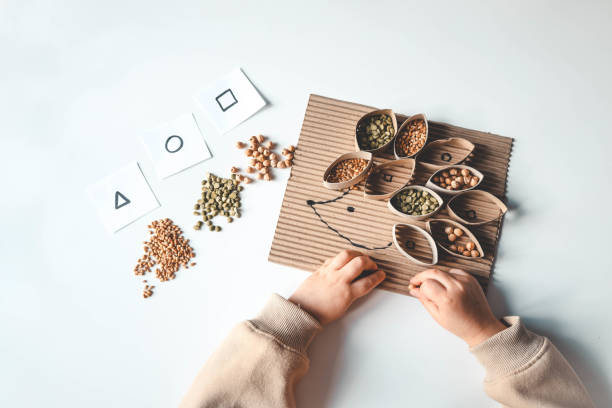
Dry materials are a good place to start: rice, lentils, oats. Less stress. Fewer towels.
Let your child scoop from one container to another. Slowly. Carefully. Repeating the same motion again and again, because repetition is comforting to toddlers.
And yes, spills will happen. That’s part of the process. Montessori treats spills as neutral information, not mistakes. You wipe together and move on.
A quiet bonus? These activities often calm overstimulated toddlers better than any flashy toy.
2. Posting and threading: tiny movements, big focus
Posting activities sound technical, but you’ve seen them before. Dropping coins into a piggy bank. Sliding cards into a box. Pushing cotton swabs through holes.
These actions ask toddlers to line things up, adjust their grip, and use just enough pressure. It’s excellent work for the fingers.
Easy ideas you can set up at home:
- A recycled spice jar with a slit cut into the lid
- Large buttons threaded onto shoelaces
- Wooden beads and a thick string
- A box with holes and craft sticks
This kind of play often brings out a quiet intensity in toddlers. Tongue slightly out. Brows furrowed. Total concentration.
You might notice they don’t want help. That’s a good sign. Montessori encourages observation over interference. Let them struggle a little. That’s where growth lives.
3. Playdough and dough: strength you can feel
Playdough doesn’t always get the respect it deserves. It’s often seen as filler activity, something to keep hands busy while adults talk.
But from a developmental lens? It’s gold.
Rolling, pinching, squishing, and flattening dough builds hand strength needed later for writing and self-care skills. And it provides rich sensory feedback without overwhelming most toddlers.
If store-bought dough feels too artificial, homemade versions are easy. Flour, salt, oil, water. Add a bit of food colouring if you feel festive, or not. Neutral tones are calming.
Offer simple tools:
- A rolling pin
- Child-safe knives
- Cookie cutters
- Small cups
Avoid turning it into a craft project. Montessori art and sensory work is about the process, not the result. No “What are you making?” Just quiet appreciation.
Sometimes toddlers talk more freely while their hands are busy. It’s a soft opening for language, storytelling, and emotional expression.
4. Spoons, tongs, and real tools toddlers love
There’s something deeply satisfying to toddlers about using real tools. Not toy versions. The real thing, scaled down.
Kitchen tools, especially, offer endless fine motor opportunities.
Think:
- Transferring fruit slices with tongs
- Scooping yoghurt with a spoon
- Stirring pancake batter (slowly, with supervision)
- Peeling a banana
- Spreading soft butter or hummus
Yes, it takes longer. Yes, it’s messier. But you’re building skills that matter, grip strength, bilateral coordination (using both hands together), and practical independence.
Montessori often talks about “practical life” work. It’s not extra. It’s life itself.
And toddlers sense that. They feel trusted.
5. Art without pressure: control over perfection
Fine motor art doesn’t need templates or final products to hang on the fridge. In fact, too much structure can backfire.
Instead, offer open-ended materials:
- Thick crayons
- Chalk
- Paintbrushes and water
- Stickers
- Dot markers
Let your toddler explore marks, lines, and movement. Watch how their grip changes over time, from fist to fingers.
Resist correcting. Resist directing. Montessori art is about expression and control, not resemblance.
Some days they’ll scribble for two minutes. Other days they’ll sit quietly for twenty. Both count.
Setting this up without buying everything new
Honestly, you probably already own most of what you need.
Look around your kitchen. Your recycling bin. That random drawer with odds and ends. Montessori-inspired doesn’t mean expensive; it means intentional.
A few quiet tips:
- Rotate activities instead of offering everything at once
- Keep materials accessible so toddlers can choose
- Use trays or baskets to define space
- Keep it simple
Less visual noise helps toddlers focus. It also helps adults feel calmer, which matters more than we admit.
“Am I doing enough?” (A gentle reality check)
This question comes up a lot, especially for new parents scrolling through highlight reels online.
Here’s the honest answer: if your toddler is using their hands daily, feeding themselves, stacking, opening, closing, pulling, you’re already supporting fine motor development.
Montessori isn’t about doing more. It’s about noticing more.
And some days, survival mode wins. That’s okay. Development isn’t fragile. It’s resilient.
A quiet kind of confidence
Fine motor activities don’t shout. They whisper. They show up in the way a toddler suddenly zips their jacket or insists on holding the spoon themselves.
Those moments are built slowly, through repetition and trust.
So slow down when you can. Let the hands work. Let the mess happen. You’re not just filling time, you’re building foundations.
And that’s no small thing.