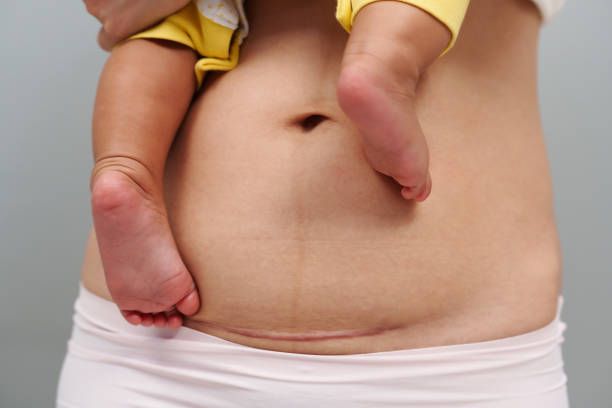
No one ever sits you down and says, “Here’s what a C-section will actually be like.”
Not the brochure version. Not the polite, sanitised version. The real one.
Instead, you hear things like “At least the baby is healthy,” or “It’s so common now,” or my personal favourite “You’ll be fine.” Which sounds reassuring until you realise no one is defining what fine even means.
This isn’t a horror story. It’s not a pity piece either. It’s just honest. The kind of honesty I wish I’d had before I walked into an operating room wearing a hospital gown that barely tied in the back, trying to feel brave while my hands shook.
If you’re pregnant, newly postpartum, supporting someone who’s had a C-section, or quietly processing one from years ago, this is for you.
Let me explain.
1. A C-Section Is Still Birth (Even If It Doesn’t Feel Like the Movies)
I didn’t expect to question whether I’d really “given birth.”
But I did. And that surprised me.
When people talk about birth, they usually mean labour. Pushing. The drama. The sweat. The triumphant final moment. A C-section doesn’t follow that script, so it can feel… sideways. Clinical. Almost like something that happened to you instead of something you did.
Here’s the thing, though: surgery doesn’t cancel motherhood.
Birth isn’t defined by pain endured or time clocked. It’s defined by the moment your body, one way or another, brings another human into the world.
You didn’t skip birth.
You just took a different route.
2. The Surgery Part Is Fast; The Recovery Is Not
The actual procedure? Shockingly quick.
Recovery? That’s where the fine print lives.
You might be walking for hours, which feels impressive until you try to sit up without using your arms. Or laugh. Or cough. Or stand up while holding a baby and realise your core strength has temporarily left the chat.
Hospitals discharge you after a few days, which can feel like a vote of confidence. But recovery doesn’t follow discharge papers. Healing from major abdominal surgery takes weeks, and honestly, months.
People say, “Take it easy.”
What they don’t explain is how hard that is when a newborn needs you every two hours.
3. Pain Isn’t Just Physical, and That Caught Me Off Guard
Yes, the incision hurts.
But that wasn’t the pain that lingered.
What lingered was the emotional whiplash. The adrenaline crash. The strange sadness that crept in when everything was technically “okay.”
Sometimes it’s grief for the birth you imagined.
Sometimes it’s shock your body went through something intense, even if your brain hasn’t caught up yet.
Sometimes it’s guilt, which makes zero logical sense but shows up anyway.
You know what? That doesn’t mean you’re ungrateful.
It means you’re human.
4. You Don’t Bounce Back; You Rebuild
There’s a quiet pressure to “get back to normal.”
As if normal still exists in the same shape.
After a C-section, your body doesn’t bounce; it recalibrates. Muscles wake up slowly. Your core feels unfamiliar. Movements you never thought about now require planning.
And no, it’s not weakness. It’s anatomy.
Your abdominal wall was cut through layers that had jobs before surgery: support, balance, and posture. Rebuilding those systems takes time, intention, and patience. Sometimes physical therapy. Sometimes, just permission to move slowly.
Honestly, slow isn’t failure.
It’s a strategy.
5. Breastfeeding After a C-Section Can Feel Weirdly Hard
This one blindsided me.
No one told me how much breastfeeding relies on your core, positioning, holding, adjusting, and getting comfortable without using your stomach muscles. Add delayed milk onset (which can happen after surgery), and suddenly, feeding feels like a logistical puzzle.
Helpful things no one mentions early enough:
- Side-lying positions can save your incision
- Pillows aren’t optional; they’re equipment
- Lactation consultants are worth their weight in gold
Breastfeeding struggles after a C-section aren’t a personal failure. They’re mechanical challenges layered onto recovery.
That distinction matters.
6. Scar Care Is a Whole Thing No One Mentions
At first, the incision feels like don’t touch, don’t look, don’t think about it.
Later, it feels… strange. Numb. Tight. Occasionally itchy. Occasionally emotional.
Scar tissue isn’t just cosmetic; it affects movement and sensation. Gentle massage, once cleared by your provider, can help. So can silicone sheets, guided exercises, and simple awareness.
And yes, sometimes you’ll feel disconnected from that part of your body for a while. That’s common. It doesn’t mean permanent.
Bodies remember.
They also adapt.
7. Your Partner May Feel Helpless (And You Might Resent That)
This one’s awkward, but real.
Partners often want to help but don’t know how. They didn’t feel the surgery. They didn’t feel the incision. They’re running on adrenaline and relief, while you’re processing something entirely different.
That gap can create tension. Silence. Misunderstandings.
It helps to say things out loud, even imperfectly:
- “I need help getting up.”
- “I don’t need fixing; I need listening.”
- “I’m healing, not broken.”
Recovery is a team effort, but teams need communication. Even clumsy communication counts.
8. Visitors, Expectations, and the Myth of “Being Fine”
You might look okay.
You might even say you’re okay.
That doesn’t mean you are.
There’s pressure to host, smile, respond to messages, and reassure everyone else that you’re recovering “well.” Sometimes it’s easier to perform wellness than to explain what healing actually looks like.
Here’s permission, if you need it:
You don’t owe anyone access during recovery.
Rest is productive.
Boundaries are medical.
9. The Mental Replay Is Normal. Even Months Later
You may replay the birth. The conversations. The moment plans changed. Or didn’t change fast enough.
This isn’t you being dramatic. It’s your brain filing an intense experience.
Some people process through journaling. Others talk it out. Some need professional support, especially if fear, panic, or intrusive thoughts linger.
Processing doesn’t mean you regret your C-section.
It means you’re integrating it into your story.
10. Eventually, the Story Changes
At first, the C-section might feel like the thing that defines the birth.
Later, it becomes part of a larger narrative, one that includes resilience, adaptation, and a kind of strength that isn’t loud but lasts.
One day, you realise you don’t flinch when someone asks about it.
You tell the story without holding your breath.
And that’s growth. Not forgetting, just settling.
Final Thought
I wish someone had told me that a C-section isn’t the easy way out.
It isn’t the hard way either.
It’s just a way. A valid one. A demanding one. A deeply human one.
If you’ve had one, are facing one, or are supporting someone through recovery, know this: healing isn’t linear, emotions aren’t tidy, and strength doesn’t always look how we expect.
Sometimes it looks like standing up slowly, holding your incision, and thinking, I’m still doing this. Even now.
And honestly?
That counts.