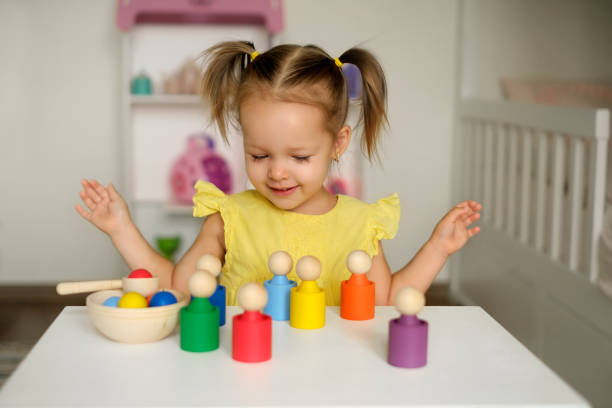
When Simple Toys Quietly Beat the Flashy Ones
Walk into most toy stores, and you’ll see blinking lights everywhere. Plastic gadgets sing songs, press buttons, and promise to teach the alphabet before a child can even say “banana.”
It’s loud. It’s colourful. It’s… a lot.
But here’s the funny part: many toddlers ignore those toys after a few minutes.
Instead, they wander over to something simple. A wooden block. A small basket of objects. Maybe a puzzle with chunky pieces.
And suddenly they’re absorbed.
Stacking. Turning. Dropping. Trying again.
If you watch closely, you’ll see something powerful happening, focused play. The kind that lasts longer than five minutes and doesn’t require a battery.
That’s the quiet magic behind Montessori toys.
Inspired by the work of Maria Montessori, this approach focuses on giving children tools that help them explore, experiment, and figure things out on their own.
No flashing lights required.
For parents, especially new ones, navigating the toddler years, these toys can feel like a breath of fresh air. They’re simple, thoughtful, and often surprisingly engaging.
Let’s talk about the ones toddlers genuinely love.
What Makes a Toy “Montessori” Anyway?
Before we jump into the list, it helps to understand what sets Montessori toys apart.
They’re not just wooden toys with neutral colours. That’s the Instagram version.
The real idea is deeper.
A true Montessori toy usually follows a few guiding principles:
1. It encourages hands-on exploration
Children learn through doing, touching, moving, and testing.
2. It teaches one skill at a time
Too many features overwhelm toddlers. Simpler toys help them concentrate.
3. It uses real-world materials
Wood, metal, cotton. Natural textures offer better sensory feedback than plastic.
4. It allows self-correction
When a piece doesn’t fit, the child notices and tries again. No adult required.
This quiet trial-and-error process builds something huge: confidence.
And honestly, toddlers thrive on that feeling.
1. The Classic Wooden Stacking Blocks
Let’s start with a toy that has survived centuries.
Blocks.
That’s it.
No instructions. No batteries. No complicated setup.
Just simple shapes waiting to become towers, bridges, or “houses for teddy.”
Wooden blocks help toddlers develop:
- Fine motor control
- Hand-eye coordination
- Early spatial reasoning
- Creative thinking
A toddler might stack three blocks today. Tomorrow it’s five.
Then suddenly they’re building something that resembles a castle, at least in their mind.
Some parents love sets from Melissa & Doug or Grimm’s because the materials feel sturdy and smooth.
But honestly? Even a basic block set works wonders.
The magic lies in the child’s imagination.
2. The Object Permanence Box (A Toddler Obsession)
Have you ever watched a toddler drop the same toy over and over?
You pick it up.
They drop it again.
It seems endless.
They’re not trying to drive you crazy. They’re learning something fundamental: object permanence.
The object permanence box turns that experiment into a game.
A child drops a ball into a hole.
It disappears.
Then, surprise, it rolls out the front.
Cue laughter.
Then they do it again. And again. And again.
Repetition might feel boring to adults, but for toddlers, it’s serious brain work.
3. Shape Sorters: Tiny Geometry Lessons
Shape sorters look simple, but they’re quietly teaching toddlers complex ideas.
A square won’t fit into the triangle hole. The circle belongs somewhere else.
This process strengthens:
- Problem-solving skills
- Visual discrimination
- Early geometry understanding
Toddlers twist shapes, flip them around, and eventually discover the correct match.
That little moment when the piece finally drops into place?
You’ll see it on their face, pure triumph.
4. Wooden Puzzles with Knobs
These puzzles are often a toddler’s first “success experience.”
Large wooden pieces with small knobs allow children to grasp and place shapes into matching spaces.
The benefit goes beyond motor skills.
Each completed piece tells the toddler:
“I did that myself.”
That sense of accomplishment might seem small, but it builds the foundation for independent learning.
Many Montessori classrooms still use puzzle designs inspired by Maria Montessori herself.
5. Practical Life Tools (Toddlers Love Real Work)
Here’s something surprising.
Toddlers don’t always want toys.
They want to do what adults are doing.
Sweeping. Pouring water. Wiping a table.
Give a toddler a tiny broom or pouring set, and suddenly they feel like part of the household team.
Montessori educators call this practical life work.
Examples include:
- A mini broom and dustpan
- Small pitchers for pouring water
- Toddler-sized cleaning cloths
It may look like play, but it builds coordination, responsibility, and pride.
And yes, sometimes toddlers sweep the same spot ten times. That’s normal.
6. Busy Boards (Tiny Hands Love These)
Busy boards turn everyday objects into exploration tools.
Picture a wooden board with:
- Latches
- Zippers
- Switches
- Buttons
- Locks
Toddlers twist, pull, slide, and flip each element.
This kind of play strengthens finger muscles needed for later tasks like writing or buttoning clothes.
Plus, it satisfies a toddler’s endless curiosity about how things work.
7. The Wooden Ring Stacker
At first glance, the ring stacker seems almost too simple.
A base. A pole. A few rings.
But toddlers learn a surprising number of skills while playing with it.
They practice:
- Hand coordination
- Color recognition
- Size comparison
- Balance
Some children stack randomly at first.
Later, they notice patterns: big ring first, smaller rings on top.
That small discovery sparks early mathematical thinking.
8. Montessori Ball Tracker (The Toy Toddlers Watch for Minutes)
Few toys hold a toddler’s attention like a ball tracker.
You place a ball at the top.
It rolls down curved ramps, clacking gently as it moves.
The movement fascinates toddlers because it demonstrates a basic concept: gravity.
Watching the ball travel from top to bottom helps build visual tracking skills, which support reading later on.
And yes, toddlers will run back to the top to repeat the process.
Again. And again.
9. Wooden Animal Figures for Open-Ended Play
Unlike toys with fixed functions, open-ended toys grow with a child.
Wooden animals are a perfect example.
A toddler might line them up today.
Tomorrow, they become characters in a pretend farm.
Later, they inspire stories.
Open-ended toys encourage:
- Language development
- Creativity
- Emotional expression
Brands like Schleich create detailed figures that feel surprisingly lifelike.
Children love that realism.
10. Montessori Kitchen Tools for Toddlers
Toddlers love helping in the kitchen.
Give them safe tools, and suddenly cooking becomes an adventure.
Popular Montessori kitchen tools include:
- Toddler-safe knives
- Banana slicers
- Child-sized cutting boards
Under supervision, toddlers can slice soft foods like bananas or strawberries.
The result?
Confidence.
And sometimes a proud little chef announces dinner.
How Many Toys Do Toddlers Actually Need?
Here’s a counterintuitive idea.
Fewer toys often create better play.
Too many options overwhelm toddlers.
They bounce from toy to toy without focusing.
Montessori parents often rotate toys, placing only a few on a shelf at once.
After a week or two, new toys appear while others rest in storage.
To the toddler, it feels like a brand new collection.
Choosing Montessori Toys Without Overthinking It
Shopping for toddler toys can feel overwhelming.
Here’s a simple checklist many parents follow.
Look for toys that are:
- Made from safe materials
- Durable enough to last years
- Simple rather than flashy
- Open-ended when possible
Most importantly, choose toys that invite exploration.
Because toddlers are natural scientists.
They test ideas constantly, drop, stack, twist, pour.
And every small experiment builds their understanding of the world.
Final Thoughts: Why Simple Toys Create Big Learners
It’s easy to assume toddlers need complicated toys to stay entertained.
But often the opposite is true.
Give a child a thoughtfully designed, simple toy, and something remarkable happens.
They slow down.
They concentrate.
They explore.
That quiet focus, stacking blocks, sorting shapes, rolling balls down a track, lays the groundwork for learning later in life.
And for parents?
There’s a small bonus.
When toddlers engage deeply in independent play, you might get a few peaceful minutes to drink your coffee while it’s still warm.
Honestly, that’s a win for everyone.